UAE could be the independent oil producer the world needs: Expert
Estimated reading time: 7 minutes
Key Takeaways
- The UAE’s exit from OPEC offers greater fiscal stability and market credibility.
- More predictable oil revenues support sovereign‑wealth‑fund financing of large‑scale real‑estate projects.
- Family offices and international buyers are likely to increase allocations to premium UAE residential and commercial assets.
- Investors should target high‑quality developments in Dubai and Abu Dhabi while monitoring supply‑demand dynamics.
- Partnering with a specialist advisor like David Moya Real Estate LLC can turn macro insights into concrete portfolio gains.
Table of Contents
- Introduction
- 1. The Strategic Rationale Behind an Independent Oil Policy
- 2. Macro‑Economic Landscape: Capital Flows and Buyer Sentiment
- 3. Supply‑Demand Dynamics in the UAE Property Market
- 4. Investor Implications: Risks, Opportunities, and Strategic Takeaways
- 5. Why Choosing David Moya Real Estate LLC Matters
- 6. Frequently Asked Questions
- 7. Forward‑Looking Perspective & Call to Action
Introduction
The United Arab Emirates’ decision to step away from OPEC and pursue a more independent oil production path resonates far beyond the energy sector. For property investors, entrepreneurs, family offices, and international buyers who already view the UAE—especially Dubai and Abu Dhabi—as a magnet for capital, this strategic shift adds a compelling new layer to the investment thesis. The recent CNBC segment highlights how a sovereign‑wealth‑backed, market‑responsive oil strategy could unlock more stable fiscal revenues, deepen ties with Washington, and reinforce the UAE’s reputation as a low‑risk, high‑growth hub.
1. The Strategic Rationale Behind an Independent Oil Policy
Abdulkhaleq Abdulla, a leading voice on UAE foreign policy, explains that the “New UAE” is redefining its role in the global energy ecosystem by exiting the OPEC framework. The move is not isolationist; it is a calibrated effort to gain flexibility in production decisions, protect domestic fiscal buffers, and signal to global partners—especially the United States—that the Emirates can act as a reliable, market‑aligned oil supplier.
- Fiscal Stability: Decoupling from OPEC quotas allows the UAE to align production with its own budgetary needs, smoothing revenue streams that fund massive infrastructure projects.
- Geopolitical Leverage: An independent stance deepens UAE‑U.S. relations, creating a diplomatic environment conducive to trade, investment, and technology transfer.
- Market Credibility: Acting as a swing producer enhances the UAE’s reputation for market responsiveness—an attribute valued by investors seeking predictable macro‑economic conditions.
2. Macro‑Economic Landscape: Capital Flows and Buyer Sentiment
2.1. Oil Revenue as a Backbone for Real‑Estate Investment
Even as diversification accelerates, oil remains a sizable share of government cash flow. An independent oil policy is projected to reduce volatility in sovereign‑wealth‑fund contributions to ADIA and the Dubai Investment Fund, translating into steady financing for large‑scale projects such as Dubai Creek Harbour and Abu Dhabi’s Saadiyat cultural zone.
2.2. Portfolio Rebalancing by Family Offices
Family offices are reallocating assets from pure equities toward tangible assets that can hedge commodity price swings. A steadier oil revenue stream makes the UAE an even more attractive anchor for these reallocations, especially alongside ongoing free‑zone incentives and ease of foreign ownership.
2.3. International Buyer Sentiment
Non‑regional investors—from Europe, North America, and Asia—view the UAE’s clearer alignment with U.S. policy as a reduction in geopolitical risk, encouraging pension funds, sovereign wealth funds, and high‑net‑worth individuals to commit to long‑term property investments in Dubai’s luxury residential market and Abu Dhabi’s expanding office sector.
3. Supply‑Demand Dynamics in the UAE Property Market
3.1. Supply Outlook
According to the Ministry of Economy, projected completions for 2026–2029 include:
- 120,000 residential units in Dubai, focused on mixed‑use towers and waterfront villas.
- 45,000 units in Abu Dhabi, largely upscale apartments and affordable housing in Al Muroor.
3.2. Demand Drivers
- Population Growth: Expat population grew 4 % YoY in 2025, reaching 9.2 million.
- Business Expansion: Over 3,000 new multinational corporations have entered the UAE post‑COVID‑19.
- Tourism Recovery: Dubai’s tourist arrivals are projected to exceed 25 million in 2026, sustaining short‑term rental yields.
3.3. Net Effect on Yields
Stable oil revenue combined with diversified growth supports net yields of 6‑8 % for core residential assets in Dubai and 5‑7 % for commercial properties in Abu Dhabi, versus comparable global markets, especially when factoring in zero capital gains tax and favorable repatriation rules.
4. Investor Implications: Risks, Opportunities, and Strategic Takeaways
4.1. Opportunities
- Long‑term value accretion driven by increased inbound capital.
- Real‑estate as an inflation hedge in a low‑tax jurisdiction.
- Joint‑venture development opportunities linked to technology and green‑energy projects (e.g., Dubai’s “District 2025”).
4.2. Risks
- Potential policy reversal if OPEC dynamics shift.
- Oversupply in luxury segments could pressure yields; monitoring absorption rates is essential.
4.3. Portfolio Takeaways
- Asset Allocation: Allocate 10‑15 % of a Gulf‑focused portfolio to high‑quality UAE residential assets and 5‑10 % to office or logistics properties.
- Timing: Enter during the post‑OPEC‑exit adjustment period to capture modest discounts before risk premiums re‑price.
- Due Diligence: Prioritize projects with strong developer balance sheets, clear free‑hold titles, and proximity to upcoming infrastructure (e.g., Dubai Expo 2027 site, Abu Dhabi metro extensions).
5. Why Choosing David Moya Real Estate LLC Matters
David Moya Real Estate LLC sits at the intersection of market intelligence and transaction execution, serving sophisticated investors—family offices, entrepreneurs, and international buyers.
- Deep Market Knowledge: Continuous monitoring of macro‑economic signals, including oil policy shifts and sovereign‑fund flows.
- Investor‑Focused Guidance: Translating macro insights into actionable recommendations aligned with risk tolerance and return horizons.
- Transaction Support: Coordinating due diligence, financing, legal counsel, and government liaison for seamless acquisitions.
- Risk Evaluation: Scenario analysis covering oil‑price sensitivity, geopolitical developments, and supply‑demand imbalances.
- Location Strategy & Timing: Identifying sub‑markets poised for upside—Dubai South logistics corridor, Abu Dhabi Mid‑Island precinct—and advising on optimal entry points.
- Long‑Term Portfolio Fit: Assistance with tax structuring, repatriation, and ESG alignment as the UAE transitions to greener energy.
6. Frequently Asked Questions
- Q1: How does the UAE’s independent oil stance affect property taxes?
A: The UAE maintains zero property tax and no capital gains tax regardless of oil policy. The independent oil stance mainly influences macro‑economic stability, indirectly supporting a favorable tax environment. - Q2: Will closer alignment with the United States increase regulatory scrutiny for foreign investors?
A: The UAE is committed to transparent, internationally compliant standards. Alignment with the U.S. is expected to reinforce, not complicate, existing investment frameworks. - Q3: Which sub‑markets are likely to benefit most?
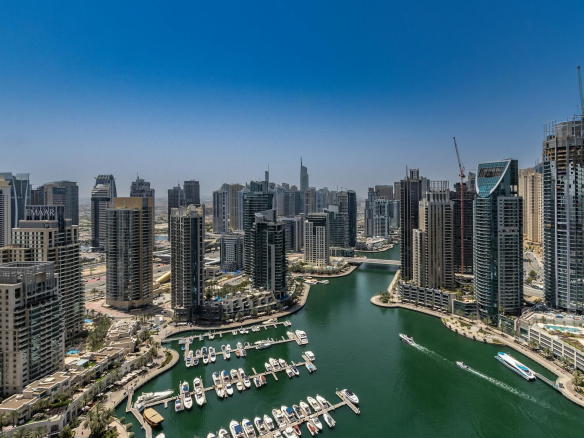
A: Premium residential zones in Dubai (Downtown, Marina) and mixed‑use developments on Abu Dhabi’s Al Maryah Island are poised for heightened demand. - Q4: How should family offices balance residential vs. commercial exposure?
A: A 60 % residential / 40 % commercial split leverages strong rental yields while capturing long‑term upside in office and logistics spaces linked to diversification. - Q5: What role do free‑zone incentives play?
A: Free zones continue to offer 100 % foreign ownership, tax holidays, and streamlined licensing, enhancing the UAE’s attractiveness for both real‑estate development and corporate headquarters.
7. Forward‑Looking Perspective & Call to Action
The expert insight that the UAE “could be the independent oil producer the world needs” signals a stable, growth‑oriented hub for capital across sectors. For real‑estate investors, this translates into predictable sovereign revenue, reduced geopolitical risk, and policy continuity that underpins long‑term development pipelines.
In the next five years you can expect:
- Enhanced fiscal resilience funding new transport, smart‑city, and cultural projects.
- Deeper U.S. partnerships creating demand for specialized assets such as data centers and R&D campuses.
- Sustained capital inflows from family offices and institutional investors attracted by high yields, zero tax drag, and political stability.
Take the next step with a partner who translates macro insight into property performance.
Contact David Moya Real Estate LLC today to discuss how the UAE’s evolving oil policy can enhance your real‑estate portfolio.
Call +971 4 555 1234 or email info@davidmoya.com. Our team is ready to provide the strategic guidance you need to capitalize on this unique moment in the Gulf’s investment landscape.
Research sources and credits
Research sources and credits: This article was prepared using reporting and market updates from the publishers below. Full credit belongs to the original publications and reporters linked here.
- UAE could be the independent oil producer the world needs: Expert
Credit: Web | Published: Wed, 29 Apr 2026 06:55:41 GMT
Skip Navigation Markets Pre-Markets U.S. Markets Europe Markets China Markets Asia Markets World Markets Currencies Prediction Markets Cryptocurrency Futures & Commodities Bonds Funds & ETFs Business Economy Finance Health & Science Media Real Estate Energy Climate Transportation Investigations Industrials Retail Wealth Sports Life Small Business Investing Personal Finance Fintech Financial Advisors Options Action ETF Street Buffett Archive Earnings Trader Talk Tech Cybersecurity AI Enterprise Internet Media Mobile Social Media CNBC Disruptor 50 Tech Guide Politics White House Policy Defense Congress Expanding Opportunity Europe Politics China Politics Asia Politics World Politics Video […] watch now Share Access Middle East # UAE could be the independent oil producer the world needs: Expert Abdulkhaleq Abdulla, a prominent voice in UAE foreign policy, analyzes ‘The New UAE’ that the United Arab Emirates sets the stage for with its exit from OPEC. He also evaluates UAE-U.S. relations, and whether the move paves the way for even deeper relations with Washington. 05:53 2 hours ago […] Video Latest Video Full Episodes Livestream Top Video Live Audio Europe TV Asia TV CNBC Podcasts CEO Interviews Digital Originals Watchlist Investing Club Trust Portfolio Analysis Trade Alerts Meeting Videos Homestretch Jim’s Columns Education Subscribe PRO Pro News Josh Brown Mike Santoli Calls of the Day My Portfolio Livestream Full Episodes Stock Screener Market Forecast Options Investing Chart Investing Subscribe Livestream Make It select USA INTL Livestream Livestream Watchlist SIGN IN Create free account Markets Business Investing Tech Politics Video Watchlist Investing Club PRO Livestream Monday – Friday: 12:00 – 13:00 SIN/HK | 0600 – 07:00 CET watch now Share Access Middle East
Next steps
If you want help evaluating projects, comparing returns, or building a UAE property strategy, contact David Moya Real Estate at +971 52 217 2034 or info@davidmoya.org.