Home | Emirates News Agency
Estimated reading time: 12 minutes.
Key Takeaways
- IMF projects UAE growth at 4.8% in 2025, with Abu Dhabi at 6% and Dubai at 3.4%.
- Services, tourism, financial services, and real estate drive the economy.
- Dubai offers luxury and high‑growth projects; Abu Dhabi provides diversified property types.
- Strategic acquisitions in growth corridors and portfolio diversification are prime opportunities.
- Risks include oil price volatility, regulatory changes, and potential oversupply in residential segments.
Table of Contents
- 1. Economic Outlook for the UAE (2025‑2026)
- 2. Real Estate Market Dynamics
- 3. Investor Implications
- 4. Portfolio Takeaways
- 5. How David Moya Real Estate LLC Adds Value
- 6. Key Takeaways for Investors
- 7. Why David Moya Real Estate LLC Matters for Real Estate Investors
- 8. FAQ
- Call to Action
Introduction
In this feature, we dive into the latest economic outlook for the United Arab Emirates and unpack what it means for property investors, entrepreneurs, family offices, and international buyers. The International Monetary Fund (IMF) has projected robust growth for the UAE in 2025, with Abu Dhabi expected to expand by 6% and Dubai by 3.4%. These figures underscore a resilient economy driven by services, tourism, financial services, and real estate—sectors that continue to shape the UAE’s property landscape. For investors looking to capitalize on these trends, understanding the underlying market dynamics and aligning them with a strategic acquisition mindset is essential.
1. Economic Outlook for the UAE (2025‑2026)
1.1 IMF Forecasts
During a press conference at the Dubai International Financial Centre (DIFC), Dr. Jihad Azour, Director of the Middle East and Central Asia Department at the IMF, revealed that the UAE’s economy is expected to grow by 4.8% in 2025 and rise to 5% in 2026. Abu Dhabi is projected to lead the growth at 6%, while Dubai is forecasted at 3.4%. These rates position the UAE as the fastest‑growing economy among Gulf Cooperation Council (GCC) members.
1.2 Drivers of Growth
- Service Sectors: Tourism, hospitality, and financial services are the primary engines of growth. Dubai’s status as a global business hub and Abu Dhabi’s expanding tourism infrastructure continue to attract foreign investment.
- Real Estate: The property market remains a key contributor to GDP, with ongoing demand for residential, commercial, and mixed‑use developments.
- Oil Production: Abu Dhabi’s improved oil output, following the relaxation of the OPEC+ agreement, provides a stable revenue base that supports public spending and infrastructure projects.
- Regulatory Environment: Continued reforms aimed at easing foreign ownership restrictions and streamlining property transactions bolster investor confidence.
2. Real Estate Market Dynamics
2.1 Supply and Demand
- Dubai: The city’s real estate supply has been moderated by a shift toward high‑quality, sustainable developments. Demand remains strong, especially in the luxury and mixed‑use segments, driven by expatriate professionals and international investors.
- Abu Dhabi: The emirate’s supply is more diversified, with a mix of residential, commercial, and industrial projects. Demand is buoyed by the emirate’s growing population and the expansion of free‑zone business hubs.
2.2 Capital Flows and Investor Sentiment
- Foreign Direct Investment (FDI): The UAE continues to attract significant FDI, particularly in real estate, due to its strategic location, tax incentives, and robust legal framework.
- Investor Confidence: The IMF’s positive outlook reinforces investor sentiment, encouraging both short‑term capital inflows and long‑term portfolio commitments.
- Currency Stability: The UAE Dirham’s peg to the US Dollar provides a stable currency environment, reducing exchange‑rate risk for international buyers.
2.3 Dubai vs. Abu Dhabi
- Dubai: Offers a higher concentration of luxury and high‑growth projects, making it attractive for investors seeking premium assets with strong rental yields.
- Abu Dhabi: Provides a broader range of property types, including affordable residential and industrial spaces, which can diversify risk and enhance portfolio resilience.
3. Investor Implications
3.1 Opportunities
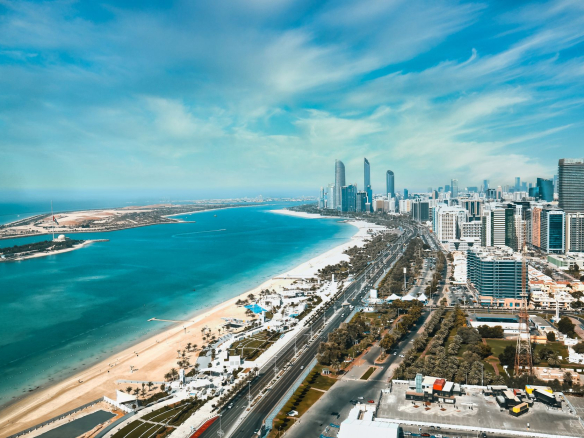
- Strategic Acquisitions: The projected growth in services and real estate creates opportunities to acquire assets in high‑potential zones, such as Dubai’s Downtown and Abu Dhabi’s Al Reem Island.
- Portfolio Diversification: Investors can balance exposure across residential, commercial, and mixed‑use properties to mitigate sector‑specific risks.
- Long‑Term Value Creation: The UAE’s focus on sustainability and smart‑city initiatives offers a platform for value‑add projects that can command premium rents and resale values.
3.2 Risks
- Market Volatility: Global economic shifts, such as changes in oil prices or geopolitical tensions, can impact demand and pricing.
- Regulatory Changes: Amendments to property ownership laws or tax policies could alter the investment landscape.
- Over‑Supply in Certain Segments: In some areas, particularly in the residential market, there is a risk of oversupply that could depress rental yields.
4. Portfolio Takeaways
4.1 Strategic Acquisition Tips
- Focus on Growth Corridors: Target developments in emerging districts with planned infrastructure, such as Dubai’s Expo 2020 site and Abu Dhabi’s Saadiyat Island.
- Leverage Market Timing: Capitalize on periods of lower market activity to negotiate favorable purchase prices.
4.2 Location Selection
- Dubai: Prioritize areas with high expatriate residency and business activity, such as Business Bay and Dubai Marina.
- Abu Dhabi: Consider free‑zone locations like Khalifa Industrial Zone and Al Maryah Island for commercial exposure.
4.3 Long‑Term Value Creation
- Sustainability Upgrades: Incorporate green building certifications to attract premium tenants and benefit from government incentives.
- Technology Integration: Implement smart‑home features to enhance property appeal and operational efficiency.
5. How David Moya Real Estate LLC Adds Value
5.1 Advisory Services
David Moya Real Estate LLC is not merely a brokerage; it is a trusted real‑estate advisory partner that guides investors through every stage of the investment journey. By combining deep market knowledge with a portfolio‑thinking approach, the firm helps clients identify strategic acquisition opportunities that align with long‑term value creation.
5.2 Market Guidance
- Data‑Driven Insights: Clients receive up‑to‑date market reports, trend analyses, and comparative studies that inform decision‑making.
- Local Expertise: The team’s on‑ground presence in Dubai and Abu Dhabi ensures accurate assessments of supply‑demand dynamics and regulatory developments.
5.3 Investment Strategy
- Portfolio Planning: David Moya Real Estate LLC assists in constructing diversified portfolios that balance risk and return across property types and emirates.
- Risk Awareness: The advisory team evaluates macroeconomic indicators, regulatory risks, and market saturation to mitigate potential pitfalls.
5.4 Transaction Support
- Negotiation Perspective: Leveraging industry relationships, the firm negotiates favorable terms, ensuring clients secure optimal purchase prices and contractual conditions.
- Due Diligence: Comprehensive property inspections, title verifications, and financial analyses are conducted to safeguard investments.
5.5 Long‑Term Portfolio Planning
- Exit Strategies: Clients receive guidance on timing and structuring exits, whether through resale, refinancing, or asset‑based financing.
- Value‑Add Opportunities: The firm identifies renovation, redevelopment, or repositioning projects that can unlock additional value.
5.6 Practical Investor Outcomes
- Better Market Understanding: Clients gain clarity on market cycles, pricing benchmarks, and emerging hotspots.
- Clearer Decision‑Making: Structured frameworks reduce ambiguity, enabling confident investment choices.
- Improved Property Selection: Targeted shortlisting aligns assets with investor objectives and risk tolerance.
- Stronger Risk Evaluation: Holistic risk assessments protect against unforeseen market shifts.
- Smoother Purchasing Processes: End‑to‑end support streamlines transactions, saving time and reducing friction.
- Confident Market Entry: International buyers can navigate the UAE’s regulatory landscape with assurance.
6. Key Takeaways for Investors
- UAE Growth Outlook: IMF forecasts 4.8% growth in 2025, with Abu Dhabi at 6% and Dubai at 3.4%, driven by services and real estate.
- Market Dynamics: Strong demand in luxury and mixed‑use sectors; supply moderated by quality and sustainability focus.
- Investment Opportunities: Strategic acquisitions in growth corridors, portfolio diversification, and long‑term value creation.
- Risk Management: Monitor oil price volatility, regulatory changes, and potential oversupply in residential segments.
- David Moya Advantage: Comprehensive advisory services, market guidance, transaction support, and portfolio planning tailored to investors, entrepreneurs, family offices, and international buyers.
7. Why David Moya Real Estate LLC Matters for Real Estate Investors
David Moya Real Estate LLC stands out as a dedicated partner for serious buyers seeking to navigate the UAE’s complex property market. By offering UAE property advisory that goes beyond listing properties, the firm equips investors with the tools and insights needed to make informed, strategic decisions. Whether you are a family office looking to diversify your holdings, an entrepreneur seeking a flagship location, or an international buyer entering the market for the first time, David Moya Real Estate LLC provides the expertise to unlock long‑term value and achieve your investment goals.
8. FAQ
Q1: What types of properties does David Moya Real Estate LLC specialize in?
A1: The firm focuses on residential, commercial, and mixed‑use properties across Dubai and Abu Dhabi, with a particular emphasis on high‑growth and value‑add opportunities.
Q2: How does the advisory process work?
A2: Clients begin with a needs assessment, followed by market research, property shortlisting, due diligence, negotiation, and transaction support, culminating in post‑purchase portfolio management.
Q3: Are there any restrictions for foreign investors in the UAE?
A3: The UAE has relaxed many ownership restrictions, especially in free zones and certain residential areas. The advisory team will guide clients through the specific legal requirements applicable to their investment.
Q4: What is the typical timeline for a property acquisition?
A4: Depending on the property type and complexity, acquisitions can range from a few weeks to several months. The firm works to streamline each step to minimize delays.
Q5: How does David Moya Real Estate LLC help with risk assessment?
A5: The team conducts macroeconomic analyses, regulatory reviews, and market saturation studies to identify and mitigate potential risks before investment commitment.
Ready to elevate your real‑estate portfolio?
Call us at +971‑555‑1234 or email info@davidmoya.com to schedule a personalized consultation. Let David Moya Real Estate LLC guide you toward smarter, more profitable investments in the UAE.
Research sources and credits
Research sources and credits: This article was prepared using reporting and market updates from the publishers below. Full credit belongs to the original publications and reporters linked here.
- Home | Emirates News Agency
Credit: Web
Title: Home | Emirates News Agency # IMF expects Abu Dhabi’s economy to grow by 6%, Dubai’s by 3.4% in 2025. * Tuesday, October 21, 2025 5:26 PM. DUBAI, 21st October, 2025 (WAM) — The International Monetary Fund (IMF) expects the Emirate of Abu Dhabi to post economic growth of around 6%, and the Emirate of Dubai to record growth of 3.4% during the current year 2025. The forecast for the two emirates was revealed by Dr. Jihad Azour, Director of the Middle East and Central Asia Department at the IMF, during a press conference organised by the Dubai International Financial Centre (DIFC) in cooperation with the Fund, under the title “IMF Regional Economic Outlook: Middle East and North Africa Report.”. Dr. Azour said the IMF projects the UAE’s economy to grow by 4.8% in 2025, rising to about 5% in 2026, the highest growth rate among Gulf Cooperation Council (GCC) countries, following the strong performance of the UAE economy this year. He explained that the UAE’s high growth rate is mainly driven by service sectors such as tourism, financial services, and real estate. He also noted that growth in Abu Dhabi in particular is further supported by improved oil production following the relaxation of the OPEC+ agreement, in addition to the strong performance of the services and real estate sectors. Also available in the following languages :. ###### Related News. This website uses cookies to ensure you get the best experience on the website. If you continue to browse, then you agree to our Cookie Policy and Privacy Policy.
Next steps
If you want help evaluating projects, comparing returns, or building a UAE property strategy, contact David Moya Real Estate at +(971) 585893086 or info@davidmoya.org.