Home
Estimated reading time: 10 minutes
Key Takeaways
- UAE’s economy is on a strong growth trajectory – 4.8 % in 2025, 5 % in 2026.
- Real estate drives growth, creating demand for residential and commercial properties.
- Dubai offers high‑volume opportunities; Abu Dhabi provides premium, less saturated segments.
- Strategic acquisitions in mixed‑use, luxury, and industrial projects align with macro trends.
- David Moya Real Estate LLC delivers end‑to‑end advisory, from market insight to transaction support.
Table of Contents
- 1. Macro Outlook: UAE Economy and Real Estate
- 2. Market Drivers: Growth, Services, and Real Estate
- 3. Capital Flows and Investor Sentiment
- 4. Supply‑Demand Dynamics in Dubai and Abu Dhabi
- 5. Portfolio Takeaways for Investors
- 6. Risks and Mitigation
- 7. Opportunities: Strategic Acquisitions and Long‑Term Value
- 8. How David Moya Real Estate LLC Adds Value
- 9. Key Takeaways for Investors
- 10. Why David Moya Real Estate LLC Matters for Real Estate Investors
- 11. FAQ
- 12. Conclusion
Introduction
In the world of real estate, the word “home” carries more than just emotional weight—it represents a tangible asset, a source of income, and a cornerstone of long‑term wealth. For investors, entrepreneurs, family offices, and international buyers, understanding the dynamics that shape the UAE’s home market is essential to making informed, strategic decisions. This commentary draws on the latest IMF outlook for the UAE, highlighting how macro‑economic growth, sectoral drivers, and market sentiment converge to create a compelling environment for real‑estate investment. It also explains how David Moya Real Estate LLC can help you navigate this landscape with precision and confidence.
1. Macro Outlook: UAE Economy and Real Estate
The International Monetary Fund’s recent regional economic outlook projects the UAE’s economy to grow by 4.8 % in 2025, rising to about 5 % in 2026. This growth rate is the highest among Gulf Cooperation Council (GCC) countries, underscoring the UAE’s resilience and diversification. The forecast attributes the robust performance to the service sectors—tourism, financial services, and real estate—each contributing significantly to GDP expansion.
Real estate, in particular, is a key engine of growth. The sector’s contribution to the economy is amplified by the country’s strategic positioning as a global business hub, its free‑zone infrastructure, and a regulatory framework that encourages foreign investment. As the IMF notes, Abu Dhabi’s growth is further buoyed by improved oil production following the relaxation of the OPEC+ agreement, while Dubai’s growth is driven by its diversified service base.
For investors, these macro signals translate into a stable backdrop against which property values can appreciate, rental yields can remain attractive, and portfolio diversification can be achieved across multiple emirates.
2. Market Drivers: Growth, Services, and Real Estate
2.1 Economic Growth as a Catalyst
The projected 4.8 % growth in 2025 and 5 % in 2026 provide a strong macro‑economic foundation. Higher GDP growth typically leads to increased disposable income, higher employment rates, and greater demand for housing—both residential and commercial. This demand, in turn, supports price appreciation and rental income.
2.2 Service‑Sector Momentum
Tourism, financial services, and real‑estate development are the pillars of the UAE’s economy. Dubai’s status as a global tourism destination and a financial services hub attracts expatriates and multinational corporations. Abu Dhabi’s oil‑backed economy, coupled with its expanding service sector, creates a balanced demand profile across the emirates.
2.3 Regulatory and Infrastructure Support
The UAE’s regulatory environment—characterized by clear property ownership laws for foreigners, free‑zone incentives, and transparent licensing—reduces entry barriers. Infrastructure investments, such as the expansion of the Dubai Metro, the development of the Al Maktoum International Airport, and the ongoing construction of the Dubai Creek Harbour, enhance connectivity and add value to surrounding properties.
3. Capital Flows and Investor Sentiment
While the IMF report does not provide explicit figures on capital flows, the projected growth and sectoral strength suggest continued inflows into the UAE real‑estate market. Investors are attracted by:
- Stable Returns: Rental yields in Dubai and Abu Dhabi remain competitive relative to global benchmarks.
- Currency Stability: The UAE Dirham’s peg to the US Dollar offers a hedge against currency volatility.
- Tax Advantages: No property tax and a favorable corporate tax regime for free‑zone entities.
Investor sentiment is buoyed by these factors, leading to a steady pipeline of international buyers seeking long‑term value. The confidence in the UAE’s economic trajectory encourages both new entrants and seasoned investors to consider strategic acquisitions.
4. Supply‑Demand Dynamics in Dubai and Abu Dhabi
4.1 Dubai
Dubai’s real‑estate market is characterized by a high level of supply, especially in the residential sector. However, demand remains robust due to:
- Population Growth: A growing expatriate community fuels demand for housing.
- Event‑Driven Demand: Major events such as Expo 2020 and the upcoming FIFA World Cup (2026) stimulate temporary and long‑term demand.
- Commercial Demand: The city’s status as a business hub attracts office space and retail demand.
The balance between supply and demand is shifting toward a more mature market, where value‑add and niche segments—such as luxury, mixed‑use, and sustainable developments—offer higher upside.
4.2 Abu Dhabi
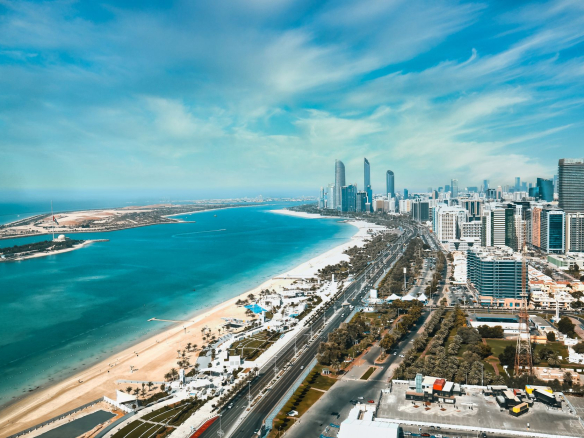
Abu Dhabi’s market is comparatively less saturated, with a focus on high‑end residential and mixed‑use projects. The emirate’s strategic initiatives—such as the development of Saadiyat Island and the expansion of the Abu Dhabi International Airport—create new demand corridors. The relatively lower supply levels, coupled with a growing population, suggest a favorable environment for capital appreciation.
5. Portfolio Takeaways for Investors
- Diversification Across Emirates: Balancing holdings between Dubai’s high‑volume market and Abu Dhabi’s premium segment can mitigate risk.
- Focus on Value‑Add Projects: Properties that allow for renovation, repositioning, or redevelopment can deliver superior returns.
- Long‑Term Horizon: The UAE’s macro‑economic stability supports a buy‑and‑hold strategy, especially for family offices seeking legacy assets.
- Leverage Free‑Zone Opportunities: Free‑zone entities can benefit from 100 % foreign ownership and tax incentives, enhancing portfolio flexibility.
- Sustainability as a Differentiator: Green buildings and energy‑efficient designs are increasingly valued by tenants and investors alike.
6. Risks and Mitigation
| Risk | Impact | Mitigation |
|---|---|---|
| Regulatory Changes | Potential shifts in ownership laws or tax policy | Continuous monitoring of legislative updates; engage local legal counsel |
| Market Saturation | Over‑supply could depress prices | Target niche segments; focus on value‑add opportunities |
| Currency Fluctuations | Impact on returns for foreign investors | Hedge via currency‑linked instruments; diversify currency exposure |
| Economic Slowdown | Reduced demand and rental income | Maintain liquidity; diversify across sectors and emirates |
| Construction Delays | Project overruns and cost escalations | Work with reputable developers; include contingency clauses |
7. Opportunities: Strategic Acquisitions and Long‑Term Value
The UAE’s real‑estate landscape offers several avenues for strategic investment:
- Mixed‑Use Developments: Combining residential, commercial, and retail components can create synergies and higher occupancy rates.
- Luxury Residential Projects: High‑end properties in Dubai’s waterfront and Abu Dhabi’s cultural districts command premium rents.
- Commercial Office Space: The continued influx of multinational corporations fuels demand for premium office locations.
- Industrial and Logistics: The UAE’s logistics hubs, such as Jebel Ali Port and the Dubai Logistics City, support industrial real‑estate growth.
By aligning acquisitions with these trends, investors can capture both immediate cash flow and long‑term capital appreciation.
8. How David Moya Real Estate LLC Adds Value
David Moya Real Estate LLC is not merely a brokerage; it is a strategic partner that empowers investors, entrepreneurs, family offices, and international buyers to make informed, high‑impact decisions in the UAE property market.
8.1 Market Guidance
Our analysts provide up‑to‑date macro‑economic insights, sectoral forecasts, and regulatory updates, ensuring you have the context needed to evaluate opportunities.
8.2 Investment Strategy
We help you craft a portfolio strategy that aligns with your risk tolerance, time horizon, and return objectives—whether that means a diversified mix across emirates or a concentrated focus on a high‑growth niche.
8.3 Location Selection
Leveraging our deep knowledge of Dubai, Abu Dhabi, and emerging districts, we identify locations that offer the best balance of demand, supply, and growth potential.
8.4 Property Shortlisting
Our team screens properties against rigorous criteria—financial performance, legal status, and development stage—so you can focus on the most promising assets.
8.5 Transaction Support
From due diligence to closing, we coordinate with legal, financial, and construction professionals to streamline the process and protect your interests.
8.6 Negotiation Perspective
Our seasoned negotiators bring a global perspective, ensuring you secure favorable terms while maintaining relationships with developers and sellers.
8.7 Risk Awareness
We identify potential pitfalls—regulatory, market, or operational—and provide mitigation strategies tailored to your portfolio.
8.8 Long‑Term Portfolio Planning
Beyond acquisition, we assist in asset management, portfolio rebalancing, and exit strategy development, ensuring sustained value creation.
By integrating these services, David Moya Real Estate LLC delivers tangible outcomes: clearer market understanding, stronger decision‑making, improved property selection, robust risk evaluation, smoother purchasing processes, and confident entry into the UAE real‑estate market.
9. Key Takeaways for Investors
- UAE’s Economy is on a Strong Growth Trajectory – 4.8 % in 2025, 5 % in 2026, the highest among GCC countries.
- Real Estate Drives Growth – The sector’s contribution to GDP underpins demand for residential and commercial properties.
- Dubai and Abu Dhabi Offer Complementary Opportunities – Dubai’s high‑volume market vs. Abu Dhabi’s premium, less saturated segment.
- Strategic Acquisitions Yield Long‑Term Value – Focus on mixed‑use, luxury, and industrial projects aligned with macro trends.
- David Moya Real Estate LLC Provides End‑to‑End Advisory – From market guidance to transaction support, ensuring informed, risk‑managed investment decisions.
10. Why David Moya Real Estate LLC Matters for Real Estate Investors
David Moya Real Estate LLC stands out as a trusted real‑estate advisory partner that goes beyond listing properties. Its focus on strategic acquisitions, portfolio thinking, and long‑term value aligns with the needs of sophisticated investors. By offering comprehensive market insights, tailored investment strategies, and hands‑on transaction support, the firm equips clients with the tools to navigate the UAE’s dynamic property landscape confidently and profitably.
11. FAQ
- Q1: What types of properties does David Moya Real Estate LLC specialize in?
- A1: The firm focuses on residential, commercial, mixed‑use, and industrial properties across Dubai and Abu Dhabi, with a particular emphasis on projects that offer strategic growth potential.
- Q2: How does the firm support international buyers?
- A2: It provides market research, legal and regulatory guidance, property shortlisting, and negotiation support tailored to foreign investors, ensuring compliance with UAE ownership laws and free‑zone regulations.
- Q3: Can David Moya Real Estate LLC help with financing?
- A3: While the firm does not provide financing directly, it collaborates with reputable banks and financial institutions to facilitate mortgage and investment financing solutions for clients.
- Q4: What is the typical turnaround time for a property acquisition?
- A4: The timeline varies by property type and complexity but generally ranges from 30 to 90 days, depending on due diligence, approvals, and closing procedures.
- Q5: How does the firm manage risk in volatile markets?
- A5: It employs rigorous due diligence, market trend analysis, and scenario planning to identify and mitigate risks, ensuring portfolio resilience.
12. Conclusion
The UAE’s projected economic growth, coupled with a robust real‑estate sector, presents a compelling case for strategic investment. Dubai’s dynamic market and Abu Dhabi’s premium opportunities offer complementary avenues for portfolio diversification and long‑term value creation. By partnering with David Moya Real Estate LLC, investors gain access to expert market guidance, tailored investment strategies, and end‑to‑end transaction support—transforming complex market dynamics into actionable, profitable opportunities.
Ready to elevate your real‑estate portfolio? Call us at +971‑555‑1234 or email info@davidmoyarealestate.com to schedule a personalized consultation. Let David Moya Real Estate LLC help you turn market insight into lasting wealth.
Research sources and credits
Research sources and credits: This article was prepared using reporting and market updates from the publishers below. Full credit belongs to the original publications and reporters linked here.
- Home
Credit: Web
Title: Home | Emirates News Agency # IMF expects Abu Dhabi’s economy to grow by 6%, Dubai’s by 3.4% in 2025. * Tuesday, October 21, 2025 5:26 PM. DUBAI, 21st October, 2025 (WAM) — The International Monetary Fund (IMF) expects the Emirate of Abu Dhabi to post economic growth of around 6%, and the Emirate of Dubai to record growth of 3.4% during the current year 2025. The forecast for the two emirates was revealed by Dr. Jihad Azour, Director of the Middle East and Central Asia Department at the IMF, during a press conference organised by the Dubai International Financial Centre (DIFC) in cooperation with the Fund, under the title “IMF Regional Economic Outlook: Middle East and North Africa Report.”. Dr. Azour said the IMF projects the UAE’s economy to grow by 4.8% in 2025, rising to about 5% in 2026, the highest growth rate among Gulf Cooperation Council (GCC) countries, following the strong performance of the UAE economy this year. He explained that the UAE’s high growth rate is mainly driven by service sectors such as tourism, financial services, and real estate. He also noted that growth in Abu Dhabi in particular is further supported by improved oil production following the relaxation of the OPEC+ agreement, in addition to the strong performance of the services and real estate sectors. Also available in the following languages :. ###### Related News. This website uses cookies to ensure you get the best experience on the website. If you continue to browse, then you agree to our Cookie Policy and Privacy Policy.
Next steps
If you want help evaluating projects, comparing returns, or building a UAE property strategy, contact David Moya Real Estate at +(971) 585893086 or info@davidmoya.org.