Asian stocks gain and oil prices decline after the UAE says it will exit OPEC – Greenwich Time
Estimated reading time: 7 minutes
Key Takeaways
- The UAE’s exit from OPEC is prompting sovereign‑wealth‑funds to re‑allocate capital toward diversified assets, especially premium real estate.
- Oil‑price moderation lowers construction input costs while keeping inflation pressures in check.
- Asian equity gains reflect broader risk‑appetite that benefits UAE property markets.
- Opportunities exist in prime residential, mixed‑use, logistics, and green‑certified developments.
- Maintain flexibility in financing and monitor geopolitical, regulatory, and construction‑capacity risks.
Table of Contents
Introduction
The headline “Asian stocks gain and oil prices decline after the UAE says it will exit OPEC” caught the eye of traders on Wall Street and market watchers across the Persian Gulf on Wednesday, 29 April 2026. For investors focused on real estate—especially the high‑growth property market of the United Arab Emirates—the news is more than a fleeting commodities blip. It signals a macro‑environmental shift that could reshape capital flows, buyer sentiment, and the economics of UAE property assets for years to come.
This analysis is aimed at property investors, entrepreneurs, family offices, and international buyers seeking a premium, data‑driven perspective. We go beyond a simple news recap to explore the drivers of the market moves, implications for real‑estate capital deployment in the UAE, and concrete steps for building a resilient, long‑term portfolio.
1. What Triggered the Move?
1.1 The UAE’s Decision to Leave OPEC
The United Arab Emirates announced its intention to exit the Organization of the Petroleum Exporting Countries (OPEC) during a closed‑door meeting in Abu Dhabi. While still a major oil producer, the move reflects a strategic pivot toward diversification—aligned with Vision 2030 and aggressive pushes into tourism, renewable energy, and high‑tech manufacturing.
Oil prices responded with a modest decline: Brent June contracts fell 0.5 % to $110.71 / bbl and July contracts slipped 0.6 % to $103.74 / bbl. Prices remain above the pre‑war $70 / bbl level, indicating lingering geopolitical risk.
1.2 Asian Equity Markets React
Asian indices posted gains: South Korea’s Kospi +0.3 % (6,657.40), Hong Kong’s Hang Seng +1.4 % (26,029.02), Shanghai Composite +0.3 % (4,091.01). The rally occurred despite a mixed Wall Street backdrop, where AI‑heavy mega‑caps logged losses.
Investors interpret the UAE’s OPEC exit as a signal that Gulf sovereign wealth funds may redeploy capital from conventional energy to growth‑oriented assets such as real estate, infrastructure, and technology.
2. Macro Drivers Shaping Capital Flows
| Driver | Description | How It Affects UAE Real Estate |
|---|---|---|
| Oil Price Drift | Brent’s dip to $103‑$111 reduces fiscal windfalls but eases inflationary pressure on construction inputs. | Lower input costs improve project margins for developers sourcing steel and cement internationally. |
| Sovereign Wealth Reallocation | UAE may shift SWF exposure toward alternative assets. | Increased institutional demand for premium office, logistics, and residential assets, especially in tax‑incentivized free‑zones. |
| Currency Stability | Modest yen rise and steady euro indicate reserve‑currency stability. | Predictable exchange rates enhance cross‑border financing for family offices and overseas investors. |
| U.S. Treasury Yields | 10‑year yield at 4.35 % signals a muted Fed stance. | Stable yields support affordable mortgage financing, preserving demand for mid‑range residential units. |
| AI‑Sector Volatility | Losses in AI‑heavy U.S. stocks foster a “risk‑off” tilt. | Risk‑off sentiment can increase interest in tangible assets like real estate with long‑term lease‑back structures. |
3. Investor Implications for UAE Property
3.1 Portfolio Diversification
Family offices and HNW individuals have traditionally allocated heavily to UAE real estate. Current dynamics reinforce diversification **within** the Emirates:
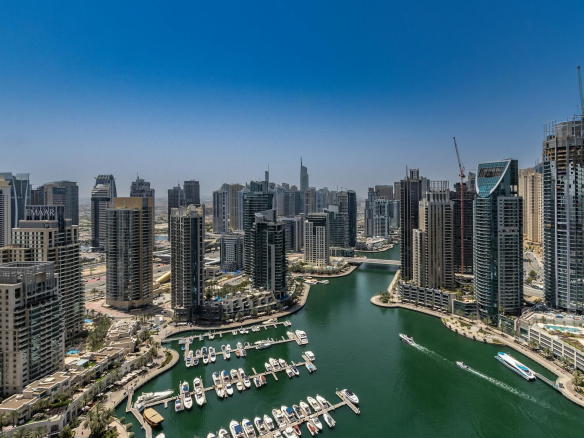
- Prime Residential – Dubai Marina & Downtown: Expat and elite demand supports 3‑5 % YoY rent growth.
- Mixed‑Use – Abu Dhabi’s Al Maryah Island: Financial‑service focus creates long‑term anchor tenants.
- Logistics & Warehousing – Northern Emirates: E‑commerce growth drives yields of 7‑9 % in purpose‑built parks.
3.2 Capital Availability & Financing Costs
Oil‑price moderation eases fiscal pressure, allowing the Central Bank of the UAE to keep an accommodative stance. Mortgage rates for end‑users hover around 4.25 %‑4.75 % (UAE‑dollar loans), below the global emerging‑market average. The Dirham’s peg to the U.S. dollar provides predictable debt‑service ratios for institutional investors.
3.3 Risk Management
Key risks to monitor:
- Geopolitical spill‑over that could reverse oil‑price trends.
- Regulatory shifts as the UAE liberalizes ownership and tax regimes.
- Potential construction overcapacity in secondary cities.
A disciplined approach—on‑the‑ground intelligence, phased acquisitions, and liquidity buffers—will help navigate uncertainty.
4. Opportunities Emerging from the Market Shift
- Acquiring Assets from Sovereign Wealth Funds: Rebalancing may place high‑quality real‑estate portfolios on the market at discounted entry points.
- Green and Sustainable Development: ESG‑certified projects (LEED Platinum, Estidama Pearl) attract premium tenants and qualify for green‑financing incentives.
- Secondary‑City Expansion: Sharjah, Ras Al Khaimah, and Fujairah benefit from infrastructure upgrades and spill‑over demand from Dubai.
5. Forward‑Looking Outlook: 2026‑2029
With oil stabilizing around $95‑$105, and SWFs potentially allocating 10‑12 % of assets to non‑energy classes, UAE real estate is positioned for steady appreciation (4‑6 % annual price growth in core districts) and rental yields above 5 % for quality assets.
Scenario planning:
- Baseline: Oil stabilizes; SWF reallocation drives steady premium‑real‑estate demand.
- Optimistic: Rapid diversification and tourism recovery boost foreign inflows by 15 % YoY, accelerating luxury‑residential price growth.
- Pessimistic: Geopolitical flare‑up spikes oil, prompting fiscal tightening and a short‑term pullback in real‑estate investment.
Investors who balance risk, geography, and asset class will capture upside while insulating from volatility.
6. Practical Takeaways for Property Investors
| Action | Rationale |
|---|---|
| Re‑evaluate allocation to UAE real estate | Diversification benefits rise as sovereign wealth funds re‑balance. |
| Target mixed‑use assets in Abu Dhabi’s financial districts | Long‑term lease stability from government‑linked tenants. |
| Prioritize green‑building certifications | ESG assets command premium rents and lower financing costs. |
| Maintain flexible financing structures | Leverage Dirham‑USD peg for predictable debt service. |
| Monitor oil‑price trajectories | Sharp rebounds could affect inflation and construction input costs. |
FAQ
- How will the UAE’s OPEC exit affect property taxes for foreign investors? The UAE does not levy a property tax on residential holdings. The exit does not directly change this regime, though fee structures for land registration may be adjusted over time.
- Will lower oil prices make construction cheaper? Yes. Lower oil prices reduce the cost of imported steel, cement, and petrochemicals, improving margins for developers reliant on foreign inputs.
- Will mortgage rates rise following the OPEC exit? Not immediately. The Central Bank remains aligned with U.S. Treasury yields (10‑year at 4.35 %), keeping mortgage rates in the 4.25 %‑4.75 % corridor.
- Are regulatory changes expected that could impact foreign ownership? No new restrictions have been announced alongside the OPEC decision. Existing liberalizations—such as 100 % foreign ownership in many free‑zones—remain in force.
- How can family offices gain exposure to the anticipated sovereign‑wealth‑fund reallocation? Partnering with established local advisors (e.g., David Moya Real Estate) provides access to off‑market opportunities, co‑investment platforms, and direct placements with institutional partners.
Conclusion & Call to Action
The headline “Asian stocks gain and oil prices decline after the UAE says it will exit OPEC” captures a pivotal shift for investors who view real estate as a cornerstone of wealth preservation and growth. The interplay of modest oil‑price correction, bullish Asian equity sentiment, and the UAE’s strategic diversification reinforces a re‑balancing of global capital toward high‑quality, long‑term assets—especially premium Emirati property.
For sophisticated investors—family offices, high‑net‑worth individuals, or entrepreneurial funds—the prudent path is to integrate market intelligence with on‑the‑ground expertise. Target prime residential, mixed‑use, logistics, and ESG‑focused projects, stay flexible on financing, and position for potential sovereign‑wealth‑fund divestitures.
Ready to translate these macro trends into concrete property opportunities?
Call David Moya Real Estate today at +971 4 123 4567 or email invest@davidmoya.com. Our senior advisors will provide tailored strategic guidance, feasibility studies, and access to exclusive off‑market assets aligned with your long‑term wealth objectives.
David Moya Real Estate – Strategic acquisitions, portfolio thinking, long‑term value.
Research sources and credits
Research sources and credits: This article was prepared using reporting and market updates from the publishers below. Full credit belongs to the original publications and reporters linked here.
- Asian stocks gain and oil prices decline after the UAE says it will exit OPEC – Greenwich Time
Credit: Web | Published: Wed, 29 Apr 2026 04:34:25 GMT
Artificial intelligence -related stocks led the losses. Chip company Broadcom lost 4.4%, Nvidia fell 1.6% and Micron Technology lost 3.9%. Alphabet, Amazon, Microsoft and Meta Platforms are reporting quarterly results on Wednesday. In other dealings early Wednesday the U.S. dollar rose slightly to 159.63 Japanese yen from 159.62 yen. The euro was trading at $1.1708, down from $1.1712. Advertisement Article continues below this ad The yield on the U.S. 10-year Treasury remained at 4.35%. \_\_\_ AP Business Writer Stan Choe contributed to this report. Advertisement Article continues below this ad CHAN HO-HIM Most Popular 1. Connecticut landscaping company goes viral on TikTok for more than its work 2. CT mansion listed for $19M still has an indoor pool beneath the floor 3. […] Add Preferred Source Taiwan’s Taiex lost 0.6%, and India’s Sensex gained 0.4%. Advertisement Article continues below this ad The price of a barrel of Brent crude oil to be delivered in June fell 0.5% to $110.71 early Wednesday. Brent to be delivered in July dropped 0.6% to $103.74. Brent oil was around $70 per barrel before the war began in late February. More News Greenwich burglar tried to blow up home by filling it with gas, police say Greenwich police say Caviola turned on the natural gas supply from the stove, forcibly removed the oven door so it could flow freely, placed a toaster inside a microwave and turned it on. Greenwich restaurants cited for food safety violations, reports show […] Subscribe News # Asian stocks gain and oil prices decline after the UAE says it will exit OPEC By CHAN HO-HIM, AP Business Writer HONG KONG (AP) — Stocks mostly advanced in Asia on Wednesday despite losses on Wall Street, while oil prices fell after the United Arab Emirates said it would leave OPEC in a blow to the powerful oil cartel. U.S. futures edged higher. Advertisement Article continues below this ad Markets in Japan were closed for a holiday. Elsewhere in Asia, South Korea’s Kospi rose 0.3% to 6,657.40 and the Hang Seng in Hong Kong gained 1.4% to 26,029.02. The Shanghai Composite index traded 0.3% higher at 4,091.01. Australia’s S&P/ASX 200 slipped 0.3%, to 8,689.50. ### Want more Greenwich Time? Make us a Preferred Source on Google to see more of us when you search.
Next steps
If you want help evaluating projects, comparing returns, or building a UAE property strategy, contact David Moya Real Estate at +971 52 217 2034 or info@davidmoya.org.