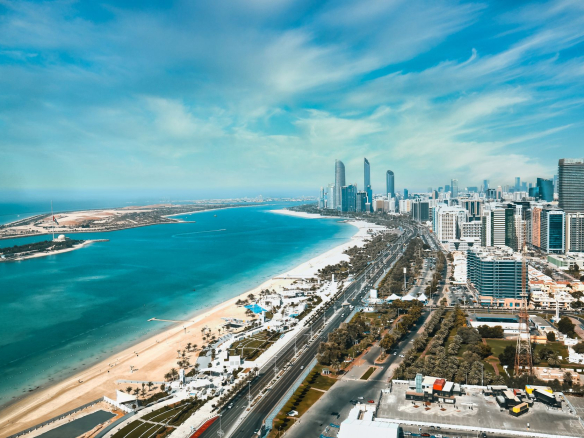

Abu Dhabi tourism soars 47% in H1/25, driven by cultural growth, strategic expansion
Estimated reading time: 8 minutes
Key Takeaways
- Tourism grew 47% in H1/25, boosting demand for hospitality, residential, and mixed‑use assets.
- New cultural attractions broaden visitor profiles and extend average length of stay.
- Strategic partnerships with tech firms enhance visitor experience and data analytics.
- Balanced portfolios across hotel equity, serviced suites, mixed‑use, and retail mitigate sector risk.
- David Moya Real Estate LLC offers end‑to‑end advisory to navigate the UAE real‑estate landscape.
Table of Contents
- Introduction
- 1. Market Overview
- 2. Drivers of Tourism Growth
- 3. Impact on the Real‑Estate Market
- 4. Capital Flows and Buyer Sentiment
- 5. Supply‑Demand Dynamics
- 6. Portfolio Implications for Investors
- 7. Risks and Mitigation Strategies
- 8. Opportunities for Investors
- 9. Forward‑Looking Outlook
- 10. How David Moya Real Estate LLC Adds Value
- FAQ
- Call to Action
Introduction
Abu Dhabi tourism soars 47% in the first half of 2025, a headline that signals more than just a boost in visitor numbers; it heralds a seismic shift in the emirate’s economic landscape and, by extension, its real‑estate market.
1. Market Overview: Abu Dhabi’s Tourism Surge in Context
| Metric | 2024 (H1) | 2025 (H1) | % Change |
|---|---|---|---|
| Visitors | ~2.6 million | 4.0 million | +47 % |
| Average Length of Stay (ALOS) | 2.9 nights | 3.2 nights | +10 % |
| Hotel Capacity Target | 50,000 rooms | 50,000 rooms | 0 % |
| Tourism Jobs Created | 0 | 178,000 | +178 % |
| Contribution to GDP | 0 | AED 90 bn (by 2030) | 0 % |
The data underscore a multi‑layered transformation: cultural expansion, strategic partnerships, and ambitious economic targets are reshaping demand across hospitality, residential, and mixed‑use sectors.
2. Drivers of Tourism Growth
2.1 Cultural Growth
Abu Dhabi’s investment in world‑class cultural venues has paid dividends. The teamLab Phenomena exhibit drew 145,912 visitors in its first year, while Al Maqtaa Museum added nearly 31,000. These attractions diversify the visitor profile and extend stay duration.
2.2 Strategic Expansion
The Tourism Strategy 2030 is anchored in three pillars: infrastructure, experience, and technology. Expansion of hotel capacity to 50,000 rooms, creation of themed districts, and partnerships with global travel tech firms create a virtuous cycle of growth.
2.3 Economic Momentum
Projected AED 90 bn contribution to GDP by 2030 and 178,000 new tourism jobs signal a robust economic engine. A growing middle class is increasingly able to spend on travel, hospitality, and premium real‑estate.
3. Impact on the Real‑Estate Market
3.1 Hospitality Demand
- Hotel occupancy rates climbing with 4.8 million guests YTD as of October 2024.
- Room supply target of 50,000 rooms met, with accelerated openings in emerging districts.
- Higher ALOS and visitor spending translate into stronger RevPAR, making hotel assets attractive to investors.
3.2 Residential Demand
- Extended ALOS indicates a shift toward longer stays, benefiting serviced‑suite and extended‑stay properties.
- Expat and investor interest grows due to stable political climate and vibrant cultural scene.
- Mixed‑use developments combining residential, retail, and cultural spaces gain traction.
3.3 Commercial and Retail
- Increased footfall in cultural districts boosts demand for boutique retail and experiential spaces.
- Ancillary services—event management, hospitality training, tech support—create demand for flexible office solutions.
4. Capital Flows and Buyer Sentiment
4.1 Foreign Direct Investment (FDI)
Abu Dhabi’s open investment regime, coupled with a growing tourism sector, attracts FDI into real‑estate, hospitality, and infrastructure.
4.2 Family Offices
Wealthy families diversify portfolios into high‑yield, low‑correlation assets such as hotel equity and mixed‑use developments.
4.3 International Buyers
The emirate’s reputation as a safe, tax‑friendly jurisdiction continues to draw buyers from Europe, Asia, and the Americas.
4.4 Sentiment Trends
- Confidence in growth reinforced by 47 % visitor increase and 13 % projected GDP contribution.
- Risk appetite moderated by stable governance and strategic diversification.
- Long‑term horizon aligns with the 2030 strategy and 39.3 million visitors target.
5. Supply‑Demand Dynamics
5.1 Supply Constraints
- Finite land availability; strategic zoning and reclamation projects essential.
- Construction pace must keep up with rising visitor numbers.
- Regulatory approvals can be time‑consuming; experienced advisory partners streamline the process.
5.2 Demand Drivers
- Tourism‑linked demand fuels accommodation, retail, and entertainment.
- Economic diversification creates new employment and consumer bases.
- Projected population growth adds domestic demand for housing and services.
6. Portfolio Implications for Investors
| Asset Class | Opportunity | Risk | Mitigation |
|---|---|---|---|
| Hotel Equity | Strong RevPAR, high occupancy | Market volatility | Diversify across districts |
| Serviced Suites | Longer stays, premium pricing | Seasonality | Target corporate clients |
| Mixed‑Use | Diversified income, cultural synergy | Development delays | Partner with experienced developers |
| Retail | Footfall from cultural sites | Competition | Focus on experiential retail |
| Residential | Expat demand, long‑term rentals | Currency risk | Hedge with local currency assets |
7. Risks and Mitigation Strategies
| Risk | Impact | Mitigation |
|---|---|---|
| Economic Slowdown | Reduced visitor numbers | Invest in resilient sectors (luxury, long‑stay) |
| Regulatory Changes | Delayed approvals | Engage local legal counsel and advisory partners |
| Currency Fluctuations | Profit erosion | Use hedging instruments and local currency assets |
| Over‑Supply | Price compression | Focus on high‑quality, niche developments |
| Geopolitical Tensions | Investor sentiment dip | Diversify across emirates and asset types |
8. Opportunities for Investors
- Hotel development in emerging districts to meet the 50,000‑room target.
- Serviced‑suite and extended‑stay properties leveraging longer ALOS.
- Mixed‑use projects near cultural sites combining residential, retail, and office.
- Retail and experiential spaces that complement cultural attractions.
- Strategic partnerships with tech firms to create data‑driven visitor experiences.
9. Forward‑Looking Outlook
Abu Dhabi’s tourism trajectory is set to accelerate with continued cultural attractions, infrastructure expansion, and deepened tech partnerships. By 2030, the emirate aims to attract 39.3 million visitors annually, create 178,000 new tourism jobs, and contribute AED 90 bn to GDP—fueling sustained demand across hospitality, residential, and mixed‑use sectors.
10. How David Moya Real Estate LLC Adds Value
10.1 Market Guidance
We synthesize macro‑economic indicators, tourism statistics, and local market trends to provide a clear picture of where value lies.
10.2 Investment Strategy
We help build a diversified portfolio aligned with risk tolerance and long‑term objectives, recommending optimal asset allocation.
10.3 Location Selection
We identify emerging cultural and commercial districts, assess proximity to attractions, and evaluate impact on property performance.
10.4 Property Shortlisting
Rigorous due diligence—including legal, financial, and operational reviews—highlights value‑add opportunities.
10.5 Transaction Support
Seasoned negotiators secure favorable terms, while we coordinate title searches, escrow management, and closing logistics.
10.6 Risk Awareness
We keep you informed of regulatory changes, market volatility, and currency risks, providing mitigation frameworks.
10.7 Long‑Term Portfolio Planning
We map exit strategies, track KPIs, and deliver regular performance reports to maximize returns.
FAQ
Q1: How does Abu Dhabi’s tourism growth affect hotel investment returns?
The 47 % visitor increase and 10 % rise in ALOS directly boost occupancy rates and RevPAR, leading to higher cash flows for hotel equity investors.
Q2: Are there regulatory hurdles for foreign investors in Abu Dhabi real‑estate?
The UAE allows 100 % foreign ownership in free‑zone and certain mainland projects, but investors should consult local legal counsel to navigate licensing, land use, and tenancy regulations.
Q3: Which sectors should I focus on given the current tourism boom?
Hospitality (hotel equity, serviced suites), mixed‑use developments near cultural hubs, and experiential retail are high‑potential sectors aligned with tourism growth.
Q4: How can I mitigate currency risk when investing in AED‑denominated assets?
Consider hedging strategies such as forward contracts or options, and diversify across multiple currencies and asset classes.
Q5: Does David Moya Real Estate LLC provide financing options?
While we do not provide direct financing, we collaborate with reputable banks and financial institutions to facilitate structured financing solutions tailored to your investment profile.
Call to Action
Ready to capitalize on Abu Dhabi’s tourism‑driven real‑estate boom? Contact David Moya Real Estate LLC today to schedule a strategic consultation and discover how our expertise can unlock superior investment outcomes.
Phone: +971‑4‑XXXXXXX
Email: info@davidmoya.com
Research sources and credits
Research sources and credits: This article was prepared using reporting and market updates from the publishers below. Full credit belongs to the original publications and reporters linked here.
- Abu Dhabi tourism soars 47% in H1/25, driven by cultural growth, strategic expansion
Credit: Web
ABU DHABI, 12th November, 2025 (WAM) – The Department of Culture and Tourism – Abu Dhabi (DCT Abu Dhabi) announced robust tourism growth in the first half of 2025, a testament to the successful execution of its ambitious Tourism Strategy 2030. Between January and June 2025, Abu Dhabi’s cultural and heritage sites welcomed over 4 million visitors, marking an incredible 47% increase compared to the same period in 2024. Further bolstering this strategic focus were newly opened sites in 2025, including the highly anticipated teamLab Phenomena Abu Dhabi, which attracted 145,912 visitors, and Al Maqtaa Museum, welcoming 30,974 visitors, demonstrating the continuous expansion of Abu Dhabi’s cultural appeal. The average length of stay (ALOS) for international hotel guests also saw an increase, reaching 3.2 nights—indicative of the compelling nature of Abu Dhabi’s attractions and experiences, which are increasingly drawing visitors for longer stays. It brings the emirate that much closer to attracting 39.3 million visitors annually, supporting the creation of 178,000 new tourism jobs, expanding hotel capacity to 50,000 rooms, and contributing AED 90 billion to Abu Dhabi’s GDP by the end of the decade. The Department of Culture and Tourism – Abu Dhabi (DCT Abu Dhabi) announced the continuation and expansion of its successful partnership with Amadeus, a leading travel technology provider.Unveiled at World Travel Market (WTM) London, this renewed collaboration through Amadeus Digital Media aims to signifi… Mohamed Khalifa Al Mubarak, Chairman of the Department of Culture and Tourism – Abu Dhabi (DCT Abu Dhabi), said that the department’s tourism sector aims to contribute AED62 billion to the economy in 2025, with a projected increase of 13 percent compared to 2024. The Department of Culture and Tourism – Abu Dhabi (DCT Abu Dhabi) has announced that the emirate’s hotels have received 4.8 million guests year-to-date (YTD) as of October 2024, resulting in seeing a 26 percent increase in international guests compared to 2023.DCT Abu Dhabi also welcomed more than 3.9 … Ahead of Arabian Travel Market 2023, the Department of Culture and Tourism – Abu Dhabi (DCT Abu Dhabi), has announced new performance targets for Abu Dhabi, which include plans to attract more than 24 million visitors to the emirate by the end of 2023.Saood Abdulaziz Al Hosani, Undersecretary at DCT Ab…
Next steps
If you want help evaluating projects, comparing returns, or building a UAE property strategy, contact David Moya Real Estate at +(971) 585893086 or info@davidmoya.org.