


Abu Dhabi opens rooftop solar to homes in self‑supply policy expansion – Fast Company Middle East
Estimated reading time: 6 minutes
Key Takeaways
- Residential rooftop solar is now permitted in Abu Dhadi, with caps of 10 kW per home.
- Feed‑in tariff of AED 0.10/kWh for the first five years and green loan products lower financing costs.
- Solar‑enabled properties command a 4‑6% resale premium and can command rent premiums of up to 6 points.
- Investors should prioritize solar‑ready projects, explore retrofits, and leverage ESG reporting.
- Cross‑emirate tokenisation and green‑bond financing will amplify liquidity for solar‑linked assets.
Table of Contents
- Introduction
- 1. Policy Context – What “opens rooftop solar to homes” really means
- 2. Market Drivers Behind the Expansion
- 3. Capital Flows and Investor Sentiment
- 4. Supply‑Demand Dynamics – How rooftops change the real‑estate equation
- 5. Portfolio Takeaways – Action Steps for Investors
- 6. Risks and Mitigation Strategies
- 7. Forward‑Looking Perspective (2026‑2029)
- FAQ
- Conclusion & Call to Action
Introduction
The United Arab Emirates has long been synonymous with ambitious, top‑down infrastructure projects that reshape skylines and set global benchmarks. In a move that adds a new layer to this narrative, Abu Dhabi opens rooftop solar to homes in a self‑supply policy expansion, as reported by Fast Company Middle East. While the headline reads like an environmental milestone, the reverberations for property investors, entrepreneurs, family offices, and international buyers are far more nuanced. The policy signals a shift toward decentralized energy and creates variables that will influence asset valuations, development pipelines, and long‑term portfolio construction across the UAE.
At David Moya Real Estate, we interpret such macro‑policy shifts through the lens of capital efficiency, risk mitigation, and sustainable value creation. This commentary dissects the drivers behind Abu Dhabi’s rooftop solar expansion, evaluates the immediate and medium‑term implications for the real‑estate market, and outlines strategic actions for sophisticated investors who wish to align their UAE property exposure with the emirate’s clean‑energy trajectory.
1. Policy Context – What “opens rooftop solar to homes” really means
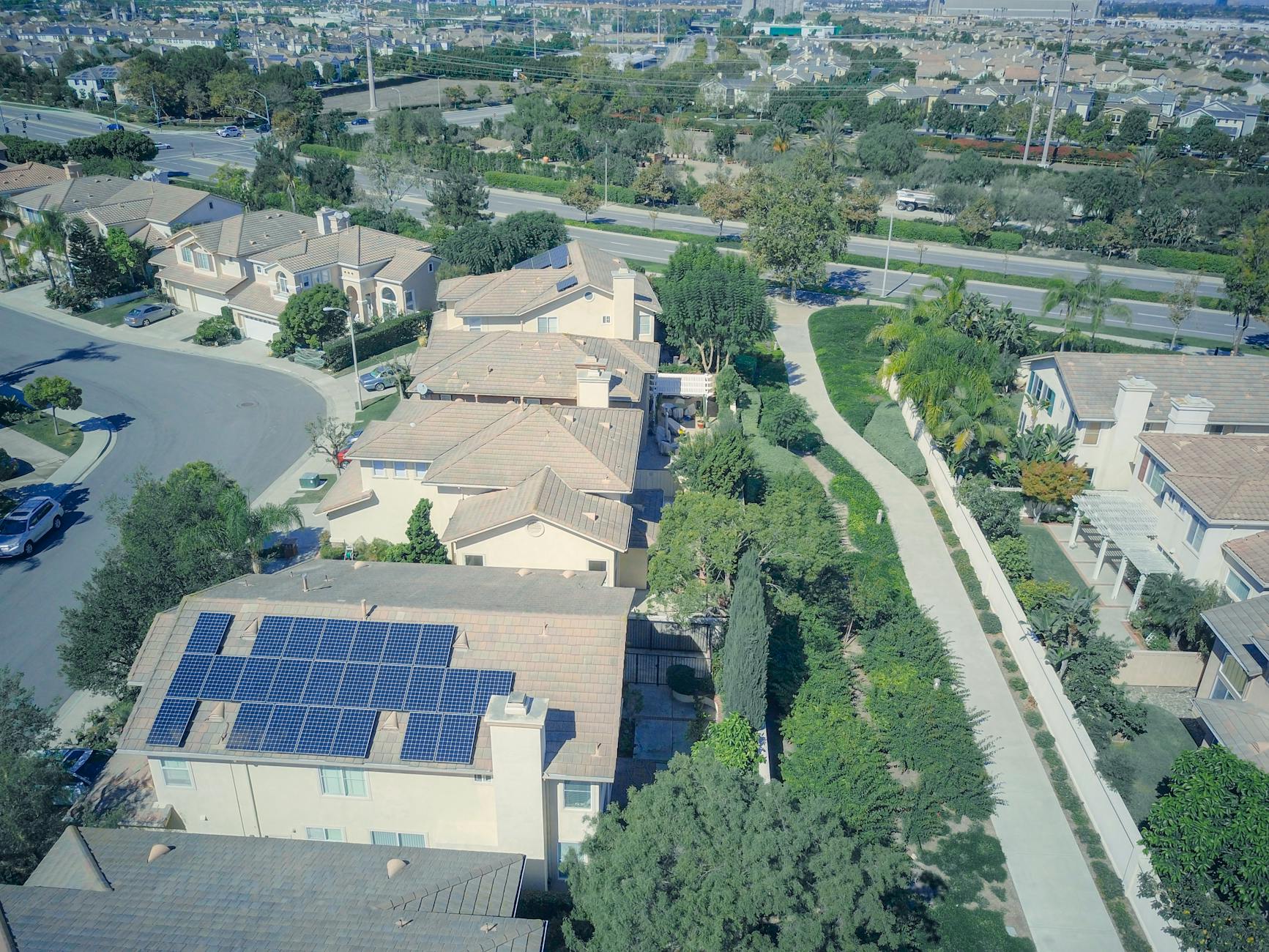
Abu Dhabi’s self‑supply framework, launched in early 2025, originally permitted commercial and industrial tenants to install photovoltaic (PV) systems and sell excess generation back to the grid under a net‑metering arrangement. The April 2026 expansion removes the commercial‑only restriction, allowing residential owners – from villa occupants to high‑rise apartment investors – to apply for rooftop solar licences, secure grid interconnection, and import electricity on an as‑needed basis.
- Capacity caps: Individual residential installations are limited to 10 kW, enough to meet the typical consumption of a mid‑size UAE household.
- Incentive structure: A modest feed‑in tariff (FIT) of AED 0.10/kWh is offered for surplus energy exported to the grid for the first five years, after which market rates apply.
- Financing mechanisms: The emirate’s sovereign wealth fund and local banks have introduced green loan products with preferential interest rates for solar‑enabled properties.
2. Market Drivers Behind the Expansion
2.1 Energy security and diversification
Abu Dhabi’s power mix has historically leaned heavily on natural gas, exposing the emirate to price volatility and geopolitical risk. Distributed generation reduces load on central plants and builds a buffer against supply shocks.
2.2 Climate commitments and ESG compliance
The UAE’s Net‑Zero by 2050 pledge places renewable integration at the core of its economic strategy. Real‑estate developers and owners are increasingly evaluated on ESG metrics; a residential portfolio that can demonstrate on‑site solar generation enjoys a competitive edge in capital‑raising.
2.3 Technological cost decline
Since 2020, the levelized cost of electricity (LCOE) from utility‑scale solar in the Gulf has fallen by more than 30 %. Coupled with improvements in battery storage, rooftop PV is now economically viable even without deep subsidies.
2.4 Consumer appetite
Surveys by the Abu Dhabi Department of Energy show that 68 % of homeowners are willing to invest in rooftop solar if the payback period is under eight years. This demand aligns with the growing segment of expatriate professionals and high‑net‑worth families seeking sustainable, cost‑predictable living environments.
3. Capital Flows and Investor Sentiment
In 2026, Abu Dhabi’s renewable‑energy capacity crossed 7.7 GW, reflecting both public‑sector financing and private‑sector participation. The Fast Company article notes a surge in “green” financing instruments, with the sovereign wealth fund earmarking AED 2 billion for renewable‑linked real‑estate projects.
International investors, particularly from Europe and North America, are increasingly screening for green credentials. For family offices, the convergence of stable rental yields and a clear sustainability narrative offers a low‑volatility, high‑credibility addition to diversified portfolios.
4. Supply‑Demand Dynamics – How rooftops change the real‑estate equation
4.1 Residential supply
Developers are integrating solar‑ready designs—pre‑wired rooftops, structural reinforcement, optimal orientation—into new projects. Sales velocity for solar‑enabled units in Al Reem Island increased by 12 % within three months of the policy announcement.
4.2 Rental market
Tenants now factor utility costs into their decision matrix. A 7 kW system can offset up to 40 % of electricity consumption, translating to lower operating expenses and potentially higher net operating income (NOI) for landlords. Early adopters in Al Muroor have reported a 6‑point rent premium for solar‑enabled units.
4.3 Secondary market impact
Properties with existing solar installations are expected to command a resale premium of 4‑6 % over comparable non‑solar assets, according to a preliminary valuation model from the Abu Dhabi Real‑Estate Regulatory Authority.
4.4 Development risk mitigation
Integrating solar from the design stage reduces retrofitting costs and risk. Green loan products tied to solar installations lower financing costs, narrowing the spread between project cost and expected revenue.
5. Portfolio Takeaways – What should investors do now?
- Re‑evaluate existing residential holdings: Conduct structural audits and cash‑flow modelling to determine retrofit feasibility. Many cases achieve a 7‑year payback, enhancing IRR.
- Prioritise solar‑ready development projects: Give preference to deals with permits for rooftop PV or “solar‑ready” clauses to reduce entitlement risk.
- Leverage green financing: Engage local banks and the sovereign fund’s green‑loan desk early; rates as low as 2.1 % above LIBOR can boost equity multiples.
- Incorporate ESG metrics into asset management: Track on‑site generation, CO₂ offsets, and cost savings; use these data in investor reporting and marketing.
- Consider cross‑emirate synergies: Pair Abu Dhabi solar‑enabled assets with Dubai’s tokenisation platforms to access global ESG‑focused capital.
6. Risks and Mitigation Strategies
| Risk | Description | Mitigation |
|---|---|---|
| Regulatory lag | Future adjustments to FIT rates or net‑metering rules could affect revenue projections. | Build sensitivity analysis into models; maintain close dialogue with the Department of Energy. |
| Technical performance | PV degradation, shading, or inverter failure may reduce generation. | Obtain third‑party performance guarantees and include maintenance contracts. |
| Financing availability | Green loan appetite may fluctuate with macro‑financial conditions. | Secure term sheets early and diversify funding across banks and sovereign sources. |
| Market saturation | Over‑supply of solar‑enabled units could erode rent premiums. | Focus on high‑demand sub‑markets and differentiate with battery storage. |
| Tenant adoption | Some tenants may not value solar benefits, limiting rent uplift. | Educate tenants on cost savings and bundle with smart‑home solutions. |
7. Forward‑Looking Perspective – The Next 3‑5 Years
Abu Dhabi aims to have 20 % of residential electricity supplied via on‑site generation by 2029, turning solar into a standard amenity. Key trends that will amplify this shift include:
- Battery storage integration: Home‑battery costs falling below AED 1,500/kWh will enable near‑complete independence during peak tariff periods.
- Smart‑grid development: Dynamic pricing will reward households that shift consumption, further improving the financial case.
- Regional green‑bond issuance: A pipeline of green bonds tied to solar‑enabled residential projects will provide low‑cost, long‑term capital.
- Regulatory harmonisation: Dubai is expected to follow Abu Dhabi’s lead in 2027, creating a unified UAE market for solar‑enabled housing.
FAQ
Q1: Can existing homes be retrofitted with rooftop solar under the new policy?
Yes. Homeowners must apply for a licence, meet structural requirements, and connect to the grid. Green loan products are available to finance retrofits.
Q2: What is the typical payback period for a residential solar installation in Abu Dhabi?
With the current FIT and electricity tariffs, most 7‑10 kW systems achieve payback in 6‑8 years, after which the electricity is essentially free.
Q3: How does solar installation affect property valuation?
Independent appraisals show a 4‑6 % premium for solar‑equipped properties, driven by lower operating costs and ESG appeal.
Q4: Are there restrictions on the type of PV technology that can be used?
Panels must meet Abu Dhabi’s quality and safety standards (IEC certifications). Both monocrystalline and polycrystalline modules are accepted.
Q5: Will the rooftop solar policy impact other renewable projects, such as community solar farms?
The residential rollout complements larger projects by reducing baseline grid demand, allowing community schemes to focus on commercial and industrial loads.
Conclusion & Call to Action
Abu Dhabi’s decision to open rooftop solar to homes marks a decisive step toward a decentralized, low‑carbon energy system—and it creates a tangible, financially measurable advantage for real‑estate investors. The policy aligns energy security, ESG imperatives, and attractive financing into a single value proposition that reshapes the risk‑return calculus of residential assets.
For investors with a strategic eye, the opportunity lies in:
- Identifying and acquiring solar‑ready or retrofittable properties.
- Leveraging green financing to optimise capital structure.
- Embedding ESG reporting into asset management.
- Exploring cross‑emirate collaborations that combine Abu Dhabi’s solar momentum with Dubai’s tokenisation platform.
Ready to integrate solar‑enabled assets into your UAE portfolio?
David Moya Real Estate’s specialist team is on hand to guide you through acquisition, financing, and ESG integration. Call us today at +971 4 555 1234 or email invest@davidmoya.ae for a confidential discussion on how to capture the upside of Abu Dhabi’s rooftop solar expansion.
Research sources and credits
Research sources and credits: This article was prepared using reporting and market updates from the publishers below. Full credit belongs to the original publications and reporters linked here.
- Abu Dhabi opens rooftop solar to homes in self-supply policy expansion – Fast Company Middle East
Credit: Web | Published: Thu, 09 Apr 2026 04:02:13 GMT
impact From AI to niche and co-creation: Are investors switching bets? CO-DESIGN Instagram’s awkward ‘link in bio’ work-around might be on its way out CO-DESIGN NASA to Artemis II: ‘Use a T-shirt to block the sunlight’ in our $24 billion spaceship News UAE expands renewable footprint as capacity crosses 7.7GW News Oman emerges as a key link in Dubai Chambers’ regional trade strategy News Dubai strengthens its role in digital asset markets through property tokenization News $124.6 billion in SME credit marks a 33% increase. Saudi Arabia deepens its push toward private sector growth Latest Stories #### Saudi Arabia links 27 heritage sites with national parks to boost eco-cultural tourism […] Work Life New study finds 80% of women leaders are shaping AI strategy impact How the UAE is emerging as a stabilizing force amid regional turbulence News Saudi Arabia’s real estate sector poised to draw $6.3 billion in foreign capital News UAE launches world’s first commercial U6GHz network ecosystem News Saudi Arabia data center sector surges under Vision 2030 with $4.26 billion investment News Abu Dhabi real estate boom continues as deals reach $18 billion impact ‘Resilience is built ahead of disruption’: DHL’s Orkun Saruhanoglu on future-proofing supply chains Work Life Getting laid off changes your perception of work forever. Here’s how Work Life In the age of AI agents, your customer may still buy from you, but they may no longer visit you impact […] READ MORE Saudi Arabia launches Sandbox to fast-track housing and municipal innovation READ MORE Egypt scales water adaptation strategy with $31.4 million climate project READ MORE Saudi Arabia’s real estate sector poised to draw $6.3 billion in foreign capital READ MORE UAE launches world’s first commercial U6GHz network ecosystem READ MORE Sponsored Content ## FROM OUR PARTNERS News Saudi Arabia links 27 heritage sites with national parks to boost eco-cultural tourism News Saudi Arabia launches Sandbox to fast-track housing and municipal innovation News Egypt scales water adaptation strategy with $31.4 million climate project News Anthropic will use its biggest, baddest AI model to protect against cyberattacks Work Life
Next steps
If you want help evaluating projects, comparing returns, or building a UAE property strategy, contact David Moya Real Estate at +971 52 217 2034 or info@davidmoya.org.


