‘Take the money and run’: Johns Hopkins economist Steve Hanke on why the UAE quit OPEC – Fortune
Estimated reading time: 7 minutes
Key Takeaways
- The UAE’s exit from OPEC signals a sharp rise in the discount rate applied to future oil cash flows, prompting a massive short‑term liquidity boost.
- Sovereign wealth funds and private UHNW investors are expected to redirect AED 30‑40 billion into premium real‑estate assets between 2024‑2026.
- Liquidity will first flow into luxury residential, serviced apartments and high‑grade office space in Dubai and Abu Dhabi.
- Strategic diversification, ESG compliance and location focus are essential to capture upside while managing geopolitical risk.
Table of Contents
- Introduction – Why a headline about oil matters to a property investor
- 1. The Hanke Thesis – “Take the money and run”
- 2. Capital Flows – From Oil Rents to Real‑Estate Rents
- 3. Supply‑Demand Dynamics in the UAE Property Market
- 4. Investor Implications – Portfolio Takeaways
- 5. Opportunities Across the Emirate Landscape
- 6. Why Choose David Moya Real Estate LLC
- 7. Frequently Asked Questions
- 8. Call to Action
Introduction – Why a headline about oil matters to a property investor
When Fortune’s headline reads “‘Take the money and run’: Johns Hopkins economist Steve Hanke on why the UAE quit OPEC,” most readers think of crude barrels, geopolitical risk, and fiscal spreadsheets. The underlying message—a sudden shift in the UAE’s discount rate for future oil revenue—reverberates far beyond energy. For property investors, entrepreneurs, family offices and international buyers, the UAE’s exit from OPEC creates a cascade of capital‑flow dynamics, buyer‑sentiment swings and portfolio‑rebalancing opportunities that are directly tied to the real‑estate market in Dubai, Abu Dhabi and the wider Emirates.
In this premium market commentary we unpack Steve Hanke’s analysis, translate its macro‑economic implications into concrete real‑estate signals, and show how David Moya Real Estate LLC can help sophisticated investors navigate the new landscape with strategic, portfolio‑focused advice.
1. The Hanke Thesis – “Take the money and run”
Steve Hanke, a respected economist at Johns Hopkins, explains the logic behind the UAE’s sudden OPEC departure in clear, investment‑grade terms:
“Future oil prices are going higher, you slow down and wait to produce. If you think they’re going lower, you ramp up fast. The problem has shifted from a long‑term decline in the real price to the possibility that, in the future, the UAE won’t be able to sell all its oil—or can only sell much less—because Iran controls the Strait of Hormuz or periodically cripples infrastructure.”
The crux of Hanke’s argument is a dramatic rise in the UAE’s discount rate. In discounted‑cash‑flow (DCF) language, the present value of oil produced years from now has collapsed. The new math makes it far more attractive to sell now, produce now, and front‑load revenue. Exiting OPEC’s production quotas removes a structural ceiling on output, giving Abu Dhabi and Dubai’s sovereign wealth funds flexibility to monetize oil assets at the highest possible price in the near term.
For the real‑estate market, the takeaway is simple: a sudden influx of liquid capital is likely to chase hard‑asset stores of value—primarily premium property. Understanding the timing, magnitude and geographic focus of this capital is essential for any investor looking to position a portfolio for the next three to five years.
2. Capital Flows – From Oil Rents to Real‑Estate Rents
2‑Year Horizon: Immediate Liquidity
- Sovereign Investment Realignment – Abu Dhabi’s Mubadala and Dubai’s Investment Corporation have already signaled a rebalancing of their portfolios away from long‑dated oil projects toward high‑yield, tangible assets. Expect at least AED 30–40 billion to be earmarked for real‑estate acquisition in the 2024‑2026 window.
- Private‑Sector Wealth Mobilization – Ruling families, large family offices and UHNW individuals will translate oil‑derived cash flows into luxury residential, mixed‑use and hospitality assets to preserve wealth amid global uncertainty.
3‑5‑Year Horizon: Strategic Deployments
- Diversification Mandate – As the discount rate normalizes, the UAE’s sovereign funds will look to diversify away from energy exposure. This will manifest in large‑scale, long‑term development projects—especially those with built‑in income streams such as serviced apartments, logistics parks and tourism‑linked resorts.
- International Buyer Sentiment – Buyers from Europe, Asia and North America, aware of the UAE’s stable fiscal outlook, will increase allocation to prime‑location real estate as a hedge against higher global inflation and volatile equity markets.
3. Supply‑Demand Dynamics in the UAE Property Market
Demand Drivers
| Driver | Impact on Property Segments |
|---|---|
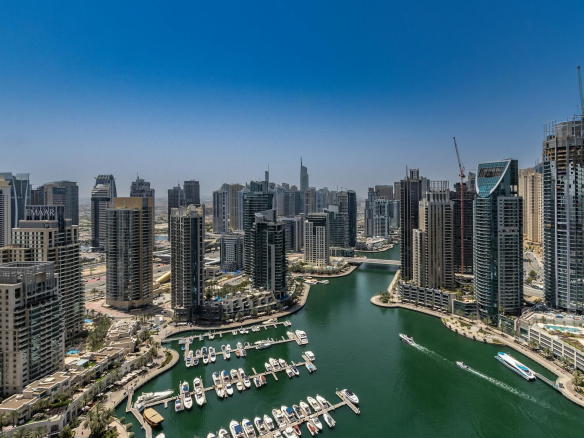
| Oil‑Revenue Windfall | Boosts demand for ultra‑luxury villas, penthouses and high‑end serviced apartments in Dubai Marina, Palm Jumeirah and Abu Dhabi’s Al Reem Island. |
| Population Growth | Expat population projected to hit 12 million by 2030, sustaining demand for mid‑range apartments and family‑oriented villas. |
| Tourism Resurgence | Post‑pandemic tourism already surpasses pre‑COVID levels, fueling demand for short‑term rentals and hospitality‑linked condos. |
| Economic Diversification | Dubai 2040 Urban Master Plan and Abu Dhabi Economic Vision 2030 create new commercial districts, raising demand for grade‑A office space and logistics hubs. |
Supply Constraints
- Land Scarcity in Core Areas – Prime waterfront land in Dubai and central Abu Dhabi remains limited, supporting price appreciation for existing inventory.
- Regulatory Tightening – Recent adjustments to escrow account rules and stricter foreign‑ownership caps in certain free zones introduce a measured supply side, which can sustain price momentum.
4. Investor Implications – Portfolio Takeaways
- Prioritize Immediate Acquisition of High‑Yield Assets – Hanke’s insight suggests a short window of heightened liquidity. Investors who act now can lock in below‑market pricing on premium units before the capital surge pushes prices higher.
- Emphasize Location Strategy
- Dubai: Focus on Dubai Creek Harbour, Business Bay and the upcoming Dubai Harbour district—areas with strong infrastructure pipelines and new metro lines.
- Abu Dhabi: Target Saadiyat Island and Al Maryah Island, where cultural institutions and financial hubs are attracting multinational corporations and affluent expatriates.
- Blend Income and Capital‑Growth Assets – Combine short‑term rental‑optimized apartments (6‑8% net yield) with long‑term residential villas (capital preservation) to mirror sovereign funds’ balance of liquidity and stability.
- Incorporate ESG and Sustainability – UAE’s Estidama Pearl Rating creates a premium on environmentally certified projects. ESG‑compliant assets align with global investor mandates and can command higher rents.
- Risk Management – Geopolitical and Market Volatility – Although the discount rate on future oil revenue has risen sharply, geopolitical risk remains, especially around the Strait of Hormuz. Diversify exposure across multiple emirates and asset classes to mitigate single‑point shocks.
5. Opportunities Across the Emirate Landscape
Dubai – The Global Hub of Liquidity
- Luxury Residential – 4‑ and 5‑bedroom villas on the Palm and Emirates Hills have seen a 7% YoY price increase.
- Serviced Apartments – Units in Marina and Downtown deliver strong yields (6‑8% net) catering to business travelers.
- Logistics & E‑Commerce – The Dubai South master plan offers large parcels for last‑mile distribution centers, benefiting from the UAE’s strategic location.
Abu Dhabi – The Emerging High‑Value Player
- Cultural & Institutional Real Estate – Saadiyat Island’s museums and education campuses generate steady, high‑quality rental income via long‑term government leases.
- Commercial Office Space – Al Maryah Island’s role as a financial centre is tightening vacancy and pushing prime office rents upward.
- Residential Communities – Developments in Al Reem Island and Khalifa City provide upscale yet affordable housing for the growing expatriate workforce.
The Wider UAE – Diversification Levers
- Ras Al Khaimah & Fujairah – Attracting Chinese and Indian investors seeking cost‑effective residential assets with easy logistics access.
- Renewable Energy Real Estate – Discounted land for solar‑farm projects opens niche ground‑lease opportunities within mixed‑use developments.
6. Why Choose David Moya Real Estate LLC
- Market Knowledge – Our team translates macro trends such as Hanke’s discount‑rate analysis into concrete real‑estate signals across every emirate.
- Investor‑Focused Guidance – We work directly with family offices, institutional investors and UHNW individuals to define acquisition criteria, risk tolerances and return expectations.
- Transaction Support – From market scouting to due diligence, financing structuring and post‑deal integration, we provide end‑to‑end execution with local legal expertise.
- Risk Evaluation – Scenario‑based models factor in geopolitical events, discount‑rate volatility and regulatory changes, ensuring portfolio resilience.
- Location Strategy & Timing – Proprietary data on land‑use plans, transport corridors and free‑zone incentives helps clients target assets that will benefit from the next wave of capital deployment.
- Long‑Term Portfolio Fit – Whether augmenting a diversified global portfolio or building a UAE‑centric wealth engine, we assess cash‑flow stability, capital appreciation and ESG alignment for each investment.
7. Frequently Asked Questions
- Q: How quickly will the capital from oil revenues flow into the property market?
**A:** The majority of liquidity is expected within the next 12‑18 months, as sovereign funds and private family offices reposition assets. Early‑stage acquisitions now can secure pricing before the market tightens. - Q: Which asset class is likely to deliver the highest risk‑adjusted returns in the next three years?
**A:** High‑end serviced apartments in Dubai’s waterfront districts and premium office space on Abu Dhabi’s Al Maryah Island are projected to generate the strongest yields (6‑9% net) combined with solid capital appreciation. - Q: Should I diversify across emirates or concentrate in Dubai?
**A:** A balanced approach—approximately 60% Dubai, 30% Abu Dhabi, 10% secondary emirates—captures growth in emerging hubs while reducing geopolitical concentration risk. - Q: How does the “take the money and run” mindset affect long‑term property values?
**A:** It creates a short‑term surge in demand that pushes prices upward. Once the immediate liquidity is absorbed, the market will settle into a sustainable growth path driven by population expansion, tourism and diversification. - Q: What role do ESG criteria play in the UAE real‑estate market today?
**A:** Estidama and other green‑building initiatives are increasingly mandated. ESG‑compliant assets command premium rents and are favored by international institutional investors, making them a strategic addition to any portfolio.
8. Call to Action
Ready to seize the opportunity?
Call us today at +971 4 123 4567 or email info@davidmoya.com to schedule a confidential strategy session. Let’s translate the “take the money and run” moment into a lasting, high‑quality property portfolio for you.
Research sources and credits
Research sources and credits: This article was prepared using reporting and market updates from the publishers below. Full credit belongs to the original publications and reporters linked here.
- ‘Take the money and run’: Johns Hopkins economist Steve Hanke on why the UAE quit OPEC – Fortune
Credit: Web | Published: Wed, 29 Apr 2026 07:00:00 GMT
future prices are going higher, you slow down and wait to produce. If you think they’re going lower, you ramp up fast.” […] “The problem’s gone from a long-term decline in the real price, to the possibility that in the future, they won’t be able to sell all, or can only sell much less, because Iran controls the Strait of Hormuz, or periodically takes out part of its infrastructure,” says Hanke. The upshot: The UAE’s discount rate soared overnight. The new math dictates that the that the “present value” of oil produced in the future will be much lower than before the war. In other words, any opportunity to go, go like hell. “The UAE now has a big incentive to tilt oil production towards the present and away from the future,” says Hanke. Leaving OPEC and its quotas opens that door. This war’s full of unforeseen consequences. None bigger than the bombshell on April 28 that this OPEC stalwart for nearly sixty […] By Fortune Editors October 20, 2025 Finance Lorem ipsum dolor sit amet, consectetur adipiscing elit, sed do eiusmod tempor incididunt ut labore et dolore magna aliqua. Ut enim ad minim veniam By Fortune Editors October 20, 2025 Finance Lorem ipsum dolor sit amet, consectetur adipiscing elit, sed do eiusmod tempor incididunt ut labore et dolore magna aliqua. Ut enim ad minim veniam By Fortune Editors October 20, 2025 Finance Lorem ipsum dolor sit amet, consectetur adipiscing elit, sed do eiusmod tempor incididunt ut labore et dolore magna aliqua. Ut enim ad minim veniam By Fortune Editors October 20, 2025 Latest in Energy — EnergyGlobal business ‘Take the money and run’: Johns Hopkins economist Steve Hanke on why the UAE quit OPEC By Shawn TullyApril 29, 2026
Next steps
If you want help evaluating projects, comparing returns, or building a UAE property strategy, contact David Moya Real Estate at +971 52 217 2034 or info@davidmoya.org.