WTF Is Happening to Dubai’s Real Estate Market?
Estimated reading time: 7 minutes
Key Takeaways
- Ultra‑luxury supply outpaces demand, while mid‑tier and industrial assets remain tight.
- FDI into UAE real estate grew >10 % YoY in 2025‑26, driven by GCC, Asian and European investors.
- Golden Visa and zero capital‑gains tax for holdings >3 years boost long‑term appeal.
- Emerging districts (Dubai South, Al Mansoura, MBR City) deliver higher yields (6‑8 %) and price resilience.
- Diversify across residential, logistics, and mixed‑use to mitigate sector risk.
- Partnering with David Moya Real Estate LLC provides market insight, risk analysis, and end‑to‑end transaction support.
Table of Contents
- Introduction
- 1. Setting the Scene – Why the Market Is in Focus
- 2. Macro Drivers Shaping the UAE Property Landscape
- 3. Supply‑Demand Dynamics – Where the Gaps Exist
- 4. Buyer Sentiment – What Investors Are Saying
- 5. Investor Implications – Risks and Opportunities
- 6. Portfolio Takeaways – How to Build a Resilient UAE Allocation
- 7. How David Moya Real Estate LLC Amplifies Investor Success
- 8. Key Takeaways for Investors
- Frequently Asked Questions
- Call to Action
Introduction
Dubai’s real‑estate market has dominated boardrooms, family‑office strategy sessions, and investor webinars over the past twelve months. For discerning investors, entrepreneurs, family offices, and international buyers, grasping the forces reshaping the UAE’s property landscape is a prerequisite for protecting capital and capturing upside. This premium market commentary unpacks macro drivers, capital flows, buyer sentiment, and supply‑demand dynamics across Dubai, Abu Dhabi, and the wider United Arab Emirates, then translates those insights into concrete portfolio implications.
1. Setting the Scene – Why the Market Is in Focus
The launch of the YouTube video “WTF Is Happening to Dubai’s Real Estate Market?” by Forever Estates (Mar 21 2026) sparked a wave of commentary, underscoring how quickly market perception can shift. While the video offers a broad overview, its virality illustrates three underlying realities:
- Heightened Global Interest: International buyers see Dubai as a “next‑stop” for capital deployment.
- Uncertainty Around Policy: Recent regulatory adjustments, visa reforms and free‑hold expansions create both excitement and caution.
- Volatile Price Signals: Quarterly price fluctuations have investors asking whether the market is in a bubble, a correction, or a new normal.
These signals influence funding costs, exit timing, and the risk‑reward calculus of every asset class.
2. Macro Drivers Shaping the UAE Property Landscape
2.1 Economic Diversification and the “Expo‑Legacy” Effect
Since the pandemic downturn, the UAE’s Vision 2030 agenda accelerated diversification away from hydrocarbons. Initiatives such as the “Dubai 2040 Urban Master Plan” and Abu Dhabi’s “Economic Vision 2035” place real‑estate development at the heart of fintech hubs, tourism clusters, and logistics corridors. The 2026 Dubai World Expo legacy projects remain fully operational, generating visitor traffic and demand for short‑term rentals that cushion the residential market.
2.2 Demographic Shifts and Population Growth
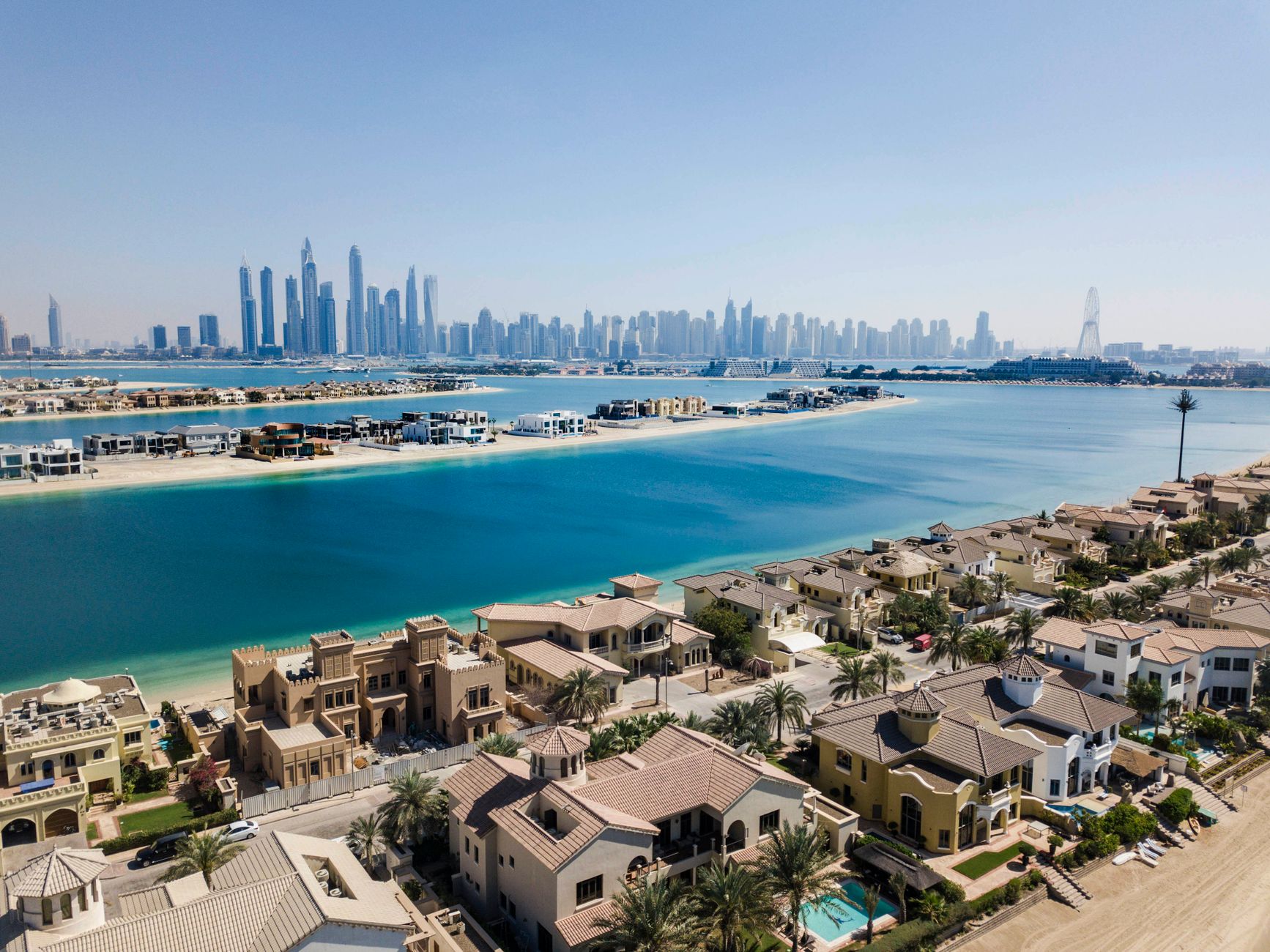
The UAE recorded a net population increase of roughly 3 % in 2025, driven primarily by skilled expatriates in technology, renewable energy, and financial services. This influx fuels demand for high‑end villas in Palm Jumeirah and mid‑tier apartments in emerging sub‑markets such as Al Mansoura and Dubai South.
2.3 Capital Flow Dynamics
Dubai’s tax‑efficient, zero‑income‑tax status remains a magnet for sovereign wealth funds, family offices, and high‑net‑worth individuals. In Q1 2026, foreign direct investment (FDI) into UAE real estate rose by an estimated 12 % YoY, according to the Ministry of Economy’s preliminary figures. The inflow is anchored in three sources:
- Gulf Cooperation Council (GCC) investors seeking safe‑haven assets.
- Asian institutional capital—especially from China, India, and South Korea—attracted by easy repatriation of rental yields.
- European high‑net‑worth individuals exploiting the favourable currency environment and stable legal framework.
2.4 Regulatory Landscape – Visas, Ownership, and Taxation
The 10‑year “Golden Visa” for investors and expanded free‑hold rights across more districts have reduced entry barriers. Moreover, the UAE now waives capital gains tax on residential sales for properties held longer than three years, adding a compelling incentive for long‑term holdings.
3. Supply‑Demand Dynamics – Where the Gaps Exist
3.1 New Deliveries vs. Absorption
Dubai’s 2025‑2026 pipeline includes over 140 000 residential units, outpacing the historical absorption rate of roughly 70 % in a 12‑month cycle. The mismatch is most pronounced in the ultra‑luxury segment (≥ AED 5 million), where a surplus of high‑rise waterfront towers remains under‑occupied.
Conversely, the “affordable‑luxury” niche (AED 1‑3 million) in emerging districts such as Dubai South, Al Qudra, and the upcoming MBR City shows tighter inventory, supporting price resilience and stable rental yields.
3.2 Commercial Real Estate – Office vs. Industrial
The office market, still feeling aftershocks from the hybrid‑work shift, shows a modest vacancy rate of 13 % in Q2 2026, up from 10 % in 2024. Logistics and warehousing spaces, however, sit at a historically low vacancy of 4 % driven by e‑commerce growth and proximity to Jebel Ali Port. Investors seeking stable cash flow may therefore pivot toward industrial assets.
3.3 Rental Yield Trends
Dubai Land Department (DLD) data indicates average gross rental yields for prime apartments in Dubai Marina and Downtown stand at 5.2 % in 2026, while emerging districts deliver 6.8 %–7.4 % yields. The yield spread underscores the strategic merit of diversified location selection.
4. Buyer Sentiment – What Investors Are Saying
A scan of comments on the Forever Estates video (44+ comments) reveals three dominant themes:
- Cautious Optimism: Viewers appreciate regulatory reforms but warn against over‑paying in speculative zones.
- Strategic Diversification: Many plan to allocate capital to mixed‑use projects that blend residential, retail, and co‑working spaces.
- Long‑Term Horizon: Advice leans toward treating Dubai exposure as a 5‑10‑year play rather than a quick‑flip opportunity.
These sentiments align with global institutional surveys that now rank “Regulatory Stability” and “Capital Preservation” as top criteria for Middle‑East exposure.
5. Investor Implications – Risks and Opportunities
5.1 Risks to Monitor
| Risk Category | Description | Mitigation |
|---|---|---|
| Pricing Correction in Luxury Segments | Oversupply of high‑end towers may press price declines of 5‑10 % over the next 12‑18 months. | Target properties with strong brand affiliation or phased delivery aligned with demand. |
| Interest Rate Exposure | UAE central bank rates have risen modestly in 2026, affecting mortgage costs for leveraged buyers. | Structure financing with fixed‑rate tenors or maintain a lower loan‑to‑value ratio. |
| Regulatory Shifts | Potential tightening of foreign ownership caps in certain free‑hold zones. | Stay informed via Ministry of Justice notices; use advisory partners to navigate changes. |
| Economic Diversification Lag | If non‑oil sectors under‑perform, demand for premium office space could stagnate. | Diversify into logistics, hospitality, and mixed‑use assets that benefit from tourism and trade. |
5.2 Opportunities to Capture
- Emerging Sub‑Markets: Dubai South, Al Mansoura, and MBR City offer lower entry prices, robust yields, and strong infrastructure pipelines.
- Industrial Real Estate: Vacancy below 5 % and rent growth of 8 % YoY make warehouses near Al Maktoum International Airport prime for yield‑focused investors.
- Mixed‑Use Developments: Projects blending residential, retail, and co‑working spaces benefit from hybrid work trends, delivering diversified cash flows.
- Long‑Term Capital Appreciation: Mid‑tier assets have historically delivered 6‑7 % CAGR, outpacing many global equity indices.
- Golden Visa Leverage: Investors meeting the AED 10 million threshold secure a 10‑year residency, easing property management and future acquisitions.
6. Portfolio Takeaways – How to Build a Resilient UAE Allocation
- Blend Asset Types: 45 % residential (mix of premium and affordable‑luxury), 30 % industrial/logistics, 25 % mixed‑use or hospitality.
- Geographic Diversification: Approx. 70 % in Dubai (liquidity, market depth) and 30 % in Abu Dhabi & Sharjah (government‑backed stability).
- Leverage Long‑Term Financing: Lock in competitive UAE mortgage rates for 10‑15 years to reduce refinancing risk.
- Incorporate ESG Criteria: Prioritise developments with LEED or Estidama certification to attract ESG‑focused capital.
- Maintain Cash Reserve: Keep 12‑18 months of operating expenses liquid to weather short‑term market dips.
7. How David Moya Real Estate LLC Amplifies Investor Success
7.1 Advisory, Not Just Brokerage
David Moya Real Estate LLC acts as a strategic partner, beginning every engagement with a deep dive into the client’s portfolio objectives, risk appetite, and timeline.
7.2 Market Guidance & Investment Strategy
Through rigorous macro‑economic analysis, the firm translates complex data—such as the capital flow trends highlighted in the Forever Estates video—into clear, actionable investment theses.
7.3 Location Selection & Property Shortlisting
A robust on‑the‑ground network across Dubai, Abu Dhabi, and Sharjah enables
Research sources and credits
Research sources and credits: This article was prepared using reporting and market updates from the publishers below. Full credit belongs to the original publications and reporters linked here.
- WTF Is Happening to Dubai’s Real Estate Market?
Credit: Web
WTF Is Happening to Dubai’s Real Estate Market? Forever Estates UAE 10200 subscribers 191 likes 30446 views 21 Mar 2026 ✅ Work with us: https://foreverestates.ae/?utm_source=youtube&utm_medium=video&utm_campaign=video_FE97 💬 WhatsApp: https://wa.me/971503864952 📞 Call +971-50-386-4952 44 comments
Next steps
If you want help evaluating projects, comparing returns, or building a UAE property strategy, contact David Moya Real Estate at +(971) 585893086 or info@davidmoya.org.
Related posts