Why a bipartisan federal housing bill could increase rent prices in Houston – Houston Chronicle
Estimated reading time: 7 minutes
Key Takeaways
- The proposed seven‑year ownership limit on new build‑to‑rent (BTR) units could cut Houston’s BTR pipeline by up to 60%.
- Reduced supply is likely to lift single‑family rental rates by 3‑5% within 12‑24 months.
- Investors may shift capital toward multifamily, mixed‑use, or geographic diversification (e.g., Dallas‑Fort Worth, San Antonio, UAE).
- Opportunities exist in “transition assets” nearing the ownership deadline and in cross‑border BTR markets with stable policy frameworks.
Table of Contents
- 1. The bill at a glance – what’s really changing?
- 2. Why the cap matters – the economics of build‑to‑rent
- 3. Supply‑demand dynamics in Houston’s rental market
- 4. Capital flows – where will investors go next?
- 5. Risks and opportunities for sophisticated investors
- 6. Portfolio takeaways – building a resilient strategy
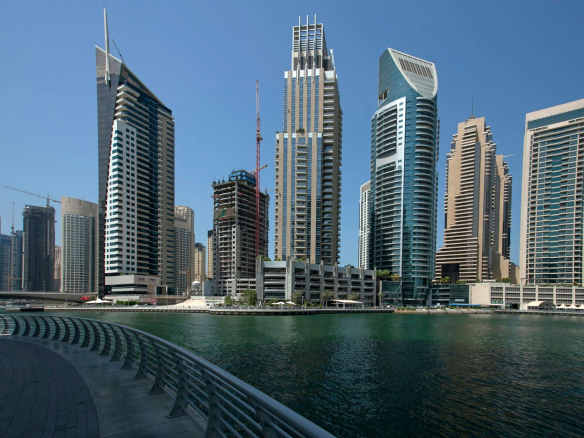
- 7. The UAE connection – lessons from Dubai’s build‑to‑rent boom
- 8. Frequently Asked Questions
- 9. Looking ahead – what will the Houston rental market look like in 2028?
- 10. Conclusion – turning policy risk into strategic advantage
A bipartisan federal housing bill introduced in early 2026 is sparking intense debate on Capitol Hill. Its implications, however, stretch far beyond Washington, already echoing through markets as distant as Texas and the United Arab Emirates. For investors, entrepreneurs, family offices, and international buyers who watch the Houston rental landscape with a strategic eye, the legislation is more than a political footnote—it is a potential catalyst for a shift in supply‑demand dynamics, capital flows, and portfolio risk‑return profiles.
In this commentary we unpack the mechanisms by which the proposed bill could push rental rates higher in Houston, examine the broader implications for real‑estate investors, and draw parallels to the booming build‑to‑rent sector in the UAE, where David Moya Real Estate has helped clients navigate similar policy‑driven market cycles.
1. The bill at a glance – what’s really changing?
The bipartisan proposal seeks to curb “speculative ownership” of single‑family rental homes by imposing a seven‑year ownership limit on newly built, purpose‑designed rental units. After seven years owners must sell or convert the property to primary residence use. The measure targets the rapidly expanding build‑to‑rent (BTR) segment, which has supplied tens of thousands of homes to families, young professionals, and migrants seeking stability in suburban markets.
Analysis by the Urban Institute suggests the bill could sharply curtail BTR growth in Houston by at least 60%, leaving “tens of thousands of rental units… unbuilt each year.” The impact is not limited to new construction; it also makes acquiring existing BTR assets financially unattractive for institutional investors given the shortened horizon for capital recovery.
2. Why the cap matters – the economics of build‑to‑rent
| Factor | Pre‑bill scenario | Post‑bill outlook |
|---|---|---|
| Capital recovery period | 10‑15 years typical for single‑family BTR | 7‑year ceiling forces earlier exit |
| Investor appetite | High – stable cash flow, low turnover | Diminished – lower IRR expectations |
| Construction pipeline | Robust – 3,000+ units per year in Houston metro | Project deferments, cancelled contracts |
| Rental supply growth | 3–4% YoY in the Houston metro area | Potential contraction of 1–2% YoY |
When the holding period is truncated, developers and owners can no longer amortize development costs or meet targeted equity yields. As Doug Ressler of Yardi Matrix notes, the “risk‑adjusted” return drops, prompting many investors to walk away.
3. Supply‑demand dynamics in Houston’s rental market
Key fundamentals driving demand:
- Population growth: +300,000 residents over the past five years.
- Employment resilience: diversified economy beyond oil.
- Affordability edge: lower cost of living compared with coastal metros.
Current vacancy sits at about 5.2%, indicating a tight market. A 60% reduction in new BTR construction would start to bite within two to three years, reducing the pipeline by roughly 7,500 units and creating upward pressure on rents.
4. Capital flows – where will investors go next?
4.1 Shift to multifamily and mixed‑use assets
Multifamily properties are not covered by the ownership limit, and Houston already has a pipeline of 12,000 multifamily units slated for construction through 2028.
4.2 Geographic diversification within Texas
Investors may pivot to San Antonio, Dallas‑Fort Worth, or Austin, where local policies remain more favorable to long‑term BTR ownership.
4.3 International diversification – the UAE angle
In Dubai and Abu Dhabi, 100‑year leaseholds and a pro‑development stance have created a stable environment for BTR. Investors seeking a longer horizon can capture yields of 5.8%‑6.2% net while benefiting from robust expatriate demand.
4.4 Increased focus on “owner‑occupied” investment models
Some funds may adopt sale‑and‑lease‑back structures or target assets that can transition to owner‑occupied units after the seven‑year limit, aligning with the bill’s home‑ownership goal.
5. Risks and opportunities for sophisticated investors
5.1 Risks
| Risk | Explanation | Mitigation |
|---|---|---|
| Rent inflation | Supply constraints push rents higher, potentially triggering affordability stress. | Model rent‑growth scenarios and stress‑test cash flows. |
| Regulatory uncertainty | The bill may be amended, delayed, or face legal challenges. | Maintain a flexible acquisition strategy and monitor congressional activity. |
| Capital lock‑in | Mid‑stream BTR projects could face financing gaps. | Conduct due‑diligence on project stage; use bridge financing with clear exit clauses. |
| Market concentration | Over‑exposure to suburban single‑family rentals amplifies downside. | Diversify across asset classes (multifamily, mixed‑use, office‑converted residential). |
5.2 Opportunities
| Opportunity | Why it matters |
|---|---|
| Premium rents in existing BTR units | Owners locked in before the bill can command higher rents as new supply dries up. |
| Strategic acquisition of “transition assets” | Properties nearing the seven‑year limit can be bought at a discount, renovated, and sold to owner‑occupiers at a premium. |
| Cross‑border portfolio rebalancing | Leveraging capital from Houston to acquire high‑growth UAE BTR projects offers geographic diversification. |
| Value‑add repositioning | Converting single‑family rentals to multi‑family or accessory dwelling units (ADUs) unlocks additional income streams. |
6. Portfolio takeaways – building a resilient strategy
- Short‑term (0‑12 months): Anticipate a slowdown in BTR permits; keep cash reserves for opportunistic purchases before rent spikes.
- Mid‑term (12‑36 months): Reallocate a portion of BTR exposure to multifamily and mixed‑use assets; explore joint‑venture structures with longer hold periods.
- Long‑term (3‑5 years): Consider tilting toward international markets with stable policy environments, notably the UAE, where BTR projects enjoy 20‑year horizons.
Leverage data platforms such as Yardi Matrix to track investor sentiment, vacancy trends, and zip‑code‑level rent growth. Position funds as contributors to affordable housing to capture ESG‑focused capital, and employ non‑recourse mezzanine debt or preferred equity to protect against early exit requirements.
7. The UAE connection – lessons from Dubai’s build‑to‑rent boom
Dubai’s BTR sector thrives under a supportive regulatory climate: 100‑year leaseholds, government‑driven expatriate demand, and a tax‑efficient environment. David Moya Real Estate has helped sovereign‑wealth‑linked family offices acquire assets in master‑planned zones such as Dubai Creek Harbour and Al Maktoum International Airport.
The core lesson for Houston investors is clear: policy certainty drives capital deployment. When federal legislation injects uncertainty, capital naturally seeks jurisdictions where the rulebook is stable. Global investors may therefore re‑allocate a slice of Texas exposure toward UAE projects that promise 15‑20 year hold periods, robust yields (5.8%‑6.2% net), and strong upside from ongoing population growth.
8. Frequently Asked Questions
- Q: Will the seven‑year limit apply to existing single‑family rentals?
A: The bill targets *newly constructed* BTR units. Existing rentals are grandfathered, though any future conversion to a purpose‑built rental would fall under the new rules. - Q: How quickly could rent increases materialize?
A: Rent pressure typically manifests within 12‑24 months after a supply shock, as developers pause new projects and vacancy rates dip below 5%. - Q: Are there exemptions for low‑income or affordable housing?
A: Yes, projects that receive federal low‑income housing tax credits (LIHTC) are carved out, but the majority of market‑rate BTR projects will be subject to the limit. - Q: Can investors sell a property before the seven‑year deadline without penalty?
A: Yes, earlier sales are allowed, though market conditions will affect valuation. Early exits can become a strategic tool to capture upside. - Q: How does this affect financing for BTR projects?
A: Lenders are likely to tighten underwriting, demanding higher equity cushions or shorter amortization periods. - Q: Should I consider shifting capital to the UAE now?
A: For investors seeking long‑term, policy‑stable exposure, Dubai and Abu Dhabi present compelling alternatives, but currency risk and operational nuances must be evaluated.
9. Looking ahead – what will the Houston rental market look like in 2028?
If the bill is enacted in full, the most plausible 2028 scenario includes:
- Annual net addition of BTR units falling from ~2,500 to under 1,000.
- Average single‑family rents rising 4%‑6% year‑over‑year, outpacing inflation.
- Institutional capital shifting toward multifamily assets and secondary Texas markets.
- Potential state‑level rent‑control proposals in response to affordability concerns.
A balanced approach—maintaining core exposure to high‑quality single‑family rentals while expanding multifamily holdings and exploring UAE opportunities—will position portfolios for resilience.
10. Conclusion – turning policy risk into strategic advantage
The bipartisan federal housing bill is poised to compress Houston’s build‑to‑rent pipeline, inevitably lifting rents in the city’s most coveted suburbs. For sophisticated investors, this is not merely a warning sign but a signal to recalibrate: diversify across asset classes, time exits strategically, and consider cross‑border allocations to markets like the UAE where policy stability reigns.
If you are looking to navigate these complexities, assess the true impact of regulatory change on your real‑estate exposure, or explore high‑potential opportunities in both Houston and the Gulf region, David Moya Real Estate stands ready to provide the expertise and local insight you need.
Contact Us
Phone: +1 (713) 555‑0198
Email: info@davidmoya.com
Let us help you turn policy risk into profitable opportunity.
Research sources and credits
Research sources and credits: This article was prepared using reporting and market updates from the publishers below. Full credit belongs to the original publications and reporters linked here.
- Why a bipartisan federal housing bill could increase rent prices in Houston – Houston Chronicle
Credit: Web | Published: Sat, 25 Apr 2026 11:00:00 GMT
The bill could sharply curtail that growth and reduce build-to-rent activity by at least 60%, meaning tens of thousands of rental units would go unbuilt each year, according to an analysis by fellows at the Urban Institute. That’s because investing in time-limited rental properties would make little financial sense. Institutional investors usually see build-to-rent projects as a stable investment, because single-family rentals cater to reliable, longer-term renters like young families, said Doug Ressler, manager of business intelligence at real estate analysis firm Yardi Matrix. But a seven-year limit on ownership would not allow most investors to recoup their capital, so they would have little incentive to invest at all, he said. Advertisement Article continues below this ad […] Before coming to Houston, she did the first year of her fellowship at the San Francisco Chronicle, where she covered breaking news, climate and earthquakes, with a focus on buildings and seismic safety. Most Popular 1. Pasadena couple sues Webster El Tiempo Cantina in civil rights suit 2. Lakers 112, Rockets 108: Houston collapses, loses in OT to fall in 3-0 hole 3. Houston police officer behind racist video has been fired, department says 4. Why the Texans loved Keylan Rutledge: ‘He wants to punch you in the mouth’ 5. Texas will soon replace the STAAR test. Here’s what comes next. Latest Business News Prominent UTHealth surgeon’s $14M mansion slated for international auction […] A new 17-story downtown Houston hotel is opening near Daikin Park as bookings for June and July surge ahead of the World Cup. Texas leads the country in shutting off power to customers who can’t pay bills Texas leads the nation in utilities shutting off services to customers who can’t afford their energy bills, according to federal data. Featured Interactives Real Estate Who owns the most acreage in the Houston area Interactives How is the Texas power grid holding up? Get live updates. Real Estate See Houston’s most and least expensive ZIP codes Real Estate How Houston rent prices compare to other U.S. cities Editor’s Picks Election 2026 Voter Guide: Explore races and candidates in the runoff election Endorsements
Next steps
If you want help evaluating projects, comparing returns, or building a UAE property strategy, contact David Moya Real Estate at +971 52 217 2034 or info@davidmoya.org.