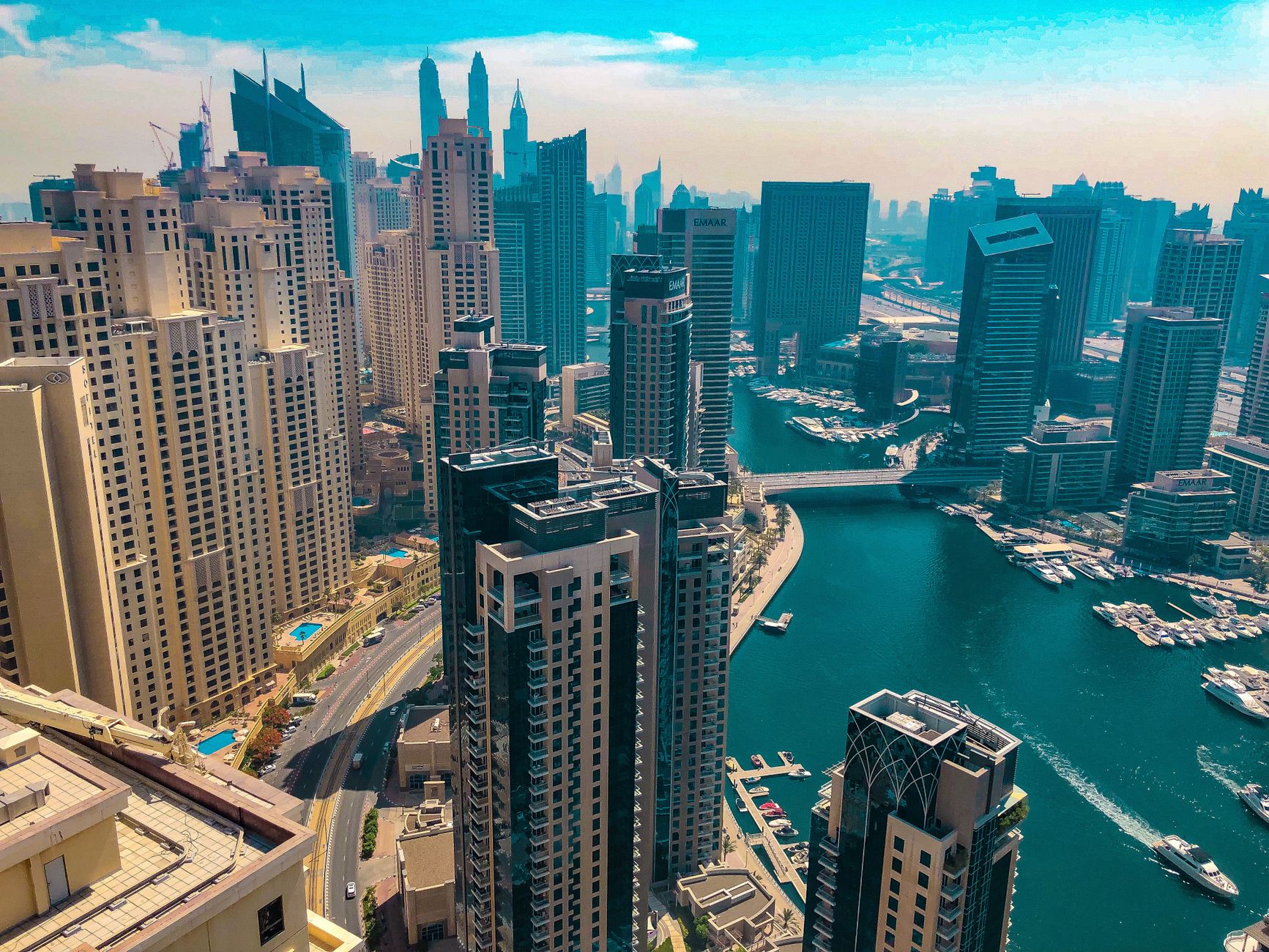
UAE’s property sector faces reckoning after Iran strikes
Estimated reading time: 7 minutes
Key Takeaways
- The Iranian missile strikes triggered a 5% equity dip for top developers and widened bond spreads, marking the first major stress test for the UAE’s property boom.
- Offshore capital remains the engine of growth, but investor caution has caused a modest short‑term cooling in FDI flows.
- Rental yields in prime Dubai and Abu Dhabi districts stay robust (>5.5%), offering immediate cash‑flow upside for completed assets.
- Pricing discounts and more flexible developer terms create a limited‑time buying window for disciplined investors.
- Diversifying across asset classes, securing hedged financing, and maintaining liquidity buffers are essential risk‑mitigation steps.
- Partnering with David Moya Real Estate LLC provides strategic insight, negotiation power, and holistic portfolio stewardship.
Table of Contents
- Introduction
- What triggered the market correction?
- Core market drivers before the shock
- How capital flows have reacted
- Buyer sentiment: Caution meets opportunity
- Supply‑Demand dynamics post‑strike
- Investor Implications: Risks and Opportunities
- Forward‑looking outlook (2026‑2028)
- How David Moya Real Estate LLC adds value
- Frequently Asked Questions
- Call to Action
Introduction
The headline “UAE’s property sector faces reckoning after Iran strikes” has been echoing through boardrooms and investor lounges across the Gulf since the missile attacks of early March 2026. It captures a pivotal moment for anyone with capital earmarked for Dubai, Abu Dhabi, or the wider United Arab Emirates. For property investors, entrepreneurs, family offices, and international buyers, the shock to the region’s “safe‑haven” aura sharpens three inter‑related questions: how resilient is the UAE’s real‑estate engine, what new risks have emerged, and where do genuine opportunities lie amidst heightened volatility?
David Moya Real Estate LLC watches these dynamics closely. As a consultancy that advises investors on strategic acquisitions, portfolio thinking, and long‑term value, we view the current turbulence not as a panic trigger but as a data‑driven inflection point. Below is a premium market commentary that dissects the drivers behind the recent market move, evaluates capital flows and buyer sentiment, and translates the macro picture into actionable takeaways for sophisticated investors.
1. What triggered the market correction?
On March 3, 2026, Iranian missile strikes over the Gulf shattered the perception of the Emirates as a geopolitical safe haven. The immediate market reaction was unmistakable:
- Equities: Aldar Properties (Abu Dhabi’s largest listed developer) and Emaar Properties (the force behind Downtown Dubai and the Burj Khalifa) each slipped roughly 5% on the same day.
- Fixed Income: Bond yields for major developers rose sharply, reflecting a sudden increase in perceived credit risk.
The correction was not driven by a sudden oversupply or a domestic policy shift; it was a reflexive response to external security concerns that momentarily chilled offshore investor appetite. The UAE’s property boom, which has been fueled for over a decade by foreign capital, now faces its “first real test” as the Reuters brief notes.
2. Core market drivers before the shock
a. Offshore Capital Dependence
Since 2010, more than 60% of new‑development financing in Dubai and Abu Dhabi has originated from offshore sources—high‑net‑worth individuals, sovereign wealth funds, and family offices based in Europe, Asia, and North America. The capital inflow has underpinned record‑breaking construction cycles, ranging from ultra‑luxury towers in the Dubai Marina to mixed‑use precincts on Yas Island.
b. Demographic and Economic Tailwinds
- Population growth: The UAE’s resident population grew at 2.4% annually, bolstered by expatriate inflows attracted by a tax‑friendly regime and a lifestyle premium.
- Economic diversification: Non‑oil GDP contributed roughly 77% of total output in 2025, with tourism, finance, and technology driving demand for premium office, hospitality, and residential assets.
c. Supply‑Demand Imbalance
At the end of 2025, inventory levels in Dubai’s high‑end segment were still below the 4‑year “healthy” threshold, leaving vacancy rates in prime locations under 8%. Abu Dhabi’s luxury segment showed a similar scarcity, reinforcing upward pressure on rents and price per square foot.
3. How capital flows have reacted
Equity Markets – The 5% dip in Aldar and Emaar stocks signalled that institutional investors are re‑pricing risk rather than dumping shares outright. Trading volumes remained moderate, indicating a “wait‑and‑see” stance.
Bond Markets – Developer‑linked bonds saw yields rise by an average of 120 basis points within 48 hours of the strikes. This widening spread reflects higher required returns for lenders, but also creates a potential discount‑buying window for long‑term investors.
Foreign Direct Investment (FDI) – Preliminary data from the UAE Ministry of Economy shows a 3% month‑on‑month dip in new foreign real‑estate investment tickets for March 2026, the first decline in twelve consecutive months. The slowdown is modest, suggesting that while sentiment is bruised, the underlying demand pool remains intact.
4. Buyer sentiment: Caution meets opportunity
For family offices and high‑net‑worth individuals, the dominant sentiment is “cautious optimism.” Key observations:
- Risk Aversion: Buyers are demanding more detailed risk assessments, especially around geopolitical exposure and currency hedging.
- Negotiation Leverage: Developers facing tighter financing terms are more willing to negotiate price concessions, extended payment schedules, or additional fit‑out allowances.
- Strategic Shifts: Some investors are pivoting from speculative “off‑plan” purchases toward completed, income‑generating assets that can provide cash flow stability during uncertain periods.
5. Supply‑Demand dynamics post‑strike
Supply Side – Construction pipelines remain robust. The Dubai Land Department reported that as of February 2026, 2.7 million sq m of residential units were already under construction, a figure only marginally lower than the pre‑strike forecast. Abu Dhabi’s “Al Maryah Island” mixed‑use project is proceeding on schedule.
Demand Side – While luxury buyer traffic has softened slightly, the rental market for premium apartments continues to tighten. Net rental yields for Grade A assets in Dubai’s Business Bay have held above 5.8% YoY, still attracting yield‑focused investors.
6. Investor Implications: Risks and Opportunities
| Risk Category | What It Means | Mitigation |
|---|---|---|
| Geopolitical volatility | Sudden security events can trigger capital flight and widen financing spreads. | Diversify across asset classes and consider hedged currency structures. |
| Financing cost spikes | Bond yields for developers have risen, potentially inflating project costs. | Negotiate developer financing terms early; explore “green” financing. |
| Liquidity compression | Short‑term trader appetite may wane, reducing secondary‑market depth. | Focus on primary‑market purchases or direct developer deals. |
| Regulatory adjustments | The UAE may tighten visa or ownership rules in response to security concerns. | Monitor Ministry of Interior guidance; work with an advisory that tracks policy shifts. |
Opportunities
- Discounted acquisitions – equity pull‑back and widened bond spreads create pricing gaps for long‑term upside.
- Strategic land parcels – developers releasing “reserve” land at below‑market rates.
- Yield enhancement – strong rental yields in core districts allow immediate cash flow.
- Portfolio diversification – adding UAE assets can hedge against Western market headwinds.
7. Forward‑looking outlook (2026‑2028)
Scenario 1 – Stabilization
If regional diplomatic channels reduce tension within the next 12 months, investor confidence could rebound quickly. The market would likely resume pre‑strike growth, with price appreciation returning to 6‑8% annually for premium segments.
Scenario 2 – Prolonged Uncertainty
Should security concerns linger, financing costs may stay elevated and foreign inflows could flatten. Prices would move sideways, with rental yields becoming the primary driver of returns.
Strategic Guidance – Maintain a disciplined, portfolio‑centric approach: prioritize cash‑flow‑positive assets, keep a 12‑18 month liquidity buffer, and leverage local advisory expertise.
8. How David Moya Real Estate LLC adds value
David Moya Real Estate LLC is not a conventional brokerage. We are a full‑service UAE property advisory that partners with investors, entrepreneurs, family offices, and international buyers to craft and execute strategic, long‑term real‑estate plans.
Key capabilities
- Market Guidance & Macro Analysis – Continuous monitoring of geopolitical developments, capital‑flow trends, and policy shifts.
- Investment Strategy Development – Tailored strategies aligned with risk tolerance, horizon, and return objectives.
- Location Selection & Asset Shortlisting – Curated opportunities across Dubai, Abu Dhabi, Sharjah, and Ras Al Khaimah.
- Transaction Support & Negotiation – Securing price concessions, extended schedules, and risk‑mitigation clauses.
- Risk Awareness & Mitigation – Rigorous due‑diligence reviews delivering transparent risk profiles.
- Long‑Term Portfolio Planning – Diversification, liquidity planning, and exit‑strategy alignment.
Tangible outcomes for our clients
- Better market understanding through concise briefing packs.
- Clearer decision‑making via strategic asset mapping.
- Improved property selection based on data‑driven fundamentals.
- Stronger risk evaluation with structured risk matrices.
- Smoother purchasing processes that shorten time‑to‑close.
- More confident market entry with bilingual, culturally‑savvy support.
9. Frequently Asked Questions
Q1: Are property prices expected to fall further after the recent dip?
A: The 5% equity correction reflects a pricing adjustment to heightened risk perception. Physical asset prices have shown only modest softening, primarily in off‑plan units. Completed premium assets retain strong demand, limiting any deep price decline in the near term.
Q2: How does the increase in developer bond yields affect my investment?
A: Higher yields raise developers’ cost of capital, potentially slowing new project launches. For investors, this creates an opportunity to acquire assets at a discount or negotiate better financing terms directly with developers.
Q3: Is it safe for foreign investors to hold UAE property amid geopolitical tension?
A: The UAE government maintains robust security and regulatory frameworks. While short‑term sentiment may fluctuate, the underlying economic fundamentals—population growth, diversified GDP, and attractive yields—remain solid for long‑term holders.
Q4: What role does currency risk play for international buyers?
A: The UAE dirham is pegged to the US dollar, offering currency stability for dollar‑denominated investors. For other currencies, hedging strategies can mitigate exchange‑rate exposure, especially when financing is sourced abroad.
Q5: How can David Moya Real Estate LLC help me negotiate better terms?
A: Our local network gives us direct lines to developers who are currently more open to concessions due to tighter financing markets. We leverage this access, together with market data on comparable transactions, to secure price reductions, extended payment schedules, or value‑add incentives.
10. Call to Action
The UAE’s property sector is at a crossroads, and the window for strategic, value‑creating acquisitions is now open. If you are ready to navigate the post‑strike landscape with a partner that blends rigorous market analysis with hands‑on transaction expertise, contact David Moya Real Estate LLC today.
Phone: +971 4 123 4567
Email: info@davidmoya.com
Let us help you turn today’s market reckoning into tomorrow’s portfolio advantage.
Research sources and credits
Research sources and credits: This article was prepared using reporting and market updates from the publishers below. Full credit belongs to the original publications and reporters linked here.
- UAE’s property sector faces reckoning after Iran strikes
Credit: Web
Exclusive news, data and analytics for financial market professionals Learn more about Refinitiv. ## Browse World. ## Browse Business. Image 1: A general view of the Dubai Marina, amid the U.S.-Israeli conflict with Iran, in Dubai. A general view of the Dubai Marina, amid the U.S.-Israeli conflict with Iran, in Dubai, United Arab Emirates, March 3, 2026. DUBAI, March 5 (Reuters) – The UAE’s years-long property boom faces its first real test after Iranian missile strikes shattered the Gulf’s safe-haven aura, rattling investors and exposing how heavily Dubai and Abu Dhabi rely on offshore money to sustain their building spree. The Reuters Iran Briefing newsletter keeps you informed with the latest developments and analysis of the Iran war. Aldar Properties (ALDAR.AD), opens new tab, Abu Dhabi’s largest listed developer, and Emaar Properties (EMAR.DU), opens new tab, the force behind downtown Dubai and the Burj Khalifa, both fell 5%, while bond prices of major developers dropped sharply. * About Reuters, opens new tab.
Next steps
If you want help evaluating projects, comparing returns, or building a UAE property strategy, contact David Moya Real Estate at +(971) 585893086 or info@davidmoya.org.