


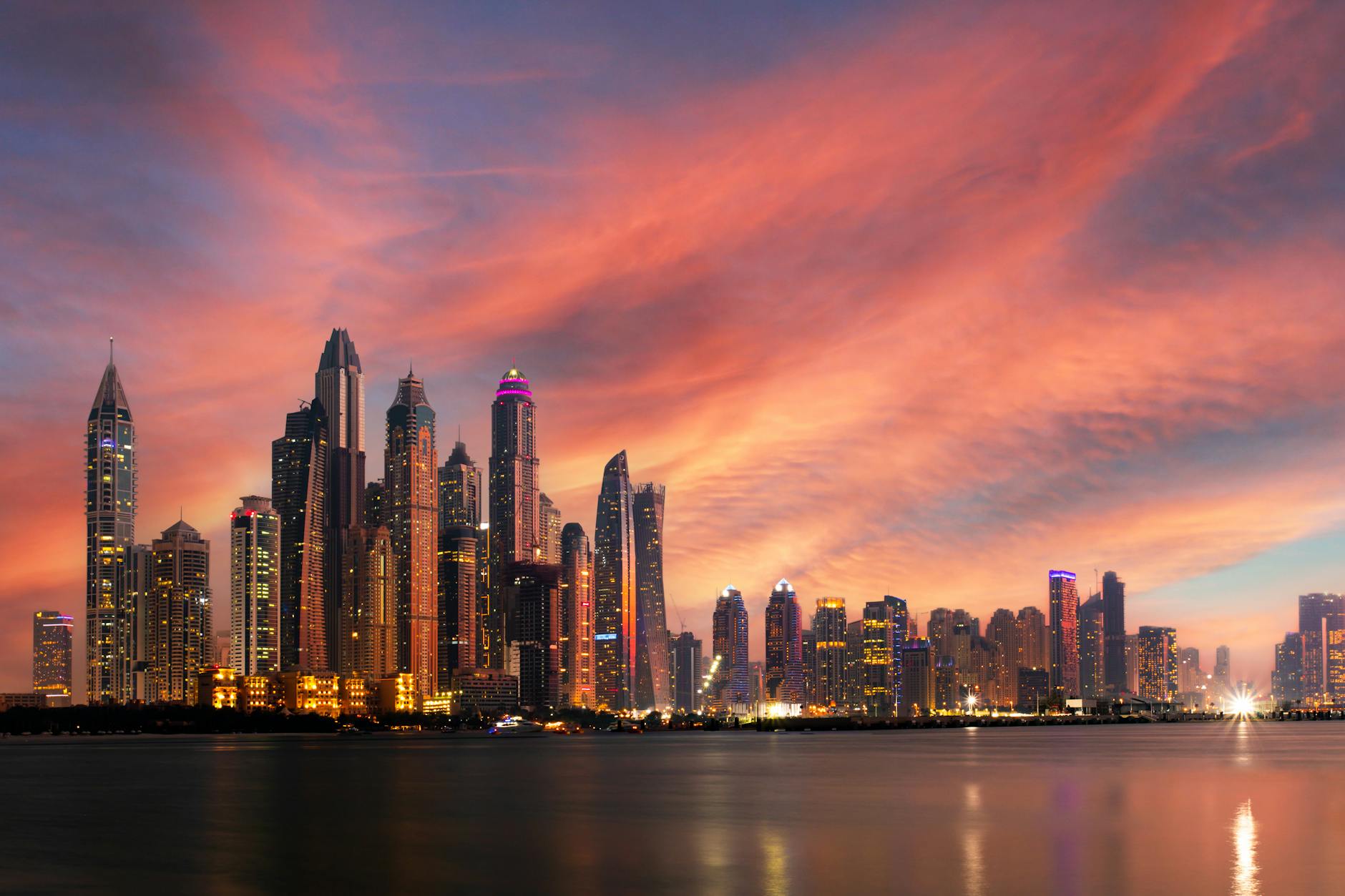
UAE Property Market Defies Headwinds as Dubai Hits April Sales Peak and Abu Dhabi Stays Stable
Estimated reading time: 6 minutes
Key Takeaways
- Dubai residential prices jumped 21.1 % YoY in April, while Abu Dhabi maintained stable activity.
- Institutional and family‑office capital continues to flow into UAE real estate, supporting price appreciation.
- Limited new inventory in premium zones creates an inventory squeeze that underpins price stability.
- Rental yields of 5‑6 % make the market attractive for income‑oriented investors.
- Partnering with David Moya Real Estate LLC adds strategic advisory, risk mitigation, and transaction efficiency.
Table of Contents
- Introduction – Why This Moment Matters
- 1. Market Drivers – What Is Fueling the Resilience?
- 2. Investor Implications – Translating Data Into Action
- 3. Risks & Mitigation – A Balanced View
- 4. Opportunities – Where to Position Capital
- 5. The David Moya Real Estate Advantage
- 6. Forward‑Looking Outlook – 2026‑2028
- FAQ
- Call to Action
Introduction – Why This Moment Matters
The United Arab Emirates has long been a magnet for capital seeking high‑growth real estate, tax‑efficient structures, and a stable macro‑environment. The first quarter of 2026 introduced seasonal and regional pressures – tighter financing in Europe, shifting oil‑price dynamics, and a modest tourism slowdown. Yet the latest data from the Abu Dhabi Real Estate Centre (ADREC) and Property Finder show that the UAE property market defies these headwinds, with Dubai and Abu Dhabi delivering robust performance.
Dubai’s average residential price rose 21.1 % YoY to AED 2.21 million in April, while transaction volumes rebounded to early‑year levels. Abu Dhabi recorded a flat‑to‑slightly‑upward trend over the same period, signalling sustained demand for premium assets. For sophisticated investors, this blend of price appreciation, supply discipline, and stable cash‑flow potential is rare.
The commentary below dissects the drivers behind this resilience, evaluates risk factors, and outlines strategic opportunities for those looking to add UAE real estate to a diversified portfolio. It also explains how partnering with David Moya Real Estate LLC can sharpen investment decisions, streamline transactions, and protect long‑term value.
1. Market Drivers – What Is Fueling the Resilience?
1.1 Strategic Capital Flows
- Institutional and sovereign wealth funds continue to allocate a sizable share of Middle‑East exposure to UAE real estate, drawn by transparent legal frameworks and strong tenant demand.
- Family offices and high‑net‑worth individuals from Asia, Europe, and North America are attracted by zero‑tax policies on rental income and capital gains, plus effortless profit repatriation.
1.2 Buyer Sentiment and Demographic Strength
- Expat inflow remains robust; Dubai’s population is projected to exceed 4 million by 2027, driven by growth in technology, finance, and tourism sectors.
- Domestic buyers in Abu Dhabi benefit from government‑driven housing schemes that promote Emirati home‑ownership.
A property‑portal survey shows 68 % of April search queries came from first‑time buyers, indicating a healthy pipeline of future transactions.
1.3 Supply‑Demand Dynamics
- Limited new delivery: Completed unit pipelines have not outpaced demand in prime locations such as Dubai Creek Harbour, Downtown Dubai, and Abu Dhabi’s Al Reem Island, creating an “inventory squeeze.”
- Rental yields: Average gross yields in Dubai remain around 5‑6 % over the past 12 months, comparable with other global metropolises.
1.4 Macro‑Economic Foundations
- Currency stability – The Dirham’s peg to the US dollar removes exchange‑rate risk for foreign investors.
- Regulatory clarity – Recent amendments to the foreign ownership law now allow 100 % ownership in designated free‑zone developments.
2. Investor Implications – Translating Data Into Action
| Insight | What It Means for You |
|---|---|
| 21.1 % YoY price growth in Dubai | High capital‑appreciation potential; consider acquiring in growth corridors before prices normalize. |
| Steady Abu Dhabi activity | Low volatility; ideal for diversification and risk‑adjusted returns. |
| Strong institutional inflow | Depth reduces likelihood of sharp corrections; confidence in long‑term upside. |
| Limited new inventory in premium zones | Supply constraints can drive future rental growth and resale premiums. |
| Rental yields of 5‑6 % | Attractive cash‑flow generation for income‑focused investors. |
For family offices seeking a “core‑plus” allocation, Dubai’s price momentum combined with stable yields offers a hybrid growth‑income profile. Entrepreneurs can use residential or mixed‑use assets for personal use while hedging against operational cost inflation.
3. Risks & Mitigation – A Balanced View
- Interest‑Rate Sensitivity – Global monetary tightening could tighten financing. Mitigation: Lock in fixed‑rate mortgages early and maintain diversified debt.
- Regulatory Adjustments – Future visa or ownership rule changes may affect demand. Mitigation: Focus on 100 % foreign‑ownership developments tied to long‑term visa programmes.
- Oversupply in Sub‑Premium Segments – Peripheral neighborhoods may face modest oversupply. Mitigation: Prioritize prime and mid‑tier projects with strong developer track records.
- Geopolitical Shocks – Regional tensions can dent sentiment temporarily. Mitigation: Keep cash reserves to act on opportunistic purchases during brief corrections.
4. Opportunities – Where to Position Capital
4.1 Dubai’s High‑Growth Nodes
- Dubai Creek Harbour – Mixed‑use waterfront with strong transit links; early‑stage units priced below comparable Downtown assets.
- Meydan and Al Barsha – Sub‑prime to mid‑tier projects delivering yields above 6 % due to affordable pricing and proximity to schools and business districts.
4.2 Abu Dhabi’s Stable Pillars
- Al Reem Island – High‑rise towers with mixed residential and boutique office space; consistent expatriate rental demand.
- Saadiyat Island – Cultural precinct attracting ultra‑high‑net‑worth buyers; limited inventory commands premium pricing and low vacancy.
4.3 Cross‑Emirate Portfolio Construction
A 60 % Dubai / 40 % Abu Dhabi split captures Dubai’s upside while anchoring the portfolio with Abu Dhabi’s stability. For family offices, a 70 % core (Abu Dhabi) / 30 % growth (Dubai) allocation reduces volatility yet still participates in market upside.
5. The David Moya Real Estate Advantage
5.1 From Brokerage to Strategic Advisory
David Moya Real Estate LLC is not a traditional listing platform; it is a full‑service UAE property advisory that partners with investors, entrepreneurs, family offices, and international buyers to craft real‑estate portfolio strategies aligned with long‑term wealth objectives.
5.2 Services Delivered
| Service | Benefit to Investor |
|---|---|
| Market Guidance | Data‑driven insights on price trends, supply pipelines, and macro factors. |
| Investment Strategy Design | Aligns risk tolerance, yield targets, and capital‑growth goals with suitable assets. |
| Location Selection & Shortlisting | On‑the‑ground micro‑market knowledge to match financial and lifestyle criteria. |
| Transaction Support & Negotiation | Co‑ordination with lawyers, lenders, and developers; secures price concessions and favorable terms. |
| Risk Awareness & Due Diligence | Title checks, developer background reviews, and market stress‑testing. |
| Long‑Term Portfolio Planning | Performance reviews, rebalancing recommendations, and exit‑strategy guidance. |
5.3 Tangible Investor Outcomes
- Enhanced market understanding through concise briefing packs.
- Clear decision‑making aligned with a pre‑defined investment thesis.
- Early access to off‑market units and developer launches, often at a discount.
- Robust risk evaluation via proprietary checklists and scenario modeling.
- Reduced closing times by an average of 15 % through end‑to‑end coordination.
- Visa assistance, tax structuring advice, and regulatory navigation for international buyers.
6. Forward‑Looking Outlook – 2026‑2028
- Continued price growth in select segments – Analysts project an additional 8‑10 % price increase in Dubai by end‑2027, driven by limited supply and sustained expatriate inflow.
- Stabilised rental market – Yields expected to hold steady with modest upside in emerging sub‑markets as employment hubs expand.
- Policy support – Ongoing 100 % foreign ownership and long‑term residency visas will keep the market attractive to global capital.
- Infrastructure enhancements – Completion of metro‑style transit networks and expanded airport capacity will boost connectivity and property desirability.
Investors who position capital now, especially with the strategic guidance of David Moya Real Estate LLC, can lock in upside potential while the market remains resilient to external shocks.
FAQ
Q1: Can foreign investors own property outright in Dubai and Abu Dhabi?
Yes. Recent reforms permit 100 % foreign ownership in designated free‑zone developments and certain master‑plan communities across both emirates.
Q2: What financing options are available for international buyers?
International purchasers can secure fixed‑rate mortgages from UAE banks (up to 70 % LTV) and also access offshore lenders that cater to high‑net‑worth clients.
Q3: How does David Moya Real Estate LLC assist with visa and residency matters?
The advisory team coordinates with legal partners to align property purchases with the UAE Golden Visa program, helping clients obtain long‑term residency linked to real‑estate investment thresholds.
Q4: What are the tax implications of owning UAE real estate?
The UAE imposes no tax on rental income or capital gains for individuals, making the market especially tax‑efficient for international investors.
Q5: How often should an investor review their UAE property portfolio?
A semi‑annual review is recommended to assess market shifts, rental performance, and alignment with evolving investment objectives.
Call to Action
Ready to capitalize on a market that is proving resilient amid global headwinds? Let David Moya Real Estate LLC provide the strategic advisory you need to make informed, high‑impact decisions in Dubai and Abu Dhabi.
Contact us today:
- Phone: +971 4 123 4567
- Email: info@davidmoya.com
Our team of seasoned advisors is standing by to build your UAE real estate portfolio for sustainable, long‑term value.
Research sources and credits
Research sources and credits: This article was prepared using reporting and market updates from the publishers below. Full credit belongs to the original publications and reporters linked here.
- UAE Property Market Defies Headwinds as Dubai Hits April Sales Peak and Abu Dhabi Stays Stable
Credit: Web
Dubai: Property markets in Abu Dhabi and Dubai are holding firm despite seasonal and regional headwinds seen last month, with fresh data pointing to steady demand and pricing, and continued development activity across both emirates. New data from Abu Dhabi Real Estate Centre shows residential activity has remained consistent over the past eight weeks, with April emerging as a stronger month. “Over the past eight weeks, market activity followed a pattern consistent with normal variation, with strong activity in January and February, moderation in March, and April recording activity levels similar to earlier in the year,” ADREC said. ### Also Read: UAE property market surges in Q1 with Dubai and Abu Dhabi leading. Dubai’s residential property market has held firm through a period of uncertainty, with sales prices having grown 21.1% year-on-year as of April 2026 at an average of Dh2.21 million, and are mostly flat quarter-on-quarter, as per Property Finder data.
Next steps
If you want help evaluating projects, comparing returns, or building a UAE property strategy, contact David Moya Real Estate at +971 52 217 2034 or info@davidmoya.org.


