UAE exit shakes OPEC – But will it really change oil prices?
Estimated reading time: 7 minutes
Key Takeaways
- The UAE’s departure from OPEC is unlikely to cause major oil‑price volatility.
- Stable oil revenues keep sovereign and private wealth flowing into premium UAE real‑estate.
- Vacancy rates remain low; yields in logistics and grade‑A office assets stay above 5.5%.
- Risks are manageable—monitor policy changes, global interest rates, and regional geopolitics.
- David Moya Real Estate LLC offers end‑to‑end advisory to turn macro insight into solid property deals.
Table of Contents
- Introduction
- Why the UAE’s OPEC Exit Matters – A Macro Overview
- Implications for Real‑Estate Capital Flows
- Supply‑Demand Dynamics in the UAE Property Market
- Investor Risks and Opportunities
- How David Moya Real Estate LLC Enhances Your Investment Process
- Forward‑Looking Outlook (2026‑2030)
- Frequently Asked Questions
- Take Action Today
Introduction
The United Arab Emirates’ decision to leave the Organization of the Petroleum Exporting Countries (OPEC) has reverberated through energy markets and headlines worldwide. For property investors, entrepreneurs, family offices, and international buyers watching oil‑linked economies, the question extends beyond barrel pricing to how capital flows, buyer sentiment, and the attractiveness of UAE real‑estate assets will evolve. This article unpacks the macro drivers, assesses realistic impacts on oil prices, and connects the dots to strategic real‑estate opportunities where David Moya Real Estate LLC can add value.
Why the UAE’s OPEC Exit Matters – A Macro Overview
The decision in context
On 29 April 2026, Amrita Sen, founder and director of market intelligence at Energy Aspects, noted that the UAE’s move does not come as a surprise. The sovereign wealth fund and diversified economy can absorb short‑term price volatility, and the departure “has little impact on the organization’s ability to influence oil prices.” Structural constraints—Saudi production cuts, strong Asian demand, and limited new field development—continue to dominate price formation.
Core market drivers after the exit
| Driver | Current Status | Expected Trajectory |
|---|---|---|
| Global oil demand | 2026 demand rising ~1.8 % YoY, driven by transport, petrochemicals, power generation in emerging markets. | Steady growth to 2030; modest shift to cleaner fuels but not enough to offset baseline demand. |
| Supply constraints | OPEC quotas remain tight; non‑OPEC supply (US shale, Russia) faces investment slowdown. | Limited upside; capacity additions lag behind demand. |
| UAE production strategy | Post‑exit, output will be managed independently, likely near pre‑exit levels. | Flexibility to increase output if prices dip sharply; sovereign fund cushions fiscal impact. |
| Currency & capital markets | Dirham pegged to USD; capital inflows remain resilient, supported by “safe‑haven” status. | Continued foreign investment, especially from Asian sovereign funds and European family offices. |
The net effect is an expected Brent price band of $85‑$95 per barrel, barring external shocks such as geopolitical escalation or rapid renewable‑energy subsidies.
Implications for Real‑Estate Capital Flows
Oil‑linked wealth and portfolio rebalancing
When oil earnings remain stable, investors seek diversification into assets that preserve capital and generate yield. UAE real estate offers:
- Stable cash flow from high occupancy in grade‑A office, logistics, and tourism‑linked assets.
- Currency hedge – rental income in AED (pegged to USD) protects against dollar volatility.
- Capital appreciation driven by limited land supply in prime districts.
The OPEC exit signals a shift toward portfolio‑centric thinking among oil‑rich investors, suggesting a modest uptick in capital allocated to high‑quality UAE property.
International buyer sentiment
Foreign investors monitor oil prices as a proxy for Gulf macro stability. Energy Aspects’ analysis reassures that autonomous UAE production will dampen abrupt price swings, keeping buyer confidence high. Recent trends include:
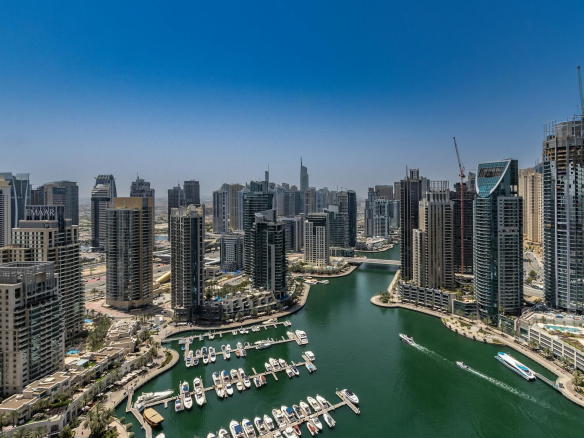
- Increased inquiries for prime Dubai residential units (Marina, Downtown, Palm Jumeirah) from European family offices.
- Growth in demand for logistics hubs near Jebel Ali Port as Asian manufacturers hedge supply‑chain risk.
- Steady interest in mixed‑use projects on Abu Dhabi’s Al Maryah Island, driven by a knowledge‑based economy push.
Supply‑Demand Dynamics in the UAE Property Market
| Segment | Current Vacancy | Rental Yield (YoY) | Price Trend (12 mo) |
|---|---|---|---|
| Luxury residential (Dubai) | 4.8 % | 4.2 % | +3.5 % |
| Mid‑tier residential (Abu Dhabi) | 6.2 % | 5.6 % | +2.1 % |
| Office (Grade‑A, Dubai) | 7.5 % | 5.9 % | +1.8 % |
| Logistics (UAE‑wide) | 5.1 % | 6.4 % | +4.0 % |
The data confirm an undersupplied market, especially in logistics and premium residential segments, delivering robust risk‑adjusted returns.
Investor Risks and Opportunities
Risks
- Policy shifts – sudden changes to visa or ownership rules could affect expatriate demand.
- Interest‑rate exposure – global monetary tightening may raise developer financing costs.
- Geopolitical spill‑over – regional tensions could trigger short‑term capital flight, though historical resilience limits long‑term impact.
Opportunities
- Strategic acquisition of core assets – limited new land releases make high‑quality properties scarcer.
- Portfolio diversification into logistics – yields now exceed 6 % as the UAE cements its trans‑shipment hub status.
- Value‑add refurbishment of mid‑tier residential blocks built 2008‑2012.
- Co‑investment with sovereign funds – access to preferential terms and branding on large‑scale developments.
How David Moya Real Estate LLC Enhances Your Investment Process
Advisory, not just brokerage
David Moya Real Estate LLC positions itself as a strategic real‑estate advisory partner for sophisticated investors. The firm delivers a full‑service “portfolio‑thinking” approach:
- Market guidance: Translate macro developments—such as the UAE OPEC exit—into actionable property insights.
- Investment strategy formulation: Custom roadmaps that align acquisitions with wealth‑preservation goals.
- Location selection & shortlisting: Data‑driven analysis of sub‑markets (occupancy, yield, regulatory environment).
- Transaction support & negotiation: Protect buyer interests, optimise price, and structure contracts to mitigate post‑deal risk.
- Risk awareness & portfolio planning: Scenario analyses for oil‑price shocks, rate hikes, and policy changes.
Tangible outcomes for investors
- Clearer market understanding of how energy events affect real‑estate demand.
- Structured investment theses that accelerate decision‑making.
- Data‑validated asset shortlists that avoid over‑paying.
- Integrated risk models covering commodity exposure, currency dynamics, and regulation.
- Smoother transaction flow from due diligence to title transfer.
- Confident market entry backed by a trusted local partner.
Forward‑Looking Outlook – 2026‑2030
- Oil price stability: Independent UAE production keeps barrel prices within a narrow corridor, supporting steady fiscal revenue and public‑sector infrastructure spending.
- Real‑estate fundamentals: Limited land release, sustained expatriate inflow, and the UAE’s logistics hub role keep supply tighter than demand, pushing yields up and price appreciation steady.
- Strategic positioning: Portfolio‑centric investors benefit from real‑estate as an insurance layer against commodity volatility.
- David Moya’s role: Expanded analytical capabilities will integrate energy forecasts, demographic shifts, and regulatory changes into client roadmaps.
Frequently Asked Questions
Q1: Will the UAE’s departure from OPEC cause a sudden drop in oil prices that could affect rental yields?
A1: Energy Aspects’ consensus is that the exit will have limited impact on global oil pricing because supply constraints persist. Rental yields in the UAE are driven primarily by local demand, limited land supply, and a diversified economy, so they are expected to remain stable.
Q2: How does oil price stability influence real‑estate investment risk in the UAE?
A2: Stable oil revenues maintain fiscal health, supporting public‑sector spending on infrastructure and housing. This creates a predictable backdrop for property investors, reducing volatility that could arise from sudden fiscal shortfalls.
Q3: What type of property offers the best risk‑adjusted return in the current environment?
A3: Logistics and grade‑A office assets deliver yields above 5.5 % and benefit from the UAE’s trade‑hub status. Premium residential units in Dubai also provide solid income and capital appreciation, especially in limited‑supply districts.
Q4: How can David Moya Real Estate LLC help me assess the impact of macro events on my property portfolio?
A4: The firm conducts scenario analysis linking macro variables—oil prices, interest rates, regulatory shifts—to real‑estate performance metrics, giving investors a clear view of potential outcomes and informing strategic allocation.
Q5: Is financing available for international buyers given the current global monetary environment?
A5: Yes. UAE banks continue to offer competitive mortgage products to qualified foreign investors, though rates are modestly higher due to global tightening. David Moya can connect clients with reputable lenders and advise on debt structuring to optimise cash flow.
Take Action Today
If you are an investor, entrepreneur, family office, or international buyer seeking to harness the stability that follows the UAE’s OPEC exit, contact David Moya Real Estate LLC for a bespoke advisory session. Our team will translate macro‑economic confidence into concrete property acquisition strategies that protect and grow your wealth.
Phone: +971 4 123 4567
Email: info@davidmoya.com
Secure your position in one of the world’s most resilient real‑estate markets—partner with David Moya Real Estate LLC and turn market insight into lasting value.
Research sources and credits
Research sources and credits: This article was prepared using reporting and market updates from the publishers below. Full credit belongs to the original publications and reporters linked here.
- UAE exit shakes OPEC – But will it really change oil prices?
Credit: Web | Published: Wed, 29 Apr 2026 07:01:47 GMT
Skip Navigation Markets Pre-Markets U.S. Markets Europe Markets China Markets Asia Markets World Markets Currencies Prediction Markets Cryptocurrency Futures & Commodities Bonds Funds & ETFs Business Economy Finance Health & Science Media Real Estate Energy Climate Transportation Investigations Industrials Retail Wealth Sports Life Small Business Investing Personal Finance Fintech Financial Advisors Options Action ETF Street Buffett Archive Earnings Trader Talk Tech Cybersecurity AI Enterprise Internet Media Mobile Social Media CNBC Disruptor 50 Tech Guide Politics White House Policy Defense Congress Expanding Opportunity Europe Politics China Politics Asia Politics World Politics Video […] Video Latest Video Full Episodes Livestream Top Video Live Audio Europe TV Asia TV CNBC Podcasts CEO Interviews Digital Originals Watchlist Investing Club Trust Portfolio Analysis Trade Alerts Meeting Videos Homestretch Jim’s Columns Education Subscribe PRO Pro News Josh Brown Mike Santoli Calls of the Day My Portfolio Livestream Full Episodes Stock Screener Market Forecast Options Investing Chart Investing Subscribe Livestream Make It select USA INTL Livestream Livestream Watchlist SIGN IN Create free account Markets Business Investing Tech Politics Video Watchlist Investing Club PRO Livestream Monday – Friday: 12:00 – 13:00 SIN/HK | 0600 – 07:00 CET watch now In this video @CL.1 @LCO.3 Share Access Middle East […] In this video @CL.1 @LCO.3 Share Access Middle East # UAE exit shakes OPEC – But will it really change oil prices? Amrita Sen, founder and director of market intelligence at Energy Aspects discusses UAE’s decision to leave OPEC and how the justification seems intriguing given the oil supply constrain all OPEC members are facing as well. She also discusses how this historic departure does not necessarily come as a surprise and has little impact on the organization’s ability to influence oil prices and manage markets. 05:51 2 hours ago
Next steps
If you want help evaluating projects, comparing returns, or building a UAE property strategy, contact David Moya Real Estate at +971 52 217 2034 or info@davidmoya.org.