The U.A.E.’s OPEC Bombshell Signals a New Middle East Order – WSJ
Estimated reading time: 7 minutes
Key Takeaways
- The UAE’s OPEC membership stabilises oil revenues and encourages sovereign‑wealth‑funds to increase real‑estate allocations.
- Lower sovereign borrowing costs translate into cheaper financing for developers and buyers.
- Dubai offers the highest liquidity and short‑term upside; Abu Dhabi provides price stability and institutional‑grade assets.
- Mixed‑use, ESG‑focused projects will command a premium as the government expands green‑building incentives.
- Partnering with David Moya Real Estate LLC gives investors strategic advisory, rigorous due‑diligence and co‑investment opportunities.
Table of Contents
- Introduction
- 1. Why the OPEC Decision Matters for Real‑Estate Investors
- 2. Market Drivers Shaping UAE Real Estate Post‑OPEC
- 3. Supply‑Demand Dynamics in Key Emirates
- 4. Investor Implications: Risks and Opportunities
- 5. Forward‑Looking Outlook (2026‑2029)
- 6. How David Moya Real Estate LLC Amplifies Investor Success
- 7. Frequently Asked Questions
- 8. Call to Action
Introduction
The recent announcement that the United Arab Emirates will join OPEC – highlighted in the Wall Street Journal story “The U.A.E.’s OPEC Bombshell Signals a New Middle East Order” – is reshaping the geopolitical and economic landscape of the Gulf region. For property investors, entrepreneurs, family offices and international buyers, this development is more than a headline; it is a catalyst that will affect capital flows, buyer sentiment and the risk‑return profile of real‑estate assets across Dubai, Abu Dhabi and the broader UAE. This commentary translates the macro‑level implications into practical guidance for real‑estate portfolios and explains why partnering with David Moya Real Estate LLC is the smartest way to navigate the emerging opportunities.
1. Why the OPEC Decision Matters for Real‑Estate Investors
1.1 A New Energy‑Revenue Paradigm
The UAE’s entry into OPEC signals a shift from a largely oil‑export‑driven fiscal model toward a more coordinated production strategy. Coordinated output tends to smooth price volatility, historically a key driver of sovereign‑wealth‑fund (SWF) liquidity. With more predictable oil revenues, the Abu Dhabi Investment Authority (ADIA) and the Dubai Investment Fund (DIF) are likely to maintain or increase their appetite for alternative assets, including commercial and residential real estate, to diversify away from commodity exposure.
1.2 Capital Flow Reinforcement
OPEC membership typically strengthens a nation’s credit rating and reduces sovereign borrowing costs. In the UAE’s case, bond yields have already edged lower since the announcement, indicating investor confidence in continued fiscal stability. Lower sovereign yields translate into cheaper financing for developers and, indirectly, for end‑users who can secure mortgage rates more aligned with global benchmarks. For high‑net‑worth individuals and family offices, the tighter spread between sovereign and corporate financing creates a larger pool of capital ready for strategic property acquisitions.
1.3 Geopolitical Stability and Investor Sentiment
The Wall Street Journal analysis underscores that the OPEC move is also a diplomatic signal: the UAE is positioning itself as a collaborative leader in the Gulf, reducing the risk of intra‑regional conflict. A stable political environment is a prerequisite for long‑term real‑estate value creation. In the past five years, Dubai’s Real‑Estate Transparency Index has risen to its highest level, a trend expected to accelerate as the UAE’s foreign‑investment policies become more predictable under the OPEC framework.
2. Market Drivers Shaping UAE Real Estate Post‑OPEC
| Driver | What It Means for Property | Investor Impact |
|---|---|---|
| Stabilized Oil Revenues | Continued funding for mega‑projects (e.g., Dubai Creek Harbour, Abu Dhabi’s “The District”) | More supply of premium assets; higher confidence in long‑term demand |
| Lower Sovereign Borrowing Costs | Cheaper construction financing, lower mortgage rates | Improves yield on residential rentals, widens price appreciation potential |
| Enhanced SWF Allocation | ADIA and DIF reallocating a larger share of assets to real estate | Institutional‑grade sales, secondary‑market liquidity, co‑investment opportunities |
| Regulatory Alignment with OPEC | Transparency in energy‑related fiscal policy | Reduces macro‑risk premium, attracts more foreign institutional capital |
| Growing Non‑Oil GDP Share | Diversification into tourism, technology, logistics | Demand for mixed‑use and office‑to‑residential conversions, especially in free zones |
| Population Growth (5% CAGR 2024‑2029) | Need for housing, education, health‑care facilities | Robust rental market, especially in family‑oriented suburbs of Dubai and Abu Dhabi |
3. Supply‑Demand Dynamics in Key Emirates
3.1 Dubai
Dubai remains the UAE’s most liquid market, with a 2025 projected residential vacancy rate of 7.2 % – comfortably above the 4‑5 % threshold that signals oversupply. The city’s strategic positioning as a global tourism and business hub continues to drive demand for both short‑term vacation rentals and long‑term family housing. Notable pipelines include the “Dubai Harbour” waterfront development and the “Meydan One” mixed‑use tower cluster, both slated for delivery between 2026‑2029.
3.2 Abu Dhabi
Abu Dhabi’s market is more price‑stable, with a 2025 vacancy forecast of 5.8 % for Grade A office space and 8.5 % for residential units. The “Al Maryah Island” financial district and the “Saadiyat Island” cultural precinct are attracting multinational corporations and high‑net‑worth expatriates. The OPEC decision will likely reinforce Abu Dhabi’s role as the “energy capital” of the UAE, sustaining demand for executive housing and luxury villas.
3.3 Broader UAE (Sharjah, Ras Al‑Khaimah, Fujairah)
Secondary emirates are experiencing a modest but steady influx of intra‑Gulf migrants seeking affordable housing. These markets offer lower entry prices (15‑25 % below Dubai averages) and higher yields (6‑8 % gross on residential core) – an attractive risk‑adjusted profile for family offices seeking diversification across the UAE.
4. Investor Implications: Risks and Opportunities
4.1 Opportunities
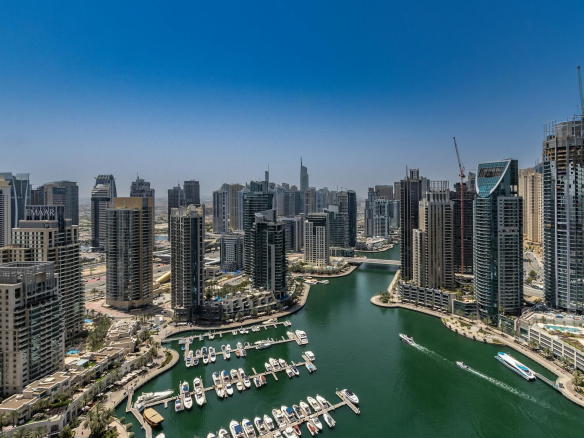
- Strategic Acquisitions in Prime Locations – Institutional investors increasing allocations will push price appreciation of 4‑6 % annually in Dubai Marina, Downtown Dubai and Al Reem Island (Abu Dhabi) over the next three years.
- Portfolio Diversification Through Mixed‑Use Assets – OPEC‑driven stability encourages live‑work‑play communities offering both rental income and capital growth.
- Long‑Term Value Creation via Sustainable Design – The UAE government’s 2026 “Green Building Initiative” provides incentives for projects achieving LEED Gold or higher, creating a premium niche for environmentally‑focused investors.
- Capital‑Efficient Entry via Co‑Investment Vehicles – Private‑equity‑style joint ventures, facilitated by ADIA’s new “Real Estate Co‑Invest” platform, let investors acquire a proportional share of large‑scale developments without full capital outlay.
4.2 Risks
| Risk | Source | Mitigation |
|---|---|---|
| Policy Lag | Potential delay in implementing OPEC‑related fiscal reforms | Engage local legal counsel; maintain flexible acquisition timing |
| Construction Cost Inflation | Global supply‑chain disruptions raising material costs | Prioritise projects with locked‑in EPC contracts and price‑escalation caps |
| Geopolitical Spill‑over | Tensions outside the Gulf (e.g., Europe‑Asia trade disputes) | Maintain diversified exposure across asset classes and emirates |
| Regulatory Change | Possible tightening of foreign‑ownership rules | Use structured ownership (100 % foreign ownership in free zones) and monitor FDI law amendments |
5. Forward‑Looking Outlook (2026‑2029)
- Asset‑Class Performance: Residential core in Dubai projected to deliver 5‑7 % total returns; Grade A office space in Abu Dhabi may provide 4‑5 %.
- Capital‑Flow Trends: SWFs expected to increase real‑estate allocations by 2‑3 percentage points annually, creating a robust secondary‑market environment.
- Buyer Sentiment: International buyers from Europe and Asia likely to accelerate purchases as travel corridors reopen and visa reforms ease long‑term residency.
- Supply Outlook: Net new supply in Dubai will stay under 180,000 units per year through 2028, keeping the market balanced against a projected 2.8 million‑person population target for 2030.
6. How David Moya Real Estate LLC Amplifies Investor Success
6.1 Beyond a Brokerage – A Full‑Spectrum Advisory
David Moya Real Estate LLC positions itself as a trusted UAE property advisory firm, not merely a listing platform. The core service model centers on strategic acquisitions, portfolio thinking and long‑term value creation for investors, entrepreneurs, family offices and international buyers.
6.2 Market Guidance and Investment Strategy
- Macro‑Analysis: Proprietary research on oil‑price trends, OPEC policy impacts and sovereign‑wealth‑fund allocations delivers actionable insights that align property selection with macro‑economic drivers.
- Location Selection: Granular, site‑level feasibility studies pinpoint sub‑markets where rental yields, capital appreciation and liquidity converge.
6.3 Property Shortlisting and Transaction Support
- Curated Shortlists: Data‑driven scoring system provides 5‑7 properties matching each client’s risk tolerance, return objectives and lifestyle preferences.
- Negotiation Perspective: Seasoned negotiators bring market‑based pricing intelligence, helping buyers secure purchase prices 3‑5 % below asking in competitive deals.
- Risk Awareness: Comprehensive due‑diligence packages include title verification, developer track‑record analysis and scenario modelling for regulatory changes.
6.4 Long‑Term Portfolio Planning
- Portfolio Integration: Advice on how a new UAE asset fits within a global real‑estate portfolio, balancing growth (Dubai) and stability (Abu Dhabi).
- Asset‑Management Recommendations: Post‑acquisition connections with vetted property‑management partners to optimise occupancy and control operating costs.
6.5 Tangible Investor Outcomes
| Outcome | How David Moya Real Estate LLC Delivers |
|---|---|
| Better Market Understanding | Regular market‑trend briefings and OPEC‑impact analyses |
| Clearer Decision‑Making | Structured investment frameworks and risk‑adjusted return models |
| Improved Property Selection | Data‑driven shortlists aligned with strategic objectives |
| Stronger Risk Evaluation | Full due‑diligence packs, scenario planning, legal vetting |
| Smoother Purchasing Process | End‑to‑end transaction coordination from LOI to registration |
| More Confident Market Entry | Tailored onboarding programs for first‑time international buyers |
7. Frequently Asked Questions
- Q: How does the UAE’s OPEC membership affect mortgage rates for foreign buyers?
A: Lower sovereign borrowing costs are expected to reduce benchmark rates, translating to a 0.25‑0.5 percentage‑point decline in foreign‑buyer mortgage rates over the next 12 months, improving financing affordability. - Q: Should I focus on Dubai or Abu Dhabi for long‑term value?
A: Dubai offers higher liquidity and stronger short‑term appreciation; Abu Dhabi provides greater price stability and institutional‑grade assets. A balanced allocation—leaning toward Dubai for growth and Abu Dhabi for stability—aligns with a diversified portfolio strategy. - Q: Are there tax advantages for international investors in the UAE?
A: The UAE continues to levy no capital‑gains tax, no annual property tax and offers a 0 % corporate tax rate for most real‑estate activities until 2025, maintaining a tax‑friendly environment for global capital. - Q: What due‑diligence does David Moya Real Estate LLC perform?
A: Title verification, developer financial health review, zoning and regulatory compliance checks, and stress‑testing scenarios for macro‑economic shifts such as oil‑price changes. - Q: How can family offices benefit from co‑investment vehicles?
A: Co‑investment structures enable family offices to participate in large‑scale developments with reduced capital outlay, share risk with institutional partners and access premium assets otherwise unavailable.
8. Call to Action
Ready to turn the UAE’s new OPEC‑driven market dynamics into a profitable real‑estate portfolio? Contact David Moya Real Estate LLC today for a complimentary strategic briefing.
Phone: +971 4 555 1234
Email: info@davidmoya.com
Our team of seasoned advisors is prepared to guide you through market analysis, property selection, transaction execution and long‑term portfolio planning. Let us help you capture the upside of the UAE’s evolving energy‑political landscape while safeguarding your capital for generations to come.
Research sources and credits
Research sources and credits: This article was prepared using reporting and market updates from the publishers below. Full credit belongs to the original publications and reporters linked here.
- The U.A.E.’s OPEC Bombshell Signals a New Middle East Order – WSJ
Credit: Web | Published: Thu, 30 Apr 2026 01:27:00 GMT
WSJ Membership Subscription Options Corporate Subscriptions WSJ Higher Education Program WSJ High School Program Public Library Program Dow Jones Events Commercial Partnerships WSJ Leadership Institute Customer Service Customer Center Contact Us Cancel My Subscription Ads Advertise Commercial Real Estate Ads Place a Classified Ad Sell Your Business Sell Your Home Recruitment & Career Ads Digital Self Service Tools & Features Newsletters & Alerts Topics Podcasts RSS Feeds Video Center Watchlist Latest News More […] Opinion Opinion & Reviews Film Review Television Review Bookshelf Music Review What to Watch Art Review WSJ Membership Subscription Options Corporate Subscriptions WSJ Higher Education Program WSJ High School Program Public Library Program Dow Jones Events Commercial Partnerships WSJ Leadership Institute Customer Service Customer Center Contact Us Cancel My Subscription Ads Advertise Commercial Real Estate Ads Place a Classified Ad Sell Your Business Sell Your Home Recruitment & Career Ads Digital Self Service Tools & Features Newsletters & Alerts Topics Podcasts RSS Feeds Video Center Watchlist Latest News More […] Lifestyle Main Careers Cars Fitness Food & Cooking Relationships Travel Workplace Carry On by Dawn Gilbertson On The Clock by Callum Borchers Elizabeth Bernstein Turning Points by Clare Ansberry WSJ Puzzles Recipes Real Estate Main Commercial Real Estate Luxury Homes Personal Finance Main Retirement Savings Credit Taxes Mortgages The Intelligent Investor by Jason Zweig Tax Report by Laura Saunders Streetwise by James Mackintosh Live Coverage Health Main Healthcare Pharma Wellness Your Health by Sumathi Reddy
Next steps
If you want help evaluating projects, comparing returns, or building a UAE property strategy, contact David Moya Real Estate at +971 52 217 2034 or info@davidmoya.org.