Tariffs Forced Primestor To Switch Modular Manufacturers – Law360
Estimated reading time: 7 minutes
Key Takeaways
- Tariff changes can rapidly inflate modular construction costs even when the primary manufacturer is domestic.
- Robust force‑majeure, change‑in‑law, and escalation clauses are essential to protect developers and investors.
- Financing covenants are vulnerable to unexpected cost spikes; lenders may adjust rates or demand additional equity.
- UAE investors should prioritize projects with locally sourced modular components to mitigate global trade risk.
- Supply‑chain transparency and near‑shoring strategies create a competitive ESG advantage and access to preferential financing.
Table of Contents
- Introduction
- 1. The Primestor Episode: A Quick Recap
- 2. Why This Matters for Real‑Estate Capital Allocation
- 3. Market Drivers Behind the Tariff Surge
- 4. Implications for UAE Real‑Estate Investors
- 5. Risk Assessment: What Could Go Wrong?
- 6. Opportunities: Turning the Challenge into a Competitive Edge
- 7. Forward‑Looking Outlook: 2026‑2028
- 8. Frequently Asked Questions
- 9. Takeaway for Investors
- 10. Conclusion
Introduction
When headlines announced that “Tariffs Forced Primestor To Switch Modular Manufacturers,” the real‑estate community reacted with surprise and caution. For investors, entrepreneurs, family offices and international buyers the story is more than a supply‑chain hiccup—it underscores how geopolitical and fiscal policy shifts can ripple through every stage of a development, from design and procurement to financing and the bottom line.
1. The Primestor Episode: A Quick Recap
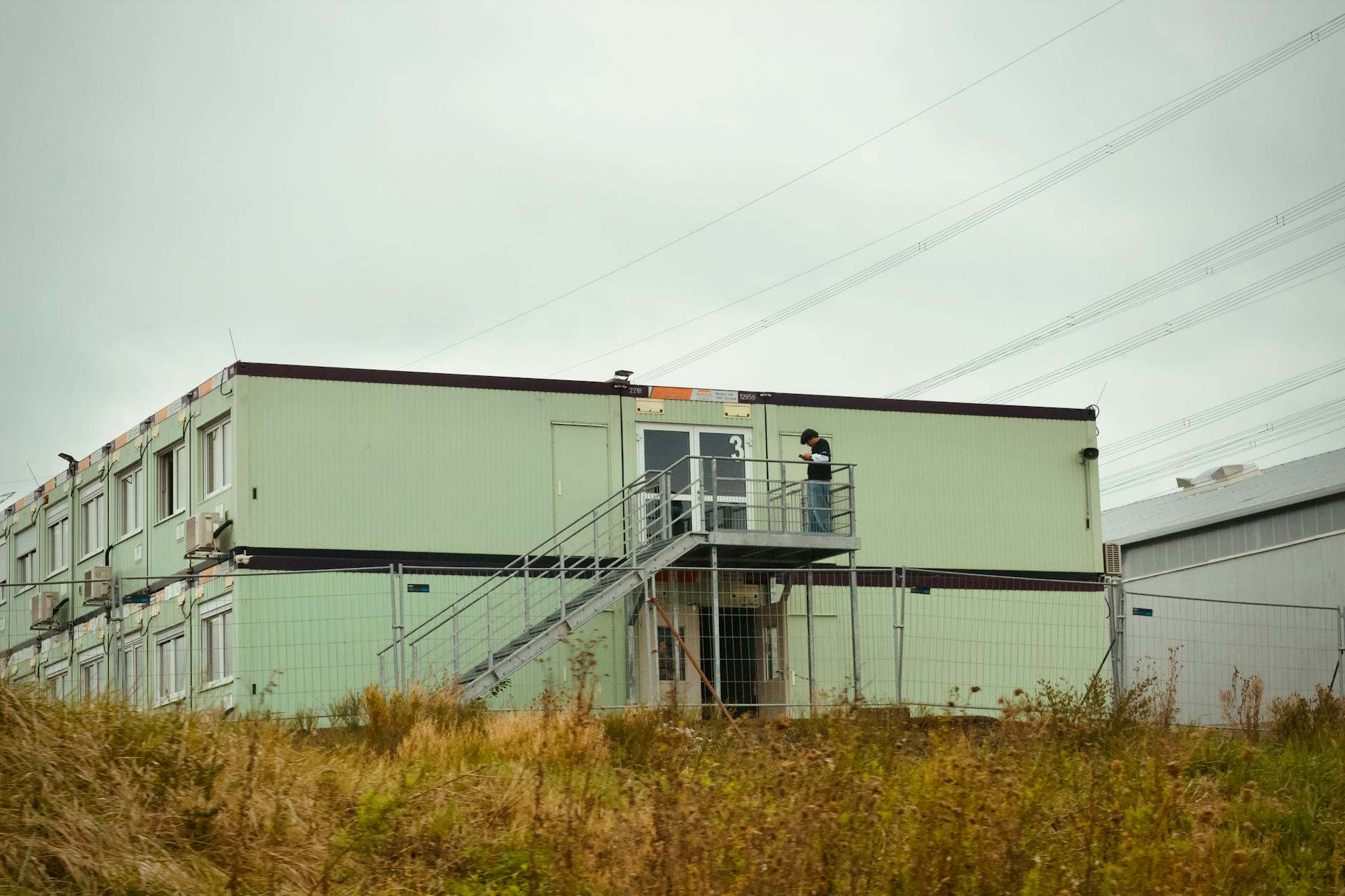
In early 2025 Primestor Development was midway through planning a $300 million mixed‑use project on the outskirts of Los Angeles County. The project was marketed as “modular‑first,” relying on prefabricated floor‑plates from WestCo Modular, a Southern California supplier. The approach promised lower timelines, reduced labor exposure and tighter cost control.
Late 2025, the U.S. Trade Representative announced retaliatory tariffs on several Asian imports. Although WestCo’s modules were fabricated domestically, critical steel framing and HVAC components sourced from overseas faced a 12 % duty, adding roughly $1.8 million per module. To stay within budget, Primestor terminated its WestCo agreement and switched to Pacific Modular Systems (PMS) in the Pacific Northwest, whose supply chain relied on U.S. steel and Canadian HVAC parts. The change required redesign, new permitting drawings and a restructured financing package, pushing the schedule back eight months and raising total costs by about $15 million.
2. Why This Matters for Real‑Estate Capital Allocation
2.1 Tariffs as a Hidden Cost Driver
Even projects that select “domestic” manufacturers often depend on sub‑components imported from abroad. When duties rise, those costs cascade downstream, impacting developers and investors alike.
2.2 Contractual Risk Management
Primestor’s original contract lacked a detailed tariff‑escalation provision, forcing a scramble after duties were announced. Developers should demand:
- Clear escalation caps tied to recognized cost indices.
- Pre‑approved alternate‑supplier lists that meet design specs.
- Dedicated contingency reserves for trade‑policy shifts.
2.3 Financing Implications
Lenders are increasingly sensitive to policy‑driven cost volatility. In Primestor’s case the construction loan’s LTV slipped above covenant thresholds, prompting a 50‑basis‑point rate hike and an equity call.
3. Market Drivers Behind the Tariff Surge
3.1 Geopolitical Tension and Domestic Policy
The tariffs were part of a broader U.S. strategy to counter perceived unfair trade practices in the Asia‑Pacific, aiming to protect domestic steel and advanced building‑product manufacturers but inadvertently affecting modular developers.
3.2 Supply‑Chain Resilience as a Competitive Edge
Post‑COVID and post‑tariff, developers are re‑evaluating single‑source dependence. Projects that can demonstrate diversified, near‑shored supply chains command a pricing premium in capital markets.
3.3 Capital Flows Toward “Domestic‑First” Projects
Institutional investors increasingly require “local content” criteria within ESG frameworks. Projects with high domestic material ratios often secure green financing, lower cap rates and stronger tenant demand.
4. Implications for UAE Real‑Estate Investors
4.1 A Parallel Landscape: Import Reliance in the Gulf
The UAE’s construction sector relies heavily on imported steel, glass and modular components from China, Turkey and Europe. Any global trade shift—anti‑dumping duties, alloy restrictions—can directly affect project economics.
4.2 Local Manufacturing Initiatives
Government incentives—Emirates Steel Industries expansion, Al Ghurair plant, “Made in Dubai” incubator—aim to lower import exposure. Aligning with developers that use locally produced modules can mitigate tariff risk and unlock preferential financing.
4.3 Portfolio Diversification Strategies
Family offices and sovereign wealth funds should consider:
- Geographic hedging between U.S., EU and GCC assets.
- Asset‑class blending (modular vs. conventional builds).
- Supply‑chain transparency mandates (>70 % of structural components disclosed).
4.4 Capital‑Efficient Opportunities in Dubai’s Modular Market
Dubai’s fast‑track projects—Expo 2020 legacy, District 2027, Al Maktoum Airport expansion—favor developers with local modular supply contracts, delivering lower acquisition multiples, higher yields and stronger ESG credentials.
5. Risk Assessment: What Could Go Wrong?
| Risk Category | Description | Mitigation for Investors |
|---|---|---|
| Tariff Volatility | Sudden duties on imported components increase cost base. | Insist on “tariff‑escape” clauses; allocate 5‑10 % contingency. |
| Supply‑Chain Disruption | Single‑source supplier failure (e.g., disaster, strike). | Require multi‑source plans; conduct supplier financial health checks. |
| Financing Covenant Breach | Cost overruns trigger loan covenant violations. | Negotiate flexible LTV ceilings; secure bridge financing. |
| Regulatory Change | Local codes evolve to favor on‑site construction. | Maintain design flexibility; partner with architects experienced in both methods. |
| Market Sentiment Shift | Tenants may perceive modular buildings as lower quality. | Secure high‑quality finishes; obtain LEED/BREEAM certifications. |
6. Opportunities: Turning the Challenge into a Competitive Edge
- Strategic Near‑Shoring: Source structural steel from Gulf Steel Companies to insulate projects from trans‑Pacific duties.
- Modular ESG Premium: Leverage reduced waste and faster build times for lower embodied carbon, attracting premium rents and financing.
- Technology‑Driven Value Capture: Use BIM integrated with supply‑chain analytics for real‑time cost monitoring.
- Portfolio Resilience Play: Combine modular and conventional assets to smooth cash‑flow volatility.
7. Forward‑Looking Outlook: 2026‑2028
7.1 Anticipated Trade Policy Landscape
Analysts expect the U.S. to maintain “strategic tariffs” on critical building inputs through 2028, mirroring protectionist trends in the EU and Japan.
7.2 Implications for Global Capital Flows
Capital will gravitate toward projects with transparent, domestically anchored supply chains. The UAE’s $4 billion modular‑construction hub in Sharjah is positioned as a regional export platform.
7.3 Investor Strategies
- Screen for “Supply‑Chain Resilience” during due diligence.
- Negotiate “Tariff Pass‑Through” mechanisms to keep covenants intact.
- Leverage UAE free‑zone incentives to create a regional procurement entity that pools orders and dilutes tariff impact.
8. Frequently Asked Questions
Q1. Will the tariff increase affect only new modular projects, or will it also retroactively impact existing contracts?
Tariffs apply at the time of importation. Existing contracts that have already cleared customs are not retroactively adjusted, but most agreements lack explicit provisions for future duties, so subsequent imports can trigger cost adjustments.
Q2. How can an investor protect the equity portion of a modular development from tariff‑driven overruns?
Negotiate an equity “buffer” clause that permits a capped increase (e.g., 5 %) in the equity contribution before additional funding is required, and consider a cost‑plus construction loan with an escalation cap.
Q3. Are there any UAE‑based manufacturers that can fully replace the imported modules used in U.S. projects?
The UAE has advanced prefabricated concrete panels and steel framing, but a full suite of high‑precision HVAC and façade systems remains import‑dependent. Joint‑venture arrangements with European modular firms are emerging as hybrid solutions.
Q4. Does the tariff issue affect the resale value of a modular building?
Resale impact is secondary to quality, location and tenant performance. Projects that demonstrate cost‑efficient, high‑quality construction without hidden overruns tend to command higher valuations due to perceived lower risk.
Q5. What role does Dubai’s “Made in Dubai” initiative play in mitigating tariff risk?
The initiative offers tax exemptions, fast‑track permitting and financing guarantees to developers that source at least 40 % of building materials locally, reducing exposure to foreign duties and stabilizing cost structures.
9. Takeaway for Investors
The Primestor episode demonstrates how external policy shocks can cascade through the development pipeline, turning a well‑planned modular project into a costly, delayed venture. For investors with exposure to U.S. modular assets—or any market with globalized supply chains—the lesson is clear: proactive supply‑chain risk management and contract structuring are now as essential as site selection and financial modeling.
In the UAE, aligning with developers that have already “localized” a significant share of their modular inputs not only protects capital from tariff volatility but also unlocks ESG premiums and faster time‑to‑revenue.
10. Conclusion
Tariffs forced Primestor to switch modular manufacturers, reshaping cost, schedule and financing. The ripple effect is a reminder that today’s “off‑site” construction benefits can be quickly eroded by policy shifts outside a developer’s control. Sophisticated investors should embed supply‑chain resilience into every thesis, demand transparent sourcing, secure robust contractual safeguards, and privilege projects leveraging the UAE’s growing domestic modular capacity. Doing so transforms a potential risk into a strategic differentiator, positioning real‑estate holdings to thrive regardless of the next tariff announcement.
Ready to Future‑Proof Your Real‑Estate Portfolio?
David Moya Real Estate’s team of seasoned advisors specializes in guiding investors through complex cross‑border developments, ensuring every acquisition is underpinned by rigorous risk controls and value‑maximizing strategies.
Call us today at +971 4 123 4567 or email info@davidmoya.com to discuss how we can help you navigate tariff risk, capitalize on UAE’s localized manufacturing incentives, and secure the next generation of high‑return, resilient assets.
Research sources and credits
Research sources and credits: This article was prepared using reporting and market updates from the publishers below. Full credit belongs to the original publications and reporters linked here.
- Tariffs Forced Primestor To Switch Modular Manufacturers – Law360
Credit: Web | Published: Mon, 27 Apr 2026 16:25:00 GMT
1 Year Later, How Tariffs Have Crept Into Real Estate Contracts April 06, 2026 NYC Real Estate Week In Review March 30, 2026 NYC Real Estate Week In Review March 30, 2026 Transamerica Pyramid Sale Now A Done Deal, At Nearly $692M March 25, 2026 US Could Approach $500B In Data Center Investment In 2026 March 24, 2026 Multifamily Most Delinquent Among $3.2B CMBS Debt Maturing #### Already have access? Click here to login ## Get instant access to the one-stop news source for business lawyers Register Now! ## Sign up now for free access to this content ## Already have access? #### Sign up for our Real Estate Authority Commercial newsletter ### You must correct or enter the following before you can sign up: ### Thank You! […] # Tariffs Forced Primestor To Switch Modular Manufacturers By Andrew McIntyre · April 27, 2026, 12:25 PM EDT In early 2025, Primestor Development was roughly half a decade into the planning process for a $300 million mixed-use project in Southern California that was primed to include a large modular… To view the full article, register now. Try a seven day FREE Trial Already a subscriber? Click here to login ### Related Sections Real Estate Authority Commercial Real Estate Authority Residential ### Recent Articles By Andrew April 20, 2026 NYC Real Estate Week In Review April 13, 2026 NYC Real Estate Week In Review April 08, 2026 Real Estate Lawyers On The Move April 08, 2026 Fried Frank Guiding Upsized New York Park Avenue Tower April 08, 2026 […] Law360 Law360 Law360 UK Law360 Pulse Law360 Employment Authority Law360 Tax Authority Law360 Insurance Authority Law360 Bankruptcy Authority Law360 Healthcare Authority Sections Home Commercial Residential Site Menu About Real Estate Authority Contact Us Sign up for our newsletters About Law360 Authority CaseMap® CLE On-Demand Context CourtLink® Digital Library Intelligize Law360 Lex Machina Lexis Medical Navigator™ Lexis® Lexis+™ Lexis® Tax MLex® MLex® (New) Nexis® Nexis Diligence™ Nexis Newsdesk™ Practical Guidance Product Liability Navigator Securities Mosaic® State Net® Verdict & Settlement Analyzer Commercial ··· Residential ··· Tall Buildings Tracker ··· Real Estate Authority Map ··· More Exclusive # Tariffs Forced Primestor To Switch Modular Manufacturers
Next steps
If you want help evaluating projects, comparing returns, or building a UAE property strategy, contact David Moya Real Estate at +971 52 217 2034 or info@davidmoya.org.