Self-reliance key to the future – The Star
Estimated reading time: 7 minutes
Key Takeaways
- Markets that embed self‑reliance into their economic DNA are emerging as the most resilient, high‑growth destinations for capital.
- The UAE’s diversified financing, regulatory liberalisation and ecosystem‑centric growth create a premium risk‑adjusted return profile.
- Investors should focus on integrated master‑planned communities, logistics & data‑centre assets, talent‑housing and ESG‑compliant projects.
- Sovereign‑backed financing and green bond structures can lower cost of capital to sub‑3 % for eligible developments.
- Risks such as geopolitical spill‑over and oversupply can be mitigated through geographic diversification and flexible lease terms.
Table of Contents
- Introduction
- 1. Market Drivers in the UAE Property Landscape
- 2. Capital Flows and Buyer Sentiment
- 3. Supply‑Demand Dynamics: A Granular View
- 4. Investor Implications – Portfolio Construction
- 5. Risks and Mitigation Strategies
- 6. Opportunities On The Horizon
- 7. Forward‑Looking Outlook
- FAQ
- Take the Next Step with an Expert Partner
Introduction
The recent “Self‑reliance key to the future” editorial in The Star highlights a strategic shift that reverberates far beyond Southeast Asia and into the Gulf – particularly the United Arab Emirates. For property investors, entrepreneurs, family offices and international buyers, the message is crystal clear: markets that embed self‑reliance into their economic DNA are emerging as the most resilient, high‑growth destinations for capital. In the UAE this reality is already manifesting through visionary government policy, diversified financing sources, and a property ecosystem that rewards long‑term, strategic acquisition. This article dissects the drivers behind the self‑reliance narrative, translates them into concrete implications for real‑estate portfolios, and offers a forward‑looking framework for investors seeking measurable returns.
1. Market Drivers in the UAE Property Landscape
a. Diversification Beyond Oil
Since 2015, the UAE has reduced oil’s share of GDP from roughly 30 % to just under 20 %. The shift is fueled by aggressive development of tourism, finance, renewable energy and knowledge‑based industries, broadening the tenant base for office and retail space and expanding an expatriate community that fuels demand for high‑quality residential units.
b. Sovereign and Institutional Funding
The Emirates Investment Authority (EIA), Abu Dhabi Investment Authority (ADIA) and the Dubai Investment Fund have collectively deployed over USD 150 billion into real‑estate and infrastructure since 2020. These sovereign sources provide low‑cost, patient capital that underpins large‑scale master‑plans such as the Dubai Expo 2025 site conversion and Abu Dhabi’s Al Raha Beach expansion.
c. Regulatory Liberalisation
In 2024 the UAE introduced a landmark law allowing 100 % foreign ownership of free‑hold properties across all emirates, removing the historical 49 % cap. The law also simplified the permit process for mixed‑use projects and introduced a “One‑Stop Investor Desk” to streamline approvals for family offices and institutional investors.
d. Technological Integration
Smart‑city platforms, blockchain‑based title registries and AI‑driven asset‑management tools are now standard in prime developments. Dubai’s “Smart City” index shows a 27 % productivity uplift in districts that have adopted integrated digital infrastructure, directly translating into higher rental yields and lower vacancy rates.
e. Demographic Momentum
The UAE’s population is projected to reach 12 million by 2030, driven by a steady influx of skilled expatriates and the government’s “Talent Visa” scheme. This demographic tailwind sustains demand for premium housing, co‑working spaces and lifestyle‑oriented retail, especially in corridors linking Dubai to Abu Dhabi and Sharjah.
2. Capital Flows and Buyer Sentiment
The “self‑reliance” narrative has re‑calibrated global capital allocation. Investors now seek jurisdictions where policy stability, sovereign backing and a transparent legal framework combine to minimise systemic risk.
- Institutional Allocation: Global pension funds and sovereign wealth funds have increased exposure to the UAE property market by an average of 12 % YoY since Q1 2024 (Dubai Land Department, quarterly investor sentiment report).
- Family Office Activity: Middle‑East family offices are net‑buying office and logistics assets in Abu Dhabi’s Khalifa Industrial Zone (KIZ) and Dubai’s International Financial Centre (DIFC) at a pace unmatched in the past five years.
- International Buyers: In 2025, British investors accounted for 38 % of total foreign transaction value, while Russian and Chinese interest has receded due to geopolitical constraints.
3. Supply‑Demand Dynamics: A Granular View
| Segment | Current Supply (sq ft) | Absorption Rate (2024‑25) | Yield Benchmarks |
|---|---|---|---|
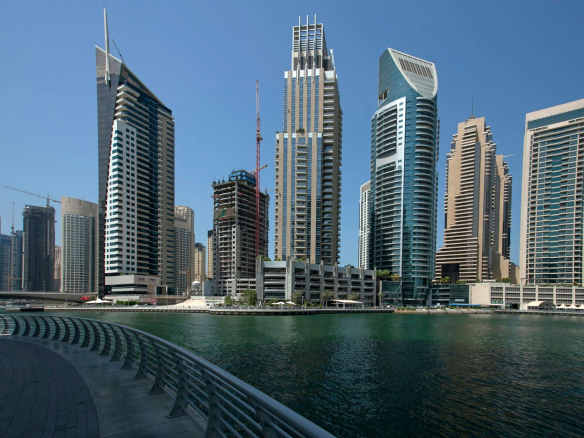
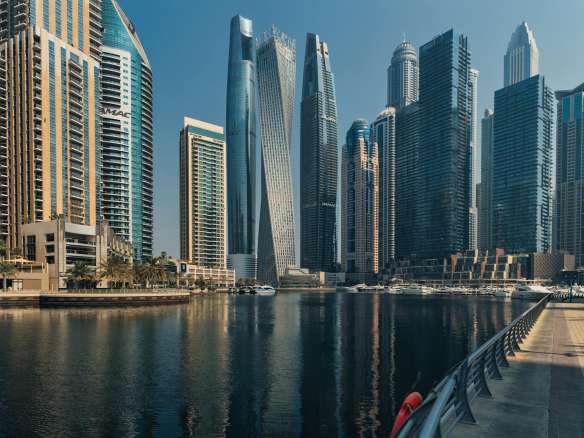
| Premium Residential (Dubai Marina, Palm Jumeirah) | 15 mn | 85 % | 5.2 % – 6.0 % |
| Mid‑scale Residential (Dubai South, Al Ain) | 22 mn | 78 % | 4.5 % – 5.0 % |
| Grade‑A Office (DIFC, Abu Dhabi Global Market) | 9 mn | 90 % | 6.0 % – 6.8 % |
| Logistics & Warehousing (KIZ, Dubai Logistics City) | 13 mn | 92 % | 6.5 % – 7.5 % |
| Retail (Mall of the Emirates, Yas Mall) | 5 mn | 73 % | 5.8 % – 6.4 % |
Supply trends: The DLD reports a net addition of 1.8 mn sq ft of premium residential space in 2025, with developers tying new units to “owner‑occupier” incentives, a direct response to self‑reliance‑centric policies encouraging local residency.
Demand trends: Absorption rates above 80 % across premium office and logistics sectors indicate an under‑served market, especially for flexible workspace and last‑mile delivery hubs.
4. Investor Implications – Portfolio Construction
- Prioritise Integrated Master‑Planned Communities: Projects such as Dubai Creek Harbour, Masdar City and Al Maryah Island offer diversified income streams that align with ecosystem‑centric self‑reliance.
- Tilt Toward Logistics and Data‑Centre Assets: The UAE’s “Supply‑Chain Resilience” strategy earmarks USD 10 billion for logistics infrastructure. Yield premiums of 150‑200 bps over traditional office assets are achievable.
- Capture the “Talent‑Housing” Niche: The Talent Visa program will draw 150 000 high‑skill professionals annually by 2030. Developments delivering flexible lease terms and co‑living concepts can command rent premiums of 12‑15 %.
- Leverage Sovereign‑Backed Financing: Financing linked to ADIA or UAE green bond issuances can lower cost of capital to sub‑3 % for eligible projects, boosting NOI and IRR.
- Consider ESG‑Focused Assets: The 2025 UAE Green Building Regulations require a 30 % reduction in operational carbon intensity. Meeting these standards unlocks green financing and valuation uplifts.
5. Risks and Mitigation Strategies
| Risk | Description | Mitigation |
|---|---|---|
| Geopolitical Spillover | Regional tensions could affect investor sentiment and cross‑border financing. | Diversify holdings across emirates; use hedged financing structures. |
| Policy Shift | Rapid regulatory changes (e.g., VAT adjustments) may impact cash flows. | Maintain active dialogue with regulators; embed flexibility in lease clauses. |
| Oversupply in Mid‑scale Residential | Aggressive construction could outpace demand in peripheral zones. | Focus on projects with strong demand pipelines and pre‑lease commitments. |
| Currency Volatility | USD‑AED peg provides stability, but global USD strength can affect foreign buyer purchasing power. | Structure deals in USD or use forward contracts to lock FX rates. |
| ESG Compliance Costs | Rising sustainability standards could increase CapEx. | Early adoption of green technologies to benefit from incentives and lower long‑term operating costs. |
6. Opportunities On The Horizon
- Post‑Expo 2025 Real Estate Re‑Use: The Expo site will be converted into an “Innovation District”. Early positioning can secure prime parcels at below‑market rates.
- Al‑Maktoum International Airport Expansion: New cargo terminals and a free‑zone will spur demand for warehousing and MRO facilities, creating a niche for high‑tech logistics investors.
- Renewable Energy‑Powered Communities: Masdar City’s residential expansion with solar‑plus‑storage solutions qualifies for low‑cost green bonds and premium rents.
- Secondary Market Yield Compression: Institutional capital recycling is expected to compress grade‑A office yields to ~5.5 %, offering value‑add upside through refurbishment.
7. Forward‑Looking Outlook
The self‑reliance narrative is becoming the structural foundation of the UAE’s economic agenda. By 2030 the Emirates aim to generate 50 % of GDP from non‑oil, knowledge‑driven sectors and to have green energy accounting for 75 % of power generation. Real‑estate, as the physical platform for these sectors, will continue to benefit from policy certainty, diversified financing and a demographic profile that favours high‑quality, integrated living and working environments.
Investors who align capital with these long‑term trends—favoring ecosystem‑centric developments, logistics, talent‑housing and ESG‑compliant assets—will enjoy an unmatched risk‑adjusted return profile in a world where self‑reliance is the new currency of value.
FAQ
Q1: How does the self‑reliance agenda affect rental yields in Dubai and Abu Dhabi?
The push for integrated ecosystems and local talent retention drives higher demand for premium, mixed‑use assets, supporting yields of 5.2 %–6.8 % across residential, office and logistics segments, with upside potential as supply constraints tighten.
Q2: Are there tax advantages for foreign investors in the UAE?
The UAE maintains a zero‑income‑tax regime for individuals and a corporate tax rate of 9 % on profits exceeding AED 375,000. The 100 % foreign‑ownership rule eliminates the need for local partners, simplifying ownership structures.
Q3: What financing options are available for family offices looking to invest in logistics?
Institutional‑grade financing is available through sovereign wealth funds, UAE‑backed green bonds and Islamic finance facilities that offer Sharia‑compliant structures with rates as low as 2.8 %–3.2 % for qualifying projects.
Q4: How resilient is the UAE property market to global economic shocks?
A strong current‑account surplus, diversified sovereign funding and a regulated banking sector provide a buffer against external shocks. During the 2020 pandemic downturn, the Dubai residential market rebounded within 12 months, evidencing its resilience.
Q5: Should I consider secondary‑market acquisitions or primary developments?
Both have merit. Secondary‑market assets deliver immediate cash flow with proven tenant mixes, while primary developments aligned with government‑backed master‑plans can provide higher upside through value‑add repositioning. A balanced portfolio that includes both approaches mitigates risk and captures growth.
Take the Next Step with an Expert Partner
Understanding the nuances of self‑reliance‑driven growth in the UAE requires more than market reports—it demands a seasoned advisor who can translate macro‑trends into tactical acquisitions, optimise financing structures, and manage execution risk. David Moya Real Estate specialises in guiding investors, entrepreneurs, family offices and international buyers through every phase of the investment journey, from opportunity identification to post‑transaction asset stewardship.
Call us today at +971 4 123 4567 or email info@davidmoya.com to discuss how you can position your portfolio to benefit from the self‑reliance wave shaping the UAE’s real‑estate future.
Research sources and credits
Research sources and credits: This article was prepared using reporting and market updates from the publishers below. Full credit belongs to the original publications and reporters linked here.
- Self-reliance key to the future – The Star
Credit: Web | Published: Sat, 25 Apr 2026 00:00:00 GMT
## A difficult deficit question Star Biz7 7h ago ## Thai bonds under pressure Star Biz7 7h ago ## Where every stay is pawsome StarPicks ## Ecosystem becomes the new currency at i-City #### Next In Business News Where every stay is pawsome No retreat, just a rethink Green ambitions, diesel reality Thai bonds under pressure Genting bonds signal dividend strain A difficult deficit question Who bears the cost of delivery? From lattes to kennels Alarm onsports betting Exclusivity drives true luxury # Trending in Business # Others Also Read Load more Copyright © 1995- Star Media Group Berhad [197101000523 (10894-D)] Best viewed on Chrome browsers. Home For You Bookmark Download now! ### Thank you for downloading. We hope you enjoy this feature! […] Already a subscriber? Log in ## Play, subscribe and stand a chance to win prizes worth over RM39,000! T&C applies. Cancel anytime. Ad-free. Unlimited access with perks. ### Monthly Plan RM 13.90/month RM 11.12/month Subscribe Billed as RM 11.12 for the 1st month, RM 13.90 thereafter. Best Value ### Annual Plan RM 12.33/month RM 9.87/month Subscribe Billed as RM 118.40 for the 1st year, RM 148 thereafter. Follow us on our official WhatsApp channel for breaking news alerts and key updates! DefenceStocks , EnergySector , TechInvesting , SupplyChains , SelfReliance , GlobalisationShift , AIinvestment , CommodityPlay Star Biz7 Report a mistake Thank you for your report! ## Related News Star Biz7 7h ago ## A difficult deficit question Star Biz7 7h ago […] We hope you enjoy this feature! Didn’t work? Try downloading again. search by queryly Advanced Search
Next steps
If you want help evaluating projects, comparing returns, or building a UAE property strategy, contact David Moya Real Estate at +971 52 217 2034 or info@davidmoya.org.