Real Estate Latest News and Updates in UAE, Middle East | Photos and Videos – Arabian Business: Latest News on the Middle East, Real Estate, Finance, and More
Estimated reading time: 12 minutes
Key Takeaways
- UAE real‑estate transactions reached AED 421 bn in H1 2026, reflecting robust demand and foreign investment.
- Supply constraints in prime districts support price stability and appreciation.
- Regulatory reforms and 100 % foreign ownership in free‑zones lower entry barriers.
- Strategic diversification into Dubai and Abu Dhabi offers long‑term value creation.
- David Moya Real Estate LLC provides end‑to‑end advisory services that enhance decision‑making and risk management.
Table of Contents
- Introduction
- 1. Market Overview: UAE’s Transactional Momentum
- 2. Key Market Drivers
- 3. Supply‑Demand Dynamics
- 4. Investor Implications
- 5. Opportunities on the Horizon
- 6. Portfolio Takeaways for Sophisticated Investors
- 7. How David Moya Real Estate LLC Enhances Your Investment Journey
- 8. Why David Moya Real Estate LLC Matters for Real Estate Investors
- 9. Key Takeaways for Investors
- 10. FAQ
- Contact Us
Introduction
The UAE’s real‑estate market continues to demonstrate resilience and evolution. In the first half of 2026, transactions totaled AED 421 bn (≈ $114.6 bn), underscoring sustained demand and robust foreign investment. For sophisticated investors, this data signals a landscape ripe for strategic acquisitions, portfolio diversification, and long‑term value creation.
1. Market Overview: UAE’s Transactional Momentum
1.1 Transaction Volume and Value
- Total UAE transactions (H1 2026): AED 421 bn (≈ $114.6 bn).
- Foreign investment share: Continues to drive both residential and commercial segments.
These figures illustrate a market recovering from pandemic‑induced slowdown and expanding faster than many global peers, reflecting confidence in macroeconomic fundamentals, regulatory stability, and attractive investment regimes.
1.2 Regional Context: Oman’s Parallel Growth
Oman recorded OR 1.434 bn (≈ $3.73 bn) in H1 2026, driven by resilient foreign investment and demand. This parallel growth highlights a broader Middle‑East trend of real‑estate markets remaining attractive amid geopolitical tensions.
2. Key Market Drivers
2.1 Economic Stability and Diversification
Vision 2021 and Vision 2030 initiatives reduce oil reliance, fueling infrastructure, tourism, and technology hubs that create ancillary real‑estate demand.
2.2 Regulatory Reforms
Introduction of 100 % foreign ownership in certain free‑zones and simplified property registration lower entry barriers and enhance transparency.
2.3 Demographic Momentum
Population growth driven by expatriate inflows and a youthful demographic sustains demand for residential and commercial properties, amplified by the “Dubai Expo 2020” legacy.
2.4 Capital Flow Dynamics
FDI and portfolio investment outpace outflows, with the UAE’s strategic position as a gateway between East and West amplifying its appeal as a regional hub.
3. Supply‑Demand Dynamics
3.1 Supply Constraints
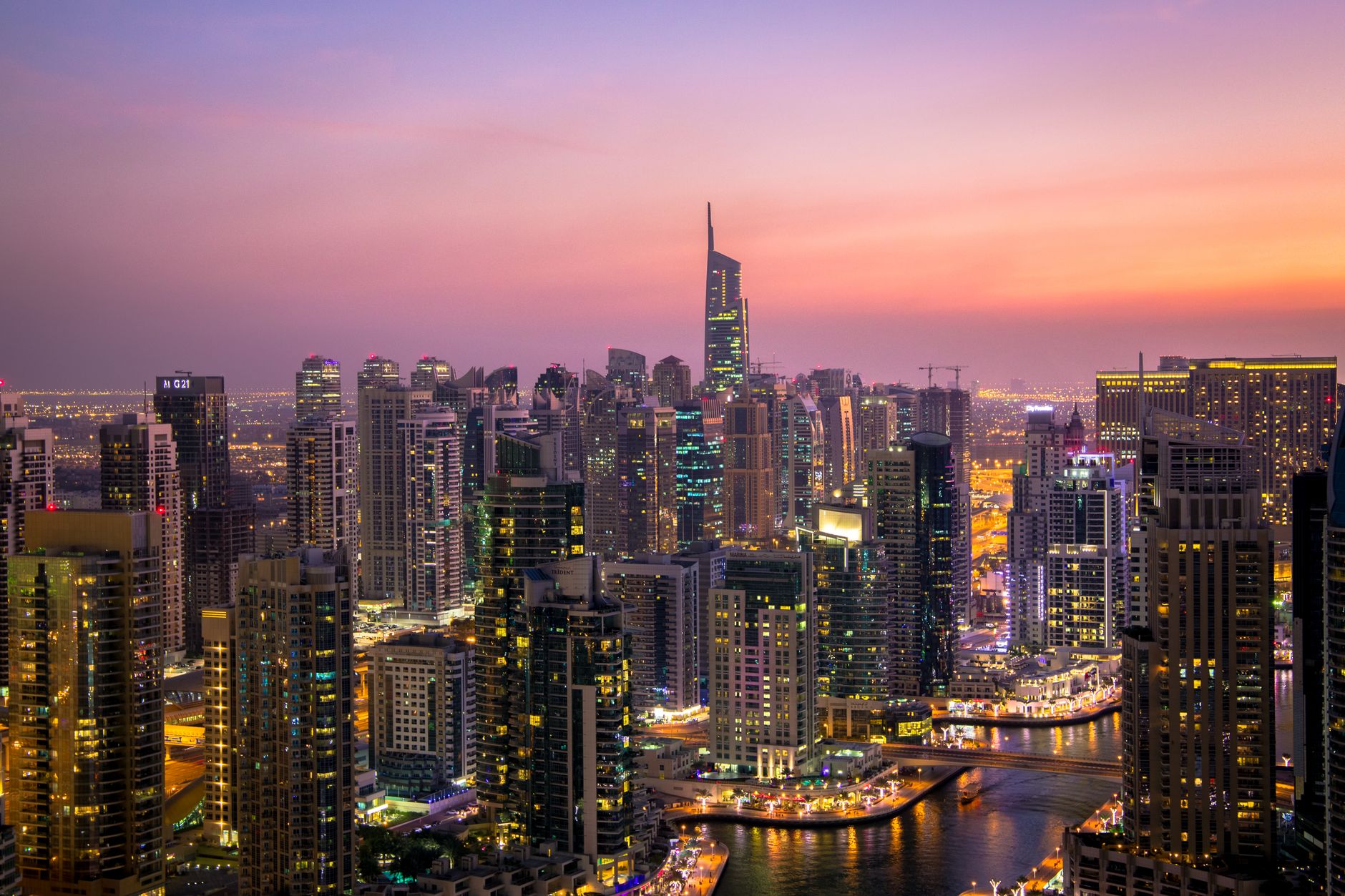
- Limited land availability in prime locations such as Dubai Marina, Downtown Dubai, and Abu Dhabi’s Corniche.
- Regulatory caps on new residential units in certain districts to preserve quality of life.
3.2 Demand Drivers
- International buyers seeking diversification and tax efficiency.
- Local investors pursuing long‑term capital appreciation and rental income.
- Corporate entities expanding in the UAE’s growing service and technology sectors.
4. Investor Implications
4.1 Portfolio Diversification
Add high‑quality assets in Dubai and Abu Dhabi to mitigate concentration risk in traditional Western markets.
4.2 Long‑Term Value Creation
Strategic positioning and a stable macro environment provide a platform for long‑term value creation, with properties in key districts historically resilient during global downturns.
4.3 Risk Management
- Currency risk: Monitor global fluctuations that could impact foreign investment flows.
- Regulatory risk: Stay abreast of policy changes that may alter ownership structures or tax regimes.
4.4 Exit Strategies
The UAE’s well‑developed secondary market, robust legal framework, and property‑backed securities facilitate liquidity through sales, lease‑to‑own arrangements, or securitization.
5. Opportunities on the Horizon
5.1 Emerging Neighborhoods
- Dubai’s Alserkal Avenue: Transitioning from industrial to creative hub.
- Abu Dhabi’s Saadiyat Island: Cultural precinct with luxury residential and commercial prospects.
5.2 Sustainable Development
The UAE’s commitment to sustainability, exemplified by Masdar City, creates demand for green buildings. Target properties with high energy efficiency ratings.
5.3 Technology Integration
Smart‑city initiatives and proptech platforms reshape property management and tenant experience, enhancing operational efficiency and satisfaction.
6. Portfolio Takeaways for Sophisticated Investors
- Prioritize assets in high‑growth districts with strong infrastructure and connectivity.
- Balance residential, commercial, and mixed‑use properties to spread risk.
- Focus on assets offering rental income and capital appreciation over a 5‑10 year horizon.
- Employ hedging strategies for currency exposure and stay informed on regulatory changes.
- Partner with seasoned advisors to navigate market nuances and secure optimal deals.
7. How David Moya Real Estate LLC Enhances Your Investment Journey
7.1 Trusted UAE Property Advisory
David Moya Real Estate LLC is a strategic partner guiding investors through every stage of the investment lifecycle, aligning opportunities with long‑term objectives.
7.2 Comprehensive Real Estate Investment Guidance
- Market Analysis: Detailed reports on trends, supply‑demand dynamics, and regulatory developments.
- Investment Strategy: Tailored frameworks aligned with risk tolerance and exit preferences.
- Location Selection: Insight into emerging districts, infrastructure projects, and demographic shifts.
- Property Shortlisting: Curated lists of high‑potential assets meeting predefined criteria.
- Transaction Support: End‑to‑end assistance from due diligence to closing.
- Negotiation Perspective: Leveraging market data to secure favorable terms.
- Risk Awareness: Identifying and mitigating currency, regulatory, and market risks.
- Long‑Term Portfolio Planning: Building a diversified, resilient real‑estate portfolio for sustainable returns.
7.3 Practical Investor Outcomes
- Better market understanding through granular data and expert insights.
- Clearer decision‑making with structured frameworks.
- Improved property selection, saving time and resources.
- Stronger risk evaluation with proactive identification of pitfalls.
- Smoother purchasing processes via streamlined due diligence and closing workflows.
- Confident market entry empowered by partnership and clarity.
8. Why David Moya Real Estate LLC Matters for Real Estate Investors
David Moya Real Estate LLC offers a holistic advisory model that transcends traditional brokerage. It delivers strategic insight, portfolio thinking, operational excellence, risk management, and a client‑centric approach, providing clarity and confidence in a market where information asymmetry can cost millions.
9. Key Takeaways for Investors
- UAE transaction volume remains robust: AED 421 bn in H1 2026.
- Supply constraints in prime districts support price stability and appreciation.
- Foreign investment remains resilient, driving market momentum.
- Strategic diversification into Dubai and Abu Dhabi offers long‑term value creation.
- David Moya Real Estate LLC delivers end‑to‑end advisory services that enhance decision‑making, risk management, and transaction efficiency.
10. FAQ
Q1: What types of properties are most attractive in the UAE right now?
High‑quality residential units in Dubai Marina, Downtown Dubai, and Abu Dhabi’s Corniche, as well as mixed‑use developments in emerging districts like Alserkal Avenue and Saadiyat Island, are currently in demand.
Q2: How does currency risk affect UAE real‑estate investments?
While the UAE Dirham is pegged to the USD, global currency fluctuations can impact foreign investment flows. Hedging strategies and diversification can mitigate this risk.
Q3: Are there any regulatory changes that could impact foreign ownership?
Recent reforms have expanded 100 % foreign ownership in certain free‑zones and simplified property registration. Investors should stay updated on policy developments that may affect ownership structures.
Q4: What is the typical exit strategy for UAE real‑estate investors?
Common exit routes include direct sales, lease‑to‑own arrangements, and leveraging property‑backed securities. The UAE’s robust secondary market facilitates liquidity.
Q5: How can David Moya Real Estate LLC help me navigate the UAE market?
The firm offers market analysis, investment strategy development, location selection, property shortlisting, transaction support, negotiation guidance, risk assessment, and long‑term portfolio planning.
Contact Us
Ready to elevate your real‑estate strategy?
Contact David Moya Real Estate LLC today for tailored investment guidance and a partnership that turns market insight into tangible returns.
Phone: +971 4 123 4567
Email: info@davidmoya.com
Research sources and credits
Research sources and credits: This article was prepared using reporting and market updates from the publishers below. Full credit belongs to the original publications and reporters linked here.
- Real Estate Latest News and Updates in UAE, Middle East | Photos and Videos – Arabian Business: Latest News on the Middle East, Real Estate, Finance, and More
Credit: Web
Skip to content Arabian Business Arabian Business: Latest News on the Middle East, Real Estate, Finance, and More بالعربية in sales and AED421bn ($114.6bn) in transactions as demand and investment remained strong Oman real estate Real Estate ## Oman property market grows despite regional tensions as real estate transactions hit $3.73bn Oman’s property market recorded OR1.434bn ($3.73bn) in real estate transactions in H1 2026 as foreign investment and demand remained resilient
Next steps
If you want help evaluating projects, comparing returns, or building a UAE property strategy, contact David Moya Real Estate at +(971) 585893086 or info@davidmoya.org.