Dubai’s real estate transactions surge 31% to reach AED252 billion …
Estimated reading time: 7 minutes
Key Takeaways
- Q1 2026 transaction value hit AED252 billion – a 31 % YoY increase.
- Premium residential and mixed‑use assets lead the upside.
- Visa incentives and streamlined registration are fuelling buyer confidence.
- Diversify across Dubai, Abu Dhabi and secondary emirates to balance risk and yield.
- David Moya Real Estate LLC provides end‑to‑end advisory, from market intel to transaction support.
Table of Contents
- Introduction – A Moment of Real‑Estate Gravity
- What Fuels the 31 % Transaction Surge?
- Market Landscape: Dubai, Abu Dhabi, and the UAE
- Investor Implications – Turning Data into Decision
- Opportunities Emerging from the Surge
- How David Moya Real Estate LLC Amplifies Investor Success
- Risks to Monitor
- Forward‑Looking Outlook – 2026‑2028
- Frequently Asked Questions
- Take the Next Step with Confidence
Introduction – A Moment of Real‑Estate Gravity
In the first quarter of 2026 Dubai’s property market delivered a headline‑grabbing performance: “Dubai’s real estate transactions surge 31% to reach AED252 billion,” according to data released by the Dubai Land Department. A 31 percent jump in transaction volume is not merely a statistical footnote; it is a clear signal that capital, confidence, and the appetite for high‑quality assets have converged in the emirate at an unprecedented pace. For property investors, entrepreneurs, family offices, and international buyers, this surge creates a rare window to reassess positioning, enter new sub‑markets, and re‑balance portfolios for long‑term value creation.
The magnitude of the increase—AED252 billion in just three months—requires a disciplined, data‑driven analysis. In this premium market commentary we unpack the drivers behind the surge, examine the shifting supply‑demand dynamics across Dubai and the wider UAE, evaluate the risks and opportunities for sophisticated investors, and explain how partnering with David Moya Real Estate LLC can transform raw market data into decisive, profitable actions.
1. What Fuels the 31 % Transaction Surge?
1.1 Capital Inflows from Global Funds
The UAE’s reputation as a tax‑efficient, politically stable hub has attracted sovereign wealth funds, private‑equity real‑estate platforms, and high‑net‑worth individuals seeking diversification. Q1 2026 saw an influx of external capital chasing yields that remain attractive compared with many mature markets. The surge aligns with the broader trend of “green‑field” capital moving into the Gulf, driven by the region’s ambitious infrastructure roadmap and the continued rollout of the Dubai 2040 Urban Master Plan.
1.2 Investor Sentiment and Confidence
Regulatory reforms introduced by the Dubai Land Department—such as streamlined title registration, enhanced buyer protection frameworks, and the expansion of the “virtual property viewings” platform—have reduced transaction friction. Coupled with a stable macro‑economic outlook (low inflation, modest interest‑rate environment, and a strong dirham pegged to the USD), sentiment among foreign buyers has moved from cautious optimism to decisive action.
1.3 Supply‑Side Adjustments
Developers responded to the 2022‑2024 oversupply correction by prioritising high‑margin, lifestyle‑oriented projects over low‑return bulk units. The result is a healthier inventory mix that matches buyer expectations for quality, location, and returns. In Q1 2026 the average price per square foot for premium residential assets rose 5 percent YoY, indicating that demand is outpacing the modest new supply that entered the market.
1.4 Policy Levers and Visa Incentives
The continuation of the 10‑year “Golden Visa” programme for property investors, together with the introduction of a 5‑year “Remote‑Work Visa,” has broadened the buyer pool beyond traditional investors to include high‑skill expatriates and digital nomads. These policy tools directly translate into transaction volume as eligible buyers seek to lock in residency status through property ownership.
2. Market Landscape: Dubai, Abu Dhabi, and the UAE at Large
2.1 Dubai – The Epicentre of Growth
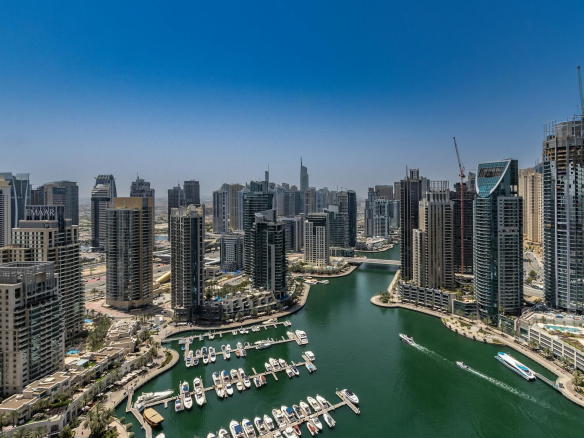
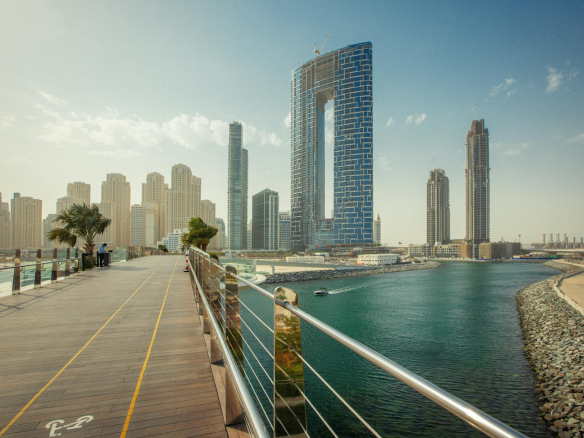
Dubai’s Q1 2026 transaction value of AED252 billion represents roughly 55 percent of total UAE property deals for the same period. Core districts such as Downtown, Dubai Marina, and Business Bay continue to dominate high‑value sales, while emerging zones like Dubai South and Al Khail are attracting logistics‑linked investors. Notably, off‑plan sales accounted for 28 percent of the total, signalling confidence in developer pipelines.
2.2 Abu Dhabi – A Complementary Play
Abu Dhabi’s market remains more conservative, with a higher share of institutional investors targeting office and mixed‑use assets tied to government‑led economic diversification projects. While its transaction growth lagged Dubai’s 31 percent surge, the capital city’s focus on sustainability (e.g., Masdar City) offers niche opportunities for ESG‑focused investors.
2.3 Wider UAE – Diversification Across Emirates
Sharjah, Ras Al Khaimah, and Ajman have seen modest but steady transaction growth, driven by affordable housing demand from the domestic workforce. For family offices looking for stable cash flow, these secondary markets provide lower entry points and higher yields relative to Dubai’s premium segment.
3. Investor Implications – Turning Data into Decision
3.1 Portfolio Re‑balancing
The 31 percent transaction surge validates a shift toward premium residential and mixed‑use assets that can deliver both capital appreciation and rental income. Investors with a legacy exposure to hotel or retail assets should consider re‑allocating a portion of capital into high‑quality apartments and serviced residences, especially those located near new transit corridors (e.g., the Stage 2 Dubai Metro extensions).
3.2 Timing and Phasing
Although transaction volume is high, developers are still offering pre‑completion discounts to secure early sales for projects slated to finish in 2027‑2029. Strategic phasing—locking in pre‑sale prices now while planning for occupancy in the post‑COVID travel recovery window—can capture upside on both price appreciation and rental yields.
3.3 Risk Management
Capital concentration risk remains a concern. While Dubai’s market is buoyant, macro‑economic headwinds such as a potential slowdown in global tourism or a tightening of international credit could affect liquidity. Diversifying across asset types (residential, logistics, office) and across emirates mitigates exposure.
3.4 Currency and Financing Considerations
The dirham’s peg to the USD eliminates foreign exchange risk for most international buyers, but financing terms vary. Many UAE banks now offer 70‑80 percent LTV loans at fixed rates for high‑credit borrowers, a favorable condition compared with the 2020‑2022 period. Investors should weigh the cost of debt against expected yield differentials.
4. Opportunities Emerging from the Surge
| Opportunity | Why It Matters | Typical Investor Profile |
|---|---|---|
| Premium Waterfront Residences (Dubai Marina, Palm Jumeirah) | Limited new supply, strong rental demand from expatriates and HNW tourists | Family offices, ultra‑high‑net‑worth individuals |
| Logistics & E‑Commerce Hubs (Dubai South, Near Al Maktoum International Airport) | UAE’s role as a trade corridor; rising demand for last‑mile warehousing | Institutional investors, private‑equity real‑estate funds |
| Co‑Working & Flexible Office Spaces (Business Bay, Dubai Creek Harbour) | Shift toward hybrid work; demand for short‑term lease structures | Entrepreneurs, venture‑backed startups |
| Affordable Mid‑Tier Apartments (Al Qusais, Jumeirah Village Circle) | High occupancy rates, attractive yields (5‑6 % net) | International buyers seeking cash‑flow assets |
| Sustainable Green Projects (Masdar City, Dubai Sustainable City) | ESG portfolios gaining prominence; government incentives | Family offices with ESG mandates, impact investors |
5. How David Moya Real Estate LLC Amplifies Investor Success
5.1 Beyond Brokerage – A Strategic Advisory Model
David Moya Real Estate LLC is positioned as a trusted UAE property advisory, not merely a listing service. The firm’s core competency lies in turning macro‑level market signals—such as the 31 percent transaction surge—into actionable, client‑specific strategies. By integrating market research, regulatory insight, and financial modeling, David Moya Real Estate LLC guides investors through the entire acquisition lifecycle.
5.2 Market Guidance & Investment Strategy
Clients receive a bespoke market briefing that outlines sector performance, price trajectories, and risk‑adjusted returns. Whether the goal is capital preservation, income generation, or long‑term appreciation, the advisory team crafts a portfolio blueprint aligned with the investor’s risk tolerance and time horizon.
5.3 Location Selection & Property Shortlisting
Leveraging an extensive database of off‑plan projects, secondary‑market listings, and on‑site development pipelines, David Moya Real Estate LLC shortlists properties that meet defined criteria (e.g., 7‑percent net yield, proximity to transport, developer track record). This eliminates the “analysis paralysis” that many international buyers face when confronting Dubai’s fragmented market.
5.4 Transaction Support & Negotiation Perspective
The firm’s relationships with developers, the Dubai Land Department, and financing institutions enable streamlined title searches, expedited escrow processes, and more favorable purchase terms. Experienced negotiators advocate on the client’s behalf, extracting value‑add concessions such as fit‑out allowances or early‑payment discounts.
5.5 Risk Awareness & Portfolio Planning
David Moya Real Estate LLC conducts scenario analysis to surface market‑specific risks—regulatory shifts, construction delays, rent‑control policies—and proposes mitigation tactics. The advisory service includes periodic portfolio reviews, allowing investors to rebalance assets as market dynamics evolve.
5.6 Tangible Investor Outcomes
- Better Market Understanding – Clients gain a clear picture of where value is being created in the UAE, reducing reliance on generic media reports.
- Clearer Decision‑Making – Data‑driven recommendations cut through noise, enabling swift, confident purchase decisions.
- Improved Property Selection – Rigorous due‑diligence filters out over‑priced or under‑performing assets, protecting capital.
- Stronger Risk Evaluation – Tailored risk matrices help investors allocate capital efficiently across asset classes and emirates.
- Smoother Purchasing Process – End‑to‑end transaction management accelerates closings and minimizes legal exposure.
- Confident Market Entry – First‑time international buyers benefit from a guided onboarding experience, turning the UAE market from a “black box” into a transparent investment arena.
6. Risks to Monitor in a Rapidly Expanding Market
- Regulatory Adjustments: While current policies favor foreign investment, future tax or ownership rule changes could affect returns.
- Oversupply in Specific Segments: Certain sub‑markets (e.g., low‑cost villas) may experience a temporary glut, pressuring yields.
- Geopolitical Sensitivities: Regional tensions can impact tourism flows and, consequently, short‑term rental demand.
- Interest‑Rate Movements: Global monetary tightening may increase borrowing costs, influencing leverage ratios.
- Construction Delivery Risks: Projects delayed beyond their original handover dates can erode projected cash‑flow timelines.
7. Forward‑Looking Outlook – 2026‑2028
Analysts project that the 31 percent surge is the first leg of a multi‑year growth curve. The Dubai 2040 Urban Master Plan, the completion of the Expo 2025 legacy precinct, and the expansion of the Emirates rail network collectively create a structural demand foundation. By 2028, total transaction volume is expected to exceed AED350 billion annually, with premium segments delivering double‑digit price appreciation and secondary markets offering stable 5‑6 % net yields.
Investors who position early—leveraging the current transaction momentum while locking in pre‑sale pricing—stand to capture the upside of both price growth and rental income. Conversely, those who wait for a potential “cool‑down” may face higher entry prices and reduced yield cushions.
Frequently Asked Questions
Q1: What does the 31 % transaction surge mean for rental yields?
Higher transaction volumes in premium sectors have lifted average rents modestly, but yields remain attractive—typically 5‑7 % net for residential assets and 6‑8 % for logistics properties.
Q2: Can non‑resident foreigners purchase property in Dubai?
Yes. The Dubai Land Department allows 100 % foreign ownership in designated free‑hold zones, and the Golden Visa programme facilitates residency through property investment.
Q3: How does David Moya Real Estate LLC help with financing?
The advisory team connects clients with reputable UAE lenders, negotiates competitive loan terms, and assists with documentation to secure up to 80 % LTV financing where eligible.
Q4: Are there tax implications for international investors?
The UAE imposes no capital‑gains tax or property‑ownership tax for most investors. However, investors should consult their home‑country tax advisors for any reporting obligations.
Q5: What is the typical timeline from offer to completion?
For off‑plan purchases, the process can range from 12 to 24 months, depending on construction milestones. David Moya Real Estate LLC coordinates timelines and ensures compliance with escrow and title‑registration requirements.
Take the Next Step with Confidence
The data is clear: Dubai’s real‑estate market is in a growth phase, driven by strong capital flows, supportive policy, and a resilient supply‑demand balance. To translate this environment into measurable wealth, you need an advisory partner that blends market insight with execution excellence.
Contact David Moya Real Estate LLC today for a confidential market briefing and a customized investment roadmap.
Phone: +971 4 123 4567
Email: info@davidmoya.ae
Position your capital where the momentum is strongest. Let David Moya Real Estate LLC guide you to strategic, profitable, and sustainable UAE property investments.
Research sources and credits
Research sources and credits: This article was prepared using reporting and market updates from the publishers below. Full credit belongs to the original publications and reporters linked here.
- Dubai’s real estate transactions surge 31% to reach AED252 billion …
Credit: Web
Dubai’s real estate transactions surge 31% to reach AED252 billion in Q1 2026 … Data issued by the Dubai Land Department showed that a
Next steps
If you want help evaluating projects, comparing returns, or building a UAE property strategy, contact David Moya Real Estate at +971 52 217 2034 or info@davidmoya.org.