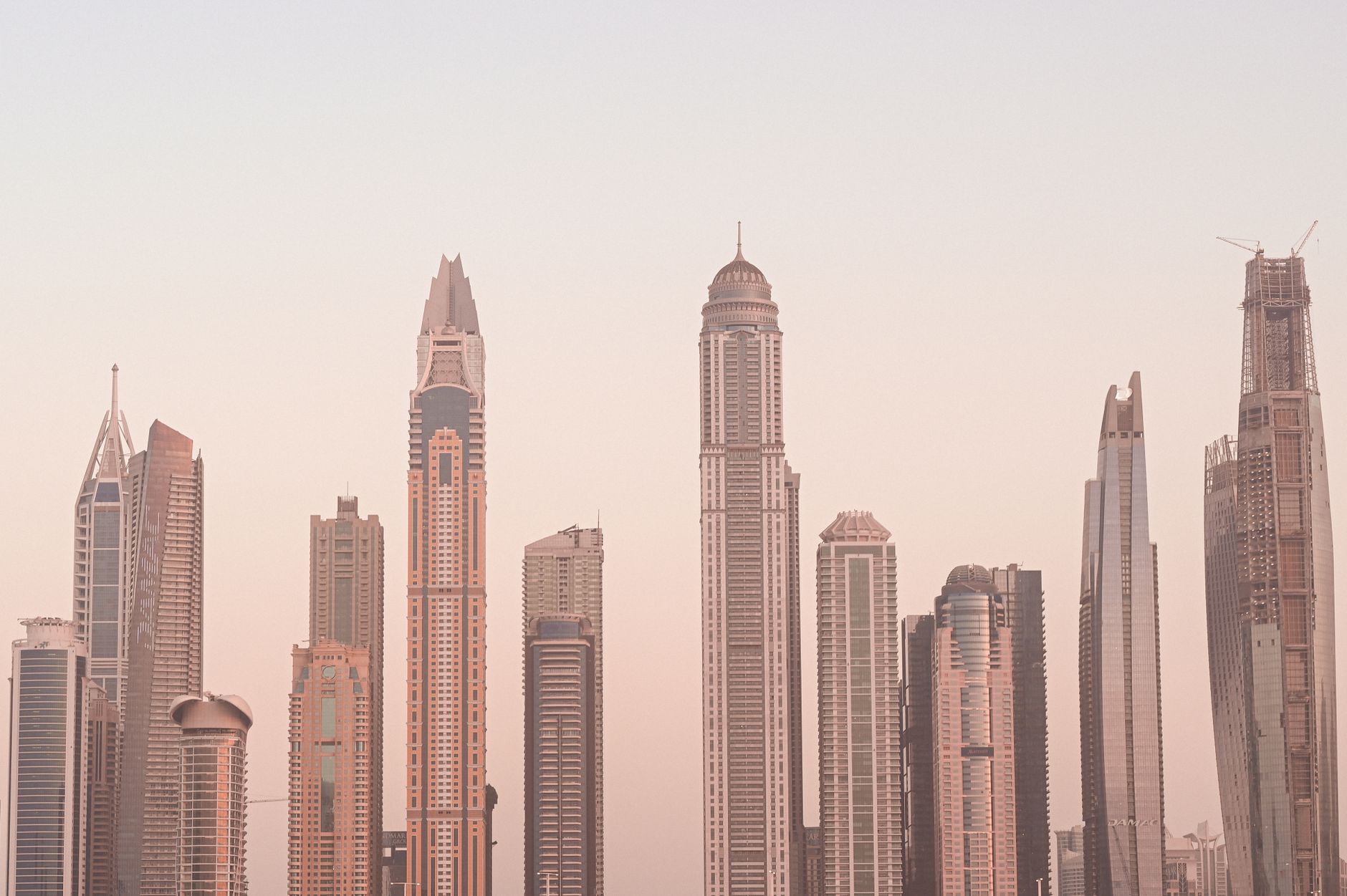
Dubai leads as UAE real estate hits new highs
Estimated reading time: 7 minutes
Key Takeaways
- Dubai recorded AED 327 billion in transactions in H1 2024, the strongest six‑month period on record.
- Foreign capital accounts for > 94 % of investors, providing deep liquidity.
- A massive supply wave (2025‑2027) will shift the market toward balanced pricing and greater buyer leverage.
- Prime luxury assets deliver 8‑10 % YoY appreciation; mid‑market apartments offer 5‑7 % gross yields.
- Abu Dhabi’s Q2 rebound adds a complementary, lower‑price entry point.
- Partnering with David Moya Real Estate LLC adds data‑driven strategy, risk management, and end‑to‑end transaction support.
Table of Contents
- Introduction
- 1. Market Overview
- 2. Core Drivers of the Upswing
- 3. Investor‑Focused Implications
- 4. Detailed Look at Dubai’s Market Segments
- 5. Abu Dhabi: A Complementary Growth Engine
- 6. How David Moya Real Estate LLC Adds Value
- 7. Investor Risks and Mitigation
- 8. Forward‑Looking Outlook (2025‑2027)
- FAQ
- Call to Action
Introduction
The UAE property market has entered a period of unprecedented activity, and Dubai is at the forefront as markets set new records. In the first half of 2024, Dubai logged 98,726 transactions worth AED 327 billion (≈ AUD 139.3 billion), confirming its status as one of the world’s most active real‑estate hubs. This surge is driven by strong capital inflows, resilient buyer sentiment, and a pipeline of supply that will reshape the market from 2025 onward. Below, David Moya Real Estate LLC provides a premium market commentary that dissects the drivers, evaluates the risks, and outlines how a sophisticated advisory partner can turn macro trends into long‑term portfolio value.
1. Market Overview: Record‑Setting Activity in Dubai and a Resurgent Abu Dhabi
Dubai’s quarter‑long performance
- Transactions: 98,726 (first six months)
- Value: AED 327 billion (≈ AUD 139.3 billion)
- Investor base: 94,717 investors, the vast majority foreign, committing AED 326 billion (≈ AUD 138.9 billion)
These figures represent the strongest six‑month period on record for Dubai and place the emirate among the globe’s most liquid property markets.
Abu Dhabi’s comeback
- Q1 2024 saw a 35 % drop in transaction volume, but Q2 rebounded with a 10 % rise in sales and a 48 % increase in value.
- The capital’s recovery underscores a market that can absorb short‑term volatility and resume growth when fundamentals improve.
Supply outlook
- A massive wave of new units is slated for delivery between 2025 and 2027, responding to pent‑up demand and population growth.
- This upcoming supply will shift the market from a “seller‑driven” environment to one where price discovery and buyer leverage become more balanced.
2. Core Drivers of the Current Upswing
| Driver | How It Impacts the Market | Investor Implication |
|---|---|---|
| Capital Flows – AED 326 bn of foreign money in six months | Demonstrates global confidence in regulatory stability, tax environment, and lifestyle appeal. | Strong liquidity enables acquisition of high‑quality assets without financing delays. |
| Strategic Government Policies – Golden visas, 100 % foreign ownership, zero‑tax on property income | Lowers entry barriers for expatriates and institutions, expands pool of occupants and tenants. | More predictable long‑term rental yields; broader buyer base improves exit options. |
| Economic Diversification – Tourism, fintech, logistics hubs | Generates employment, raises disposable incomes, sustains demand for premium space. | Price appreciation in mixed‑use districts; opportunities for “live‑work‑play” projects. |
| Supply‑Demand Rebalance – Upcoming 2025‑2027 inventory | Will ease price pressure, creating more rational valuations and room for negotiable deals. | Shift from competitive bidding wars to strategic, fundamentals‑based acquisitions. |
| Buyer Sentiment – High confidence among HNWIs, family offices, sovereign wealth funds | Drives willingness to pay premium for well‑located, well‑managed assets. | Prime locations (Downtown Dubai, Palm Jumeirah) retain value and generate superior capital gains. |
3. Investor‑Focused Implications
3.1 Portfolio Diversification
- Geographic spread: Dubai now rivals London and New York in transaction volume, offering a non‑correlated asset class.
- Asset class mix: Mixed‑use projects let investors diversify across residential, hospitality, logistics, and office within one jurisdiction.
3.2 Yield Potential
- Prime residential rentals in central Dubai: 5‑6 % gross.
- Secondary districts: 6‑7 % gross due to lower acquisition costs.
- Long‑term upside from capital appreciation and rent growth, especially near new Metro extensions.
3.3 Risk Management
- Supply risk: Monitor developer pipelines; focus on projects with strong pre‑sales.
- Regulatory risk: Ongoing advisory support to anticipate policy shifts.
3.4 Timing and Entry Strategies
- Short‑term: Off‑plan units priced below market to lock future upside.
- Medium‑term: Completed premium assets for immediate cash flow.
- Long‑term: Land‑bank acquisitions for development post‑2027.
4. Detailed Look at Dubai’s Market Segments
4.1 Luxury Residential (Palm Jumeirah, Emirates Hills)
- Demand driven by HNW international buyers seeking lifestyle and capital preservation.
- Prices have appreciated 8‑10 % YoY; buyers mainly from Europe, Asia, GCC.
4.2 Mid‑Market Apartments (Dubai Marina, JLT)
- Demand from expat professionals, small families, long‑term renters.
- Highest transaction volumes; price growth 5‑7 % YoY; yields 6‑7 % gross.
4.3 Emerging Sub‑Markets (Dubai South, MBR City)
- New master‑planned communities slated 2025‑2027.
- Early acquisition can capture appreciation as infrastructure (metro, schools, hospitals) is completed.
5. Abu Dhabi: A Complementary Growth Engine
- Q2 2024 value rose 48 % after a weak Q1, indicating rapid rebound.
- Key sectors: government projects, cultural tourism (Louvre Abu Dhabi, Saadiyat), expanding financial district.
- Lower price‑to‑rent ratios than Dubai, making it attractive for value‑focused investors.
6. How David Moya Real Estate LLC Adds Value
David Moya Real Estate LLC is not a simple listing service; it is a full‑service UAE property advisory firm that partners with investors, entrepreneurs, family offices, and international buyers to craft and execute strategic real‑estate portfolios.
6.1 Market Guidance & Investment Strategy
- Deep data analytics using the latest transaction reports.
- Strategic road‑mapping aligned with cash‑flow cycles and risk tolerance.
6.2 Location Selection & Property Shortlisting
- Location intelligence mapping schools, transport, commercial hubs.
- Curated shortlists meeting strict developer reputation and return criteria.
6.3 Transaction Support & Negotiation
- End‑to‑end execution: due diligence, title verification, financing, settlement.
- Negotiation edge using market benchmarks and developer incentives.
6.4 Risk Awareness & Portfolio Planning
- Macro and micro risk matrix assessment.
- Optimised asset mixes across Dubai, Abu Dhabi, and free‑zone locations.
6.5 Tangible Outcomes
- Clear, data‑driven market understanding.
- Structured decision‑making aligned with strategic objectives.
- Access to off‑market opportunities and rigorous vetting.
- Proactive supply‑glut identification to protect capital.
- Smoother purchasing process with coordinated legal and financial steps.
- Confidence for international buyers navigating UAE’s legal, tax, and cultural nuances.
7. Investor Risks and Mitigation
| Risk | Description | Mitigation Strategies |
|---|---|---|
| Oversupply (2025‑2027) | Large inventory could pressure rents and resale values in certain sub‑markets. | Focus on prime locations with limited new inventory; stagger acquisitions; keep cash reserves for opportunistic buying. |
| Regulatory Shifts | Potential changes to foreign‑ownership caps or visa rules. | Continuous policy monitoring; maintain flexible holding periods; use advisory partner for rapid compliance. |
| Currency Volatility | AED is USD‑pegged, but foreign investors face exchange‑rate risk on repatriated returns. | Employ hedging where appropriate; structure deals in AED for predictable cash flows. |
| Construction/Developer Risk | Off‑plan projects carry completion and quality uncertainties. | Conduct thorough developer due‑diligence, review delivery track record, require escrow arrangements and performance guarantees. |
8. Forward‑Looking Outlook (2025‑2027)
- Supply‑Demand Equilibrium: By 2027, price growth is expected to moderate to 3‑5 % annually, while rental yields stay stable due to sustained expatriate inflows.
- Technological Integration: Smart‑city initiatives and blockchain‑based registries will increase transparency and attract institutional capital.
- Sectoral Shifts: Logistics and data‑center assets likely to outpace traditional office space, driven by e‑commerce and cloud growth.
- Sustainability Premium: Projects meeting Dubai’s Green Building Regulations or Abu Dhabi’s Estidama rating command a 5‑7 % price premium.
FAQ
Q1 – What is the minimum investment size for a foreign buyer in Dubai?
Dubai permits 100 % foreign ownership with no statutory minimum. Most high‑quality developments start from AED 1 million (≈ USD 270,000).
Q2 – How does the upcoming supply wave affect rental yields?
In the short term, new units may modestly compress yields in secondary districts. Prime locations with limited new inventory are expected to maintain 5‑6 % gross yields.
Q3 – Are there tax advantages for international investors?
The UAE imposes zero property‑income tax and no capital gains tax for individuals, offering a tax‑efficient environment for high‑net‑worth investors.
Q4 – What due‑diligence steps should I take before purchasing an off‑plan unit?
Verify the developer’s track record, escrow arrangements, payment schedule, and obtain a clear title report from the Dubai Land Department. David Moya Real Estate LLC assists with all these checks.
Q5 – Can I finance a purchase as a non‑resident?
Yes. UAE banks offer mortgages to non‑resident buyers, typically up to 70 % LTV, subject to credit assessment and income verification.
Call to Action
If you are ready to capitalize on the UAE’s record‑breaking real‑estate momentum, partner with a trusted advisor that blends market insight with execution excellence. Contact David Moya Real Estate LLC today to discuss tailored investment strategies, receive a customized property shortlist, and begin building a resilient UAE property portfolio.
Phone: +971 4 123 4567
Email: info@davidmoya.com
Invest with confidence. Invest with insight. Invest with David Moya Real Estate LLC.
Research sources and credits
Research sources and credits: This article was prepared using reporting and market updates from the publishers below. Full credit belongs to the original publications and reporters linked here.
- Dubai leads as UAE real estate hits new highs
Credit: Web
Dubai posts its strongest quarter on record while upcoming supply reshapes buying conditions across the UAE. ### The UAE’s property market is set for another significant year, with new data showing record-breaking activity in Dubai, a stronger-than-expected rebound in Abu Dhabi, and a major supply wave expected to reshape conditions from 2025 to 2027. Across the first six months of the year, Property Finder reported the emirate recorded 98,726 transactions totalling AED 327 billion (AUD 139.3 billion), reinforcing its position as one of the world’s most active real estate markets. A total of 94,717 investors, the majority foreign, placed AED 326 billion (AUD $138.9 billion) into UAE properties during the same period. Abu Dhabi had a slow start, recording a 35% fall in Q1 transactions, but the capital staged a swift turnaround in the second quarter with a 10% rise in sales and a 48% increase in value.
Next steps
If you want help evaluating projects, comparing returns, or building a UAE property strategy, contact David Moya Real Estate at +(971) 585893086 or info@davidmoya.org.