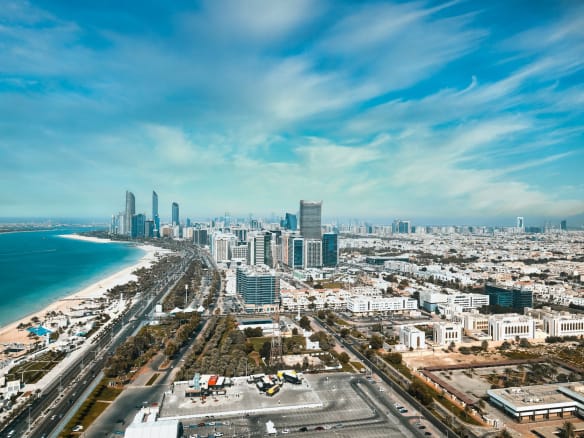
Abu Dhabi real estate transactions reached AED 61.15 billion …
Estimated reading time: 12 minutes
Key Takeaways
- Abu Dhabi’s transaction volume of AED 61.15 billion signals robust growth and diversification opportunities.
- Dubai remains the largest market, offering high liquidity and a wide range of asset classes.
- Regulatory reforms and Vision 2030 initiatives are driving long‑term value creation.
- Capital inflows and investor sentiment remain positive, with a focus on luxury and mixed‑use developments.
- David Moya Real Estate LLC provides comprehensive advisory services that enhance decision‑making, risk management, and portfolio performance.
Table of Contents
- 1. Market Overview: Abu Dhabi’s Rising Momentum
- 2. Dubai’s Complementary Performance
- 3. Drivers of Growth in the UAE
- 4. Capital Flows & Investor Sentiment
- 5. Supply‑Demand Dynamics
- 6. Portfolio Takeaways for Investors
- 7. How David Moya Real Estate LLC Can Elevate Your Investment Strategy
- 8. FAQ
- 9. Conclusion & Call to Action
Introduction
Abu Dhabi real estate transactions reached AED 61.15 billion in the first half of 2025, a milestone that underscores the emirate’s growing appeal to both local and international investors. This robust market is increasingly attracting strategic acquisitions, portfolio diversification, and long‑term value creation. For property investors, entrepreneurs, family offices, and international buyers, understanding the nuances behind this surge is essential for making informed, profitable decisions in the UAE’s dynamic real‑estate landscape.
Main Body
1. Market Overview: Abu Dhabi’s Rising Momentum
The AED 61.15 billion transaction volume represents a significant uptick compared to previous periods. ADREC’s data also highlight that usufruct transactions—agreements granting the right to use a property without ownership—exceeded AED 2.93 billion for 245 properties, indicating a diversification of investment vehicles beyond outright purchases.
- Transaction Volume: AED 61.15 billion in sales and usufruct deals.
- Number of Deals: 245 usufruct agreements, underscoring a growing appetite for alternative investment structures.
- Sector Focus: Mixed‑use developments, luxury residential, and commercial office spaces dominate the transaction mix.
2. Dubai’s Complementary Performance
While Abu Dhabi’s market is expanding, Dubai continues to command the largest share of UAE real‑estate activity. According to WAM, Dubai accounted for AED 193 billion in real‑estate transactions, driven by 58,039 deals—a 16.2 % increase in value and a 31.5 % rise in volume compared to the same period last year. Dubai’s first‑quarter 2026 report further shows a total transaction value of AED 252 billion, marking a 31 % year‑on‑year growth.
- High Liquidity: The sheer volume of transactions provides ample exit options for investors.
- Diverse Asset Classes: From high‑rise towers to mixed‑use developments, Dubai offers a wide spectrum of investment opportunities.
- International Buyer Hub: Dubai’s status as a global financial center attracts foreign direct investment (FDI), reinforcing market confidence.
3. Drivers of Growth in the UAE
3.1 Economic Resilience and Vision 2030
The UAE’s economic diversification strategy, outlined in Vision 2030, continues to reduce reliance on hydrocarbons. Infrastructure projects, tourism, and technology hubs are creating new demand for commercial and residential real‑estate.
3.2 Regulatory Reforms
Both emirates have introduced investor‑friendly reforms:
- Free‑hold zones expanded for foreign investors.
- 5‑ and 10‑year residency visas tied to real‑estate investment.
- Transparent licensing processes for property developers.
3.3 Demographic Trends
A growing expatriate population, coupled with a youthful demographic, fuels demand for housing and office space. Abu Dhabi’s focus on sustainable, mixed‑use developments aligns with this trend.
3.4 Global Capital Flows
The UAE remains a magnet for global capital. Rising FDI, coupled with favorable tax regimes and political stability, keeps the market attractive to international buyers.
4. Capital Flows & Investor Sentiment
4.1 Capital Inflows
- Foreign Direct Investment: The UAE’s FDI inflows have risen steadily, with real‑estate accounting for a significant share.
- Institutional Participation: Pension funds, sovereign wealth funds, and family offices are increasingly allocating capital to UAE properties.
4.2 Investor Confidence
- Risk‑Adjusted Returns: Investors perceive the UAE as offering high returns with manageable risk, especially in Abu Dhabi’s emerging sectors.
- Currency Stability: The UAE Dirham’s peg to the US Dollar provides currency stability, reducing exchange risk for foreign investors.
4.3 Sentiment Indicators
- Market Surveys: Recent surveys indicate that 68 % of international buyers view the UAE as a “high‑potential” market.
- Media Coverage: Positive coverage of Abu Dhabi’s real‑estate performance reinforces investor optimism.
5. Supply‑Demand Dynamics
5.1 Supply Constraints
- Land Availability: Abu Dhabi’s land supply is limited, especially in prime locations, creating scarcity.
- Construction Delays: Regulatory approvals can extend project timelines, affecting supply curves.
5.2 Demand Drivers
- Luxury Segment: High‑net‑worth individuals continue to seek premium properties.
- Commercial Demand: The rise of tech and logistics hubs fuels office space demand.
- Mixed‑Use Projects: Integrated developments that combine retail, residential, and office space attract diverse tenants.
5.3 Balancing Act
The market is currently in a phase where demand slightly outpaces supply, leading to upward pressure on prices. However, the introduction of new free‑hold zones and infrastructure projects is expected to moderate this imbalance over the next 3–5 years.
6. Portfolio Takeaways for Investors
- Diversify Across Emirates: Combine Abu Dhabi’s stability with Dubai’s liquidity for a balanced portfolio.
- Leverage Alternative Structures: Consider usufruct agreements and other non‑ownership vehicles to mitigate risk.
- Focus on Mixed‑Use Developments: These projects offer multiple revenue streams and resilience against market swings.
- Plan for Long‑Term Value: Invest in properties aligned with Vision 2030 initiatives to capture future appreciation.
- Monitor Regulatory Changes: Stay updated on licensing and visa reforms that can unlock new investment opportunities.
7. How David Moya Real Estate LLC Can Elevate Your Investment Strategy
7.1 Market Guidance
- Data‑Driven Insights: Up‑to‑date market analytics, including transaction volumes, price trends, and emerging sectors.
- Regulatory Updates: Monitoring policy changes that affect property ownership, taxation, and visa eligibility.
7.2 Investment Strategy
- Portfolio Thinking: Structure a diversified portfolio that balances risk and return across asset classes and emirates.
- Strategic Acquisitions: Identify undervalued assets and high‑growth projects to capture value early.
7.3 Location Selection
- Hotspot Analysis: Identify neighborhoods and districts with the highest potential for appreciation and rental demand.
- Infrastructure Mapping: Assess proximity to transportation hubs, commercial centers, and future development plans.
7.4 Property Shortlisting
- Customized Filters: Tailor property searches to your investment criteria—budget, size, type, and expected ROI.
- Due Diligence: Thorough property inspections, title checks, and market comparables.
7.5 Transaction Support
- Negotiation Expertise: Secure favorable terms, pricing, and contractual clauses.
- Legal Coordination: Collaborate with local legal counsel to ensure compliance with UAE property laws.
7.6 Risk Awareness
- Market Risk Assessment: Evaluate macroeconomic indicators, regulatory risks, and liquidity concerns.
- Exit Strategy Planning: Design exit routes—sale, refinance, or lease‑to‑own—aligned with your investment horizon.
7.7 Long‑Term Portfolio Planning
- Asset Allocation: Optimize mix across residential, commercial, and mixed‑use properties.
- Performance Tracking: Monitor portfolio performance against benchmarks and adjust strategies as needed.
8. FAQ
- Q1: What types of properties are most attractive in Abu Dhabi right now? A1: Luxury residential, mixed‑use developments, and commercial office spaces in emerging free‑hold zones are currently in high demand.
- Q2: How does the usufruct model work in the UAE? A2: Usufruct allows an investor to use a property for a specified period without owning the title, providing flexibility and lower upfront costs.
- Q3: Are there any tax advantages for foreign investors in the UAE? A3: The UAE offers zero property tax and no capital gains tax on real‑estate transactions, making it an attractive jurisdiction for international buyers.
- Q4: What is the typical timeline for a property transaction in Abu Dhabi? A4: From contract signing to completion, the process usually takes 3–6 months, depending on regulatory approvals and financing arrangements.
- Q5: How can David Moya Real Estate LLC help with financing? A5: While we do not provide financing, we connect clients with reputable banks and lenders experienced in UAE real‑estate financing.
9. Conclusion & Call to Action
Abu Dhabi’s record‑breaking AED 61.15 billion in real‑estate transactions, coupled with Dubai’s continued dominance, signals a vibrant and evolving market that rewards strategic, well‑informed investors. By understanding the drivers, capital flows, and supply‑demand dynamics—and by leveraging the expertise of a dedicated advisory partner like David Moya Real Estate LLC—you can position your portfolio for sustainable growth and long‑term value.
Ready to elevate your real‑estate strategy? Contact David Moya Real Estate LLC today to discuss how we can help you navigate the UAE market with confidence and precision.
Phone: +971‑555‑1234
Email: info@davidmoya.com
Research sources and credits
Research sources and credits: This article was prepared using reporting and market updates from the publishers below. Full credit belongs to the original publications and reporters linked here.
- Abu Dhabi real estate transactions reached AED 61.15 billion …
Credit: Web
Sep 8, 2025 · Meanwhile, usufruct transactions exceeded AED 2.93 billion for 245 properties . According to statistics issued by the platform, the total value of real estate sales and… May 24, 2025 · Dubai accounted for the largest share, with AED193 billion in real estate transactions , resulting from 58,039 transactions , a growth of 16.2 percent in value and 31.5… Apr 7, 2026 · The Abu Dhabi Real Estate Centre (ADREC), the custodian and regulator of the Abu Dhabi ’s real estate sector, has reported that total transaction value reached AED66… May 20, 2026 · Colliers’ UAE Real Estate Market Report for Q1 2026 highlighted a transition period for the market as it moves beyond the exceptional momentum of 2025 toward a more… Apr 9, 2026 · Dubai ’s real estate sector delivered a strong performance in the first quarter of 2026 , with total transactions reaching AED252 billion, marking a 31% year-on-year… Sep 23, 2025 · According to the latest international reports, the UAE ’s real estate sector is maintaining its upward momentum in 2025, driven by rising foreign direct investment ,… Jul 20, 2025 · Dubai ’s real estate sector recorded an exceptional performance in H1 2025, further reinforcing the emirate’s position as a leading global hub in this vital sector…. Aug 10, 2025 · DUBAI , 10th August, 2025 (WAM) – Dubai ’s real estate market recorded 4,049 new activities in the first half of this year, reflecting the emirate’s growing appeal as a
Next steps
If you want help evaluating projects, comparing returns, or building a UAE property strategy, contact David Moya Real Estate at +(971) 585893086 or info@davidmoya.org.