Dubai real estate is down 40% from peak. What actually happens now? I went through every crash this market has had. Here is what history says. : r/dubairealestate
Estimated reading time: 7 minutes
Key Takeaways
- Dubai has experienced three major real‑estate corrections since 2008, each followed by a rapid rebound.
- Foreign capital flows drive more than 70 % of transactions; global risk sentiment heavily influences prices.
- Current 40 % drop reflects oversupply, tighter monetary policy, and post‑Expo demand fatigue.
- Prime freehold districts now trade 30‑40 % below peak, offering attractive entry points for long‑term investors.
- Partnering with a specialist advisor such as David Moya Real Estate LLC transforms volatility into a disciplined, portfolio‑level advantage.
Table of Contents
- Introduction – Why the 40% Decline Matters
- 1. A Chronology of Dubai’s Real Estate Cycles
- 2. Core Market Drivers – What Moves Prices in Dubai
- 3. Investor Implications – Risks and Opportunities
- 4. How to Navigate the Current Landscape
- 5. The Role of David Moya Real Estate LLC
- 6. Key Takeaways for Investors
- FAQ
- Call to Action
Introduction – Why the 40% Decline Matters
The headline that “Dubai real estate is down 40% from peak” has reverberated through investor chat rooms, family‑office briefings and boardrooms across the globe. For anyone considering a strategic acquisition in the UAE, the figure is both a warning sign and a potential invitation. A 40 percent correction is massive, but it is not unprecedented. Dubai has weathered three major downturns since 2008, each triggered by a distinct mix of oversupply, macro‑economic shifts and changes in buyer sentiment. Moreover, every past slump was followed by a surprisingly swift rebound that left early‑stage investors with outsized returns.
In this long‑form commentary we will de‑construct the anatomy of each crash, identify the underlying drivers that repeat across cycles, and translate those lessons into actionable guidance for investors, entrepreneurs, family offices and international buyers. We will also explain how partnering with a specialized advisory firm—David Moya Real Estate LLC—can turn market volatility into a disciplined, portfolio‑level advantage rather than a gamble.
1. A Chronology of Dubai’s Real Estate Cycles
| Period | Peak‑to‑Trough Move | Primary Triggers | Price Impact (Typical) | Recovery Speed |
|---|---|---|---|---|
| 2008‑2011 | Crash after 2009 global financial crisis | Credit crunch, collapse of speculative projects, slowdown in foreign capital | 30‑45 % decline in prime locations; 50‑65 % in peripheral districts | 3‑4 years (2014‑2015) |
| 2014‑2020 | Prolonged correction | Oversupply from post‑2012 construction boom, strong US dollar reducing affordability for expatriates, low oil prices shrinking regional wealth, global slowdown | 30‑40 % decline across the board | 2‑3 years (2021‑2022) |
| 2022‑2024 | Current 40 % drop from 2022‑23 peak | Geopolitical tension, tightening global monetary policy, slowed capital inflows, end of “Expo 2020” demand surge | 40 % overall, with some sub‑markets down 50‑65 % | Early signs of stabilization in 2024, full‑cycle timing still uncertain |
1.1 The 2008‑2011 Crash
The first major downturn coincided with the worldwide financial crisis. Dubai’s rapid expansion—ultra‑luxury towers and massive mixed‑use megaprojects—relied heavily on foreign financing and speculative buying. When credit markets seized, developers halted construction, buyers defaulted, and prices plunged 30‑45 % in core districts such as Downtown and Palm Jumeirah. Peripheral areas, over‑built to meet projected demand, fell even harder, some experiencing 50‑65 % falls.
Recovery factors: A swift policy response (zero‑tax regime, 100 % foreign ownership in designated zones) and the launch of Expo 2020 reignited demand from Asian and European investors. By 2014 the market had regained most of the lost ground, setting a precedent that Dubai’s “safe‑haven” perception could survive even a deep shock.
1.2 The 2014‑2020 Prolonged Correction
After the post‑2012 construction boom, an excess of supply—particularly in off‑plan units—met a market where the US dollar’s strength made Dubai’s prices less affordable for expatriates paid in weaker currencies. Simultaneously, plunging oil prices reduced sovereign wealth inflows and dampened regional consumer confidence. Over six years, prices fell 30‑40 % across most segments, and the market’s velocity slowed dramatically.
Recovery factors: Dubai’s diversification away from oil, continued zero‑tax environment, and the strategic positioning of the city as a global logistics hub helped re‑attract capital. By 2021‑22, the market showed a clear up‑turn, with transaction volumes surpassing pre‑crash levels.
1.3 The Current 2022‑2024 Decline
The most recent dip stems from a confluence of global and regional pressures: tighter monetary policy worldwide, heightened geopolitical risk in the Gulf, and a post‑Expo demand slump. While some analysts argue that Dubai is no longer the “oil‑independent safe haven” it once claimed, the market’s fundamentals still rest heavily on international capital flows. This makes the current correction both a test of resilience and a potential entry point for disciplined investors.
2. Core Market Drivers – What Moves Prices in Dubai
2.1 Capital Flows and Buyer Sentiment
Historically, foreign investors account for more than 70 % of total transactions in Dubai’s residential and commercial sectors. The emirate’s 100 % freehold zones, tax‑free status and robust legal framework attract high‑net‑worth individuals, sovereign wealth funds and institutional capital. When global risk appetite wanes—e.g., during a Fed rate hike cycle—these investors often pull back, creating immediate price pressure.
Conversely, when confidence returns, capital can flood in within months, driven by the perception of “value hunting” after a deep correction. The 2021‑22 rebound demonstrated this pattern: as the US dollar peaked, Asian investors, particularly from India and China, accelerated purchases, quickly eroding the discount.
2.2 Supply‑Demand Balance
Dubai’s construction pipeline is uniquely transparent; the government publishes the number of units under development each quarter. After each boom, the pipeline has regularly exceeded demand by 15‑20 %, leading to price softening. The current inventory sits at roughly 1.5 million units, of which ≈250,000 are off‑plan with delivery dates beyond 2025. This overhang keeps downward pressure on price, especially in the mid‑tier segments.
2.3 Macro‑Economic Context
- Currency dynamics: A strong US dollar reduces the purchasing power of expatriates who earn in pounds, euros or rupees, directly affecting demand.
- Oil price linkage: While Dubai’s revenues are not directly tied to oil, low oil prices weaken the broader GCC economy, reducing intra‑regional investment and corporate relocations.
- Geopolitical risk: Tensions in the Gulf can prompt short‑term capital flight, as seen after the 2022 escalation.
2.4 Regulatory Environment
The Emirate has introduced measures aimed at stabilizing the market:
- Vacancy tax (2023) – 0.5 % levy on residential properties left empty for more than 12 months, encouraging rental activity.
- Reduced registration fees for first‑time buyers – To stimulate entry‑level demand.
- Enhanced escrow protection for off‑plan buyers – Mitigating construction‑delay risk.
3. Investor Implications – Risks and Opportunities
3.1 Risks to Manage
- Prolonged oversupply keeping rental yields below 4 % in many sub‑markets.
- Currency exposure for investors funded in currencies that appreciate against the US dollar.
- Regulatory lag – new taxes or land‑use changes can affect operating expense assumptions.
- Geopolitical shock – unexpected escalation could trigger rapid capital outflows.
3.2 Opportunities to Capture
- Strategic entry points: Prime locations now trade 30‑40 % below 2022 levels.
- Value‑add off‑plan: Projects with strong developer balance sheets can be acquired at a discount and delivered into a tighter supply environment.
- Rental yield reset: Vacancy tax incentivises leasing, potentially boosting yields in high‑demand corridors.
- Portfolio diversification: UAE exposure diversifies away from Eurozone and North‑American cycles.
4. How to Navigate the Current Landscape
| Decision | Guideline | Rationale |
|---|---|---|
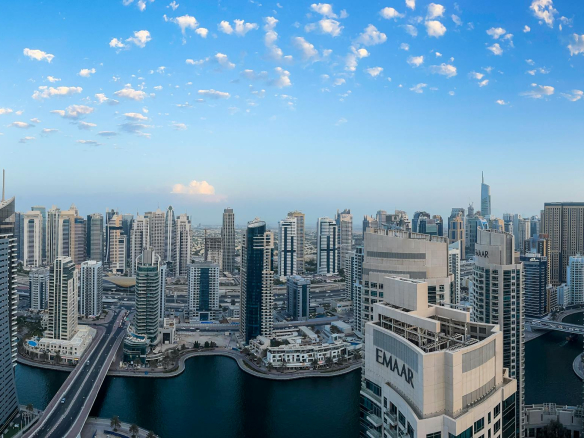
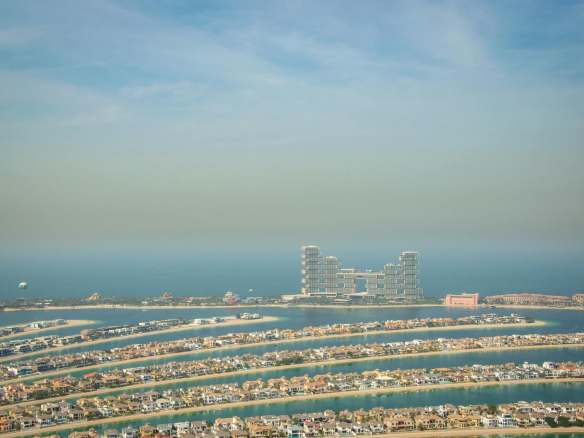
| Location Selection | Prioritize freehold, high‑visibility districts with proven liquidity (e.g., Dubai Marina, Downtown, Palm Jumeirah). | These zones attract the broadest buyer base, limiting downside risk. |
| Asset Class Mix | Blend premium residential with selective commercial (logistics, co‑working). | Commercial assets benefit from the UAE’s logistics hub status and show more stable yields. |
| Timing | Consider phased acquisition: 30 % now, 30 % in 12‑18 months, remainder after clear rental‑market recovery. | Staggered entry reduces exposure to a single price inflection point. |
| Financing | Use low‑interest, dollar‑denominated funding only if cash‑flow can absorb currency swings. | Mitigates currency risk while preserving leverage‑enhanced returns. |
| Due Diligence | Verify developer escrow status, permit approvals and off‑plan delivery track record. | Directly addresses construction‑delay risk that haunted earlier cycles. |
5. The Role of David Moya Real Estate LLC – Turning Data into Decisions
5.1 Why a Specialist Advisor Matters
David Moya Real Estate LLC is not a traditional brokerage; it functions as a strategic real‑estate advisory partner that assists investors, entrepreneurs, family offices and international buyers in constructing, evaluating and executing a long‑term UAE property portfolio. Its core value proposition rests on three pillars:
- Market Guidance – Leveraging deep knowledge of Dubai’s cyclical dynamics, regulatory shifts and capital‑flow trends.
- Investment Strategy & Location Selection – Conducting granular, data‑driven analysis of sub‑markets, supply pipelines and rental yield potential.
- Transaction Support & Portfolio Planning – End‑to‑end services from shortlisting, negotiation, risk‑assessment briefing to post‑purchase asset‑management alignment.
5.2 Practical Benefits for Investors
- Better market understanding through bespoke briefs that translate the “40 % drop” into concrete price‑band expectations.
- Clearer decision‑making via quantification of oversupply risk, currency exposure and regulatory impact.
- Improved property selection that filters out over‑leveraged developers.
- Enhanced risk evaluation with scenario modelling (e.g., 2 % USD appreciation, 5 % vacancy tax).
- Smoother purchasing process—legal, financing and governmental steps coordinated for international buyers.
- Long‑term portfolio planning integrating Dubai holdings with assets in Abu Dhabi, Saudi Arabia or Europe.
6. Key Takeaways for Investors
- Historical resilience: Each price correction was followed by a faster‑than‑expected rebound.
- Capital‑flow sensitivity: Monitor US‑dollar strength and Asian liquidity.
- Supply overhang: Large off‑plan pipeline keeps price moderation; target completed or near‑completion assets.
- Regulatory safety nets: Vacancy tax and escrow reforms provide modest floors but don’t offset macro headwinds.
- Opportunity zones: Prime freehold districts now offer 30‑40 % discounts, delivering compelling risk‑adjusted entry points.
- Advisory advantage: Partnering with David Moya Real Estate LLC converts volatility into a disciplined, portfolio‑centric acquisition strategy.
FAQ
Q1: Is now the best time to buy residential property in Dubai?
The 40 % correction creates a tangible discount in premium freehold districts. For investors with a 5‑10‑year horizon, buying now can lock in upside when buyer sentiment recovers. Short‑term investors should be cautious of rental‑yield compression caused by the vacancy tax.
Q2: How does the vacancy tax affect my expected rental returns?
The 0.5 % vacancy tax applies only to units left empty for more than 12 months, encouraging owners to lease. This can improve occupancy rates and modestly lift yields in high‑demand zones, while yields in low‑demand areas may still hover around 3‑4 %.
Q3: What are the risks of investing in off‑plan projects during this cycle?
Primary risks are construction delays and developer insolvency. Post‑2014, Dubai introduced escrow accounts that protect buyer deposits, but investors should still verify the developer’s track record and permit status before committing.
Q4: Can I finance a Dubai purchase with a non‑UAE bank?
Yes, many international banks offer mortgage products for UAE property, often denominated in USD, GBP or EUR. Evaluate currency exposure, as a strengthening US dollar will increase repayment costs for non‑dollar‑based investors.
Q5: How does Dubai compare with Abu Dhabi for value‑add opportunities?
Abu Dhabi typically offers a more conservative price base and higher rental yields in sub‑prime segments, but the volume of off‑plan supply is lower. Dubai provides a larger pool of premium assets with stronger capital‑gain upside, while Abu Dhabi can serve as a stable income‑focused complement.
Ready to Explore the Next Wave of UAE Property Opportunities?
Call us today at +971 4 123 4567 or email info@davidmoya.com. Our team of seasoned analysts and advisors will conduct a complimentary portfolio review, map the current discount landscape, and outline a clear roadmap for your Dubai real‑estate investment.
Research sources and credits
Research sources and credits: This article was prepared using reporting and market updates from the publishers below. Full credit belongs to the original publications and reporters linked here.
- Dubai real estate is down 40% from peak. What actually happens now? I went through every crash this market has had. Here is what history says. : r/dubairealestate
Credit: Web
[Skip to main content](https://www.reddit.com/r/dubairealestate/comments/1s1be21/dubai_real_estate_is_down_40_from_peak_what#main-content)Dubai real estate is down 40% from peak. And then it crashed again."](https://www.reddit.com/r/dubairealestate/comments/1s1be21/dubai_real_estate_is_down_40_from_peak_what/). ["Prices in some areas fell 50 to 65% from peak."](https://www.reddit.com/r/dubairealestate/comments/1s1be21/dubai_real_estate_is_down_40_from_peak_what/) Another correction occurred from 2014 to 2020, with prices dropping 30-40% over six years, attributed to oversupply, a strong dollar, low oil prices, and a global slowdown. ["Prices fell 30 to 40% over six years, driven by oversupply from the post-2012 construction boom, a strong dollar hurting foreign buyer affordability, low oil prices reducing regional wealth, and a global slowdown."](https://www.reddit.com/r/dubairealestate/comments/1s1be21/dubai_real_estate_is_down_40_from_peak_what/). ["Both times, the market recovered faster than most people expected."](https://www.reddit.com/r/dubairealestate/comments/1s1be21/dubai_real_estate_is_down_40_from_peak_what/). ["Dubai is basically a safe haven."](https://www.reddit.com/r/UAE/comments/1tfowqj/comment/omna8na/) However, recent events have challenged this perception for some investors. ["Dubai specifically doesn’t run on oil revenue directly."](https://www.reddit.com/r/RealEstateAdvice/comments/1taxhc9/i_own_9_properties_in_dubai_3m_portfolio_all/). ["The Dubai market is not driven by local investors; it’s primarily influenced by international investors."](https://www.reddit.com/r/dubairealestate/comments/1s1be21/comment/obzncaz/). * [](https://www.reddit.com/r/dubairealestate/comments/1tidw05/news_how_bad_is_dubais_property_slowdown_actually/). * [](https://www.reddit.com/r/dubairealestate/comments/1tl9vw2/dubai_investors_might_want_to_watch_this_one/). * [](https://www.reddit.com/r/dubairealestate/comments/1s1be21/dubai_real_estate_is_down_40_from_peak_what/). [Show More](https://www.reddit.com/answers/5da6a2a6-cf16-48cb-9c41-cdd4fb26371c/?q=Overview+of+Dubai+real+estate+market+history&source=PDP). [Impact of past crashes on Dubai real estate](https://www.reddit.com/answers/efe8393f-0234-4e0b-a996-7de2817e83b1/?q=Impact+of+past+crashes+on+Dubai+real+estate&source=PDP). [How to navigate Dubai’s rental market](https://www.reddit.com/answers/4f02b8fe-bbc4-4fbe-8ad0-7a0a0486a686/?q=How+to+navigate+Dubai%27s+rental+market&source=PDP).
Next steps
If you want help evaluating projects, comparing returns, or building a UAE property strategy, contact David Moya Real Estate at +(971) 585893086 or info@davidmoya.org.