Dubai property sector shows early signs of weakness
Estimated reading time: 7 minutes
Key Takeaways
- Transaction volumes are falling and price reductions are emerging, indicating a market correction.
- Luxury residential supply outpaces demand, creating immediate discount opportunities.
- Geopolitical risk is tightening capital flows, especially from Europe and Asia.
- Diversify across Dubai and Abu Dhabi to balance exposure to oversupplied segments and government‑backed projects.
- Partner with David Moya Real Estate LLC for data‑driven insights, deal structuring, and portfolio integration.
- Adopt a 3–5‑year holding horizon to capture upside as the market stabilises.
Table of Contents
- Introduction
- 1. What the Data Is Telling Us
- 2. The Main Market Drivers
- 3. Buyer Sentiment – Who Is Pulling Back?
- 4. Supply‑Demand Dynamics – A Closer Look
- 5. Implications for Different Investor Profiles
- 6. Opportunities Hidden in the Weakness
- 7. How David Moya Real Estate LLC Turns Market Stress into Strategic Advantage
- 8. Forward‑Looking Outlook – 2026 – 2028
- 9. Key Takeaways for Investors
- FAQ
- Call to Action
Introduction
The headline that dominated regional business news on March 20, 2026 – “Dubai property sector shows early signs of weakness” – is now echoing through investor briefings, boardrooms, and family‑office strategy sessions. The primary keyword Dubai property sector shows early signs of a slowdown appears in analyst reports, broker updates, and even in the headlines of global news wires. For the sophisticated investor, entrepreneur, family office, or international buyer who treats real estate as a core component of a diversified portfolio, the message is clear: the market that delivered five years of uninterrupted price appreciation is beginning to tilt.
This commentary goes beyond a short news recap. It dissects the drivers behind the emerging weakness, evaluates capital‑flow patterns, gauges buyer sentiment, and translates the macro‑trend into concrete implications for a high‑net‑worth audience. Throughout the piece, we weave in how David Moya Real Estate LLC can turn a potentially unsettling market environment into a source of strategic advantage.
1. What the Data Is Telling Us
- Transaction volumes are falling: Recent analyst data cited by Reuters shows a sharp contraction in the number of completed deals just three weeks after the escalation of the U.S.–Israeli conflict with Iran.
- Price reductions are surfacing: A growing minority of real‑estate agents in Dubai report that sellers are beginning to offer discounts to sustain buyer interest.
- Underlying concerns pre‑date the geopolitical shock: Even before the current tension, market watchers warned that after five years of double‑digit price growth the sector was “headed for a slowdown.”
These three signals – lower volume, price pressure, and pre‑existing vulnerability – form a triad that points to a market correction rather than a fleeting dip.
2. The Main Market Drivers
2.1 Geopolitical Context
The March 2026 escalation of the U.S.–Israeli war on Iran has introduced a “risk‑off” bias among global investors. Capital that previously chased high‑yield, high‑visibility assets such as Dubai’s luxury apartments is now being repositioned toward safer havens or waiting for clearer risk signals. While the UAE has traditionally insulated itself from regional turbulence through strong sovereign backing and diversified economic policy, the immediacy of the conflict is already reflected in buyer caution.
2.2 Macro‑Economic Fundamentals
- Interest‑rate environment: The UAE’s currency board ties the dirham to the US dollar, meaning that any Fed tightening is directly transmitted to local mortgage rates. Recent hikes have nudged borrowing costs up by roughly 150 basis points, making financing less attractive for leveraged buyers.
- Oil‑related fiscal buffers: Although the UAE’s fiscal position remains strong, a modest dip in oil prices this year trimmed discretionary spending power among regional high‑net‑worth individuals, a segment that traditionally accounted for a sizable share of premium Dubai transactions.
2.3 Supply‑Demand Imbalance
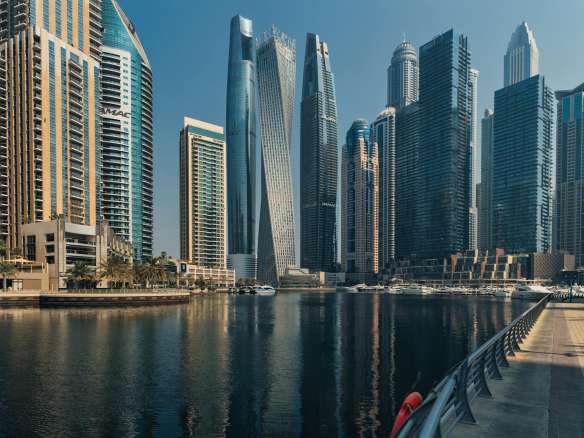
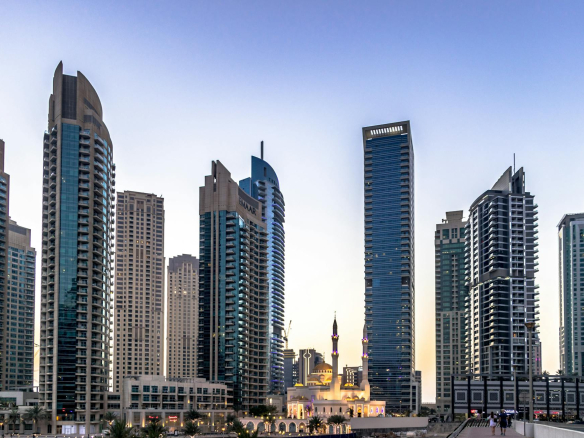
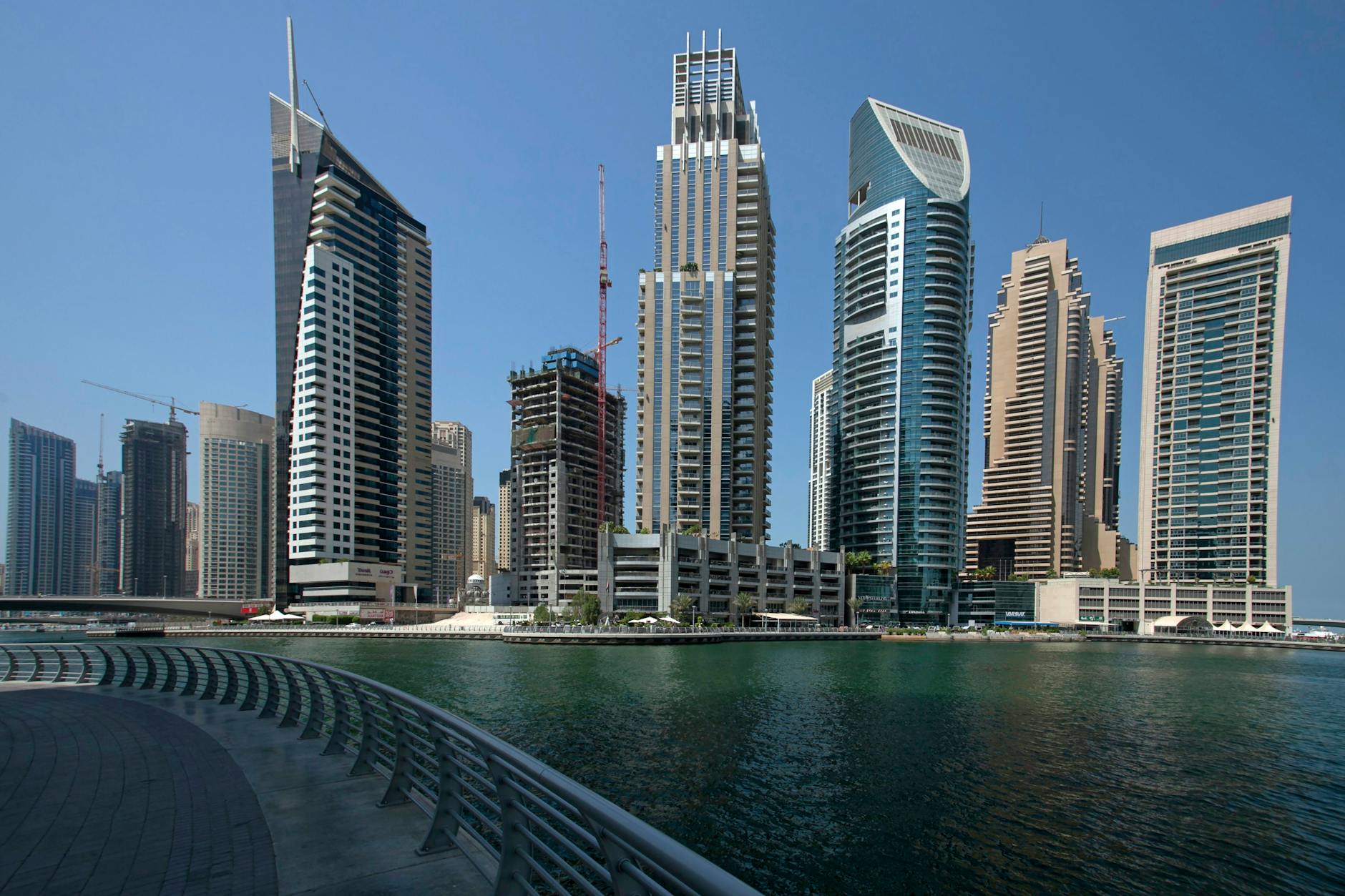
During the boom years (2020‑2025) developers delivered an unprecedented volume of off‑plan units, luxury villas, and mixed‑use towers. As of Q1 2026, inventory levels in prime districts such as Downtown Dubai, Dubai Marina, and Palm Jumeirah are 15‑20 % above the absorption rate forecasted by the Dubai Land Department. When supply outpaces demand, price concessions become inevitable.
2.4 Capital‑Flow Shifts
- Foreign direct investment (FDI): The United Kingdom, India, and Russia have historically been the top source countries for Dubai property purchases. Recent data indicates a 7 % YoY decline in net inflows from these markets, partly due to currency volatility and heightened geopolitical risk.
- Institutional money: Sovereign wealth funds and pension funds that had allocated a portion of their real‑estate mandate to the Gulf are now re‑balancing toward stable Western markets, creating a modest void in the institutional buyer pool.
3. Buyer Sentiment – Who Is Pulling Back?
3.1 International Buyers
High‑net‑worth individuals from Europe and Asia, who once viewed Dubai as a tax‑efficient gateway to the Middle East, are now adopting a “wait‑and‑see” posture. Their primary concerns are currency exposure, potential travel restrictions, and the possibility of further geopolitical escalation.
3.2 Regional Entrepreneurs & Family Offices
Local entrepreneurs who financed acquisitions through private credit lines are re‑evaluating cash‑flow projections. Family offices that previously leveraged the strong rental yields of short‑term holiday rentals are noting a 10 % dip in occupancy rates for the first quarter of 2026, driven by reduced tourist arrivals linked to travel advisories.
3.3 Institutional Tenants
Corporate tenants are renegotiating lease terms as they reassess expansion plans in the Gulf. The rising cost of financing and uncertain demand for office space, especially after the hybrid‑work shift, are prompting a slowdown in new lease commitments.
4. Supply‑Demand Dynamics – A Closer Look
| Segment | 2022‑2025 Growth | Q1 2026 Inventory vs. Absorption | Price Trend |
|---|---|---|---|
| Luxury apartments (≥ 2 BR) | +12 % YoY | +18 % excess | -2 % YoY (early reductions reported) |
| Villas & townhouses | +9 % YoY | +15 % excess | Stable, slight softening |
| Off‑plan units | +14 % YoY | +22 % excess | Discounts of 3‑5 % on average |
| Commercial office space | +6 % YoY | Balanced (absorption ≈ supply) | Flat |
The table illustrates that the luxury residential segment is the first to exhibit price concessions, while commercial office space remains relatively balanced. For investors, this suggests that opportunistic entry points may exist in high‑quality off‑plan projects that have not yet been fully priced down.
5. Implications for Different Investor Profiles
5.1 Private International Buyers
- Risk mitigation: Consider allocating a smaller percentage of the overall portfolio to speculative off‑plan units.
- Value‑add focus: Target assets that can be repositioned (e.g., converting short‑term holiday rentals to serviced apartments) to capture upside as tourism rebounds.
5.2 Entrepreneurs & High‑Growth Start‑ups
- Strategic real‑estate as operational base: Lease‑back arrangements with developers can lock in lower rents while preserving balance‑sheet flexibility.
- Co‑working hubs: With office demand softening, negotiating shared‑space agreements can reduce fixed costs.
5.3 Family Offices
- Long‑term yield stability: Diversify across Dubai and Abu Dhabi to benefit from Abu Dhabi’s more measured supply pipeline and its focus on government‑backed projects.
- Portfolio rebalancing: Blend core income‑generating assets (e.g., mid‑tier residential rentals) with a modest tactical allocation to opportunistic purchases at discounted prices.
5.4 Institutional Investors
- Look for joint‑venture (JV) opportunities: Developers may be willing to offer equity stakes in exchange for capital, providing upside participation without full exposure to market volatility.
- Fixed‑income linked structures: Preference‑share offerings tied to rental performance can secure predictable cash flows.
6. Opportunities Hidden in the Weakness
- Discounted Premium Locations: Palm Jumeirah and Downtown Dubai are now seeing price reductions of 3‑5 % on select units. For a buyer with a long‑term horizon, these discounts translate into immediate yield enhancement.
- Off‑plan Flexibility: Developers eager to keep cash flow flowing are offering early‑bird incentives such as deferred payment schedules, reduced service charges, and limited‑time upgrade packages.
- Asset Re‑positioning: The dip in short‑term tourist occupancy creates a window to acquire hotels or serviced‑apartment buildings at lower multiples, then reposition them for the post‑pandemic, post‑conflict tourism surge expected in 2027‑2028.
- Capital‑Efficient Partnerships: Family offices can co‑invest with sovereign wealth funds that are still actively deploying capital under longer‑term strategic mandates, gaining exposure while sharing risk.
7. How David Moya Real Estate LLC Turns Market Stress into Strategic Advantage
David Moya Real Estate LLC is not a conventional brokerage that merely lists properties. We function as a comprehensive UAE property advisory that guides investors through every stage of the acquisition journey, from macro‑level market analysis to granular contract negotiation.
7.1 Market Guidance & Investment Strategy
- Data‑driven insights: Using proprietary dashboards that monitor transaction volumes, price trends, and capital‑flow metrics, we help clients see where the market is softening and where value remains hidden.
- Strategic allocation: We construct bespoke portfolio models that align property exposure with each client’s risk tolerance, liquidity needs, and return expectations.
7.2 Location Selection & Property Shortlisting
- Geo‑targeted expertise: Whether you’re eyeing Dubai’s ultra‑luxury waterfront or Abu Dhabi’s emerging Al Maryah Island business district, our on‑the‑ground research identifies sub‑markets with the most attractive risk‑adjusted returns.
- Tailored shortlists: We filter thousands of listings down to a curated set that meet precise criteria – cap rate, freehold vs. leasehold, developer credibility, and future infrastructure plans.
7.3 Transaction Support & Negotiation Perspective
- Deal structuring: From deferred payment schedules to joint‑venture equity splits, we advise on structures that protect downside while preserving upside.
- Negotiation leverage: Our long‑standing relationships with developers and landowners enable us to secure concessions (price reductions, inclusions of furnishings, warranty extensions) that a solo buyer would rarely achieve.
7.4 Risk Awareness & Long‑Term Portfolio Planning
- Scenario analysis: We model outcomes under different geopolitical, interest‑rate, and supply‑demand scenarios, ensuring clients understand potential profit‑and‑loss trajectories.
- Portfolio integration: Real‑estate holdings are evaluated alongside private equity, fixed income, and alternative assets to maintain an optimal diversification profile.
7.5 Tangible Investor Outcomes
| Outcome | How David Moya Real Estate LLC Delivers |
|---|---|
| Better market understanding | Regular market briefs, predictive analytics, and on‑demand briefings |
| Clearer decision‑making | Structured investment memos with quantified risks/returns |
| Improved property selection | Expert‑curated shortlists and due‑diligence checklists |
| Stronger risk evaluation | Scenario modelling and stress‑testing of each asset |
| Smoother purchasing process | End‑to‑end coordination with legal, finance, and government entities |
| Confident entry into UAE real estate | Personalized onboarding, visa assistance, and post‑sale asset management options |
8. Forward‑Looking Outlook – 2026 – 2028
Short‑term (next 6‑12 months)
Transaction volumes are expected to remain below 2025 levels, with modest price corrections concentrated in over‑supplied luxury segments. Rental yields for mid‑tier residential assets should stay resilient, supported by continued expatriate inflow for the energy and logistics sectors.
Medium‑term (2027‑2028)
Assuming geopolitical tensions ease, the UAE’s diversified economy—particularly its push toward green energy, fintech, and tourism diversification—will re‑ignite demand. Anticipated infrastructure projects (e.g., Dubai Metro Phase 3 extension and Abu Dhabi’s new cultural district) will create fresh pockets of scarcity, driving price appreciation in targeted sub‑markets.
Strategic positioning
Investors who acquire quality assets at current discounts and hold for a 3‑5‑year horizon are likely to realise double‑digit total returns once the market normalises. A balanced mix of core (stable income) and opportunistic (value‑add) holdings will protect against residual volatility while capturing upside.
9. Key Takeaways for Investors
- Transaction volumes are falling and price reductions are emerging, signalling a market correction.
- Supply still outpaces demand in luxury residential segments, creating immediate discount opportunities.
- Geopolitical risk has tightened capital flows, especially from Europe and Asia; monitor currency and policy developments closely.
- Diversify across Dubai and Abu Dhabi to balance exposure to oversupplied sectors and government‑backed projects.
- Leverage advisory expertise—particularly from David Moya Real Estate LLC—to identify high‑quality assets, structure resilient deals, and integrate real estate into a broader portfolio strategy.
- Adopt a 3‑5‑year holding horizon to capture upside as the market stabilises and infrastructure‑driven demand materialises.
FAQ
Q1. Is now a good time to buy Dubai property?
A1. For investors with a long‑term horizon (3‑5 years) and a focus on high‑quality assets, the current price concessions provide attractive entry points. Short‑term investors should be cautious due to ongoing volatility in transaction volumes and buyer sentiment.
Q2. How does the geopolitical situation affect property financing?
A2. The UAE dirham’s peg to the US dollar means any Fed rate hikes are directly reflected in local mortgage rates, raising financing costs. Additionally, some international lenders are tightening credit criteria for Middle‑East exposures, making local bank financing a more reliable option.
Q3. Should I consider Abu Dhabi instead of Dubai?
A3. Abu Dhabi offers a more measured supply pipeline and a higher proportion of government‑backed projects, which can lower market risk. Investors seeking diversification within the UAE often allocate capital to both emirates to balance growth potential with stability.
Q4. What role can a real‑estate advisory play in my acquisition?
A4. An advisory such as David Moya Real Estate LLC provides market intelligence, curates property shortlists, structures deals, conducts due diligence, supports negotiations, and integrates the acquisition into a broader portfolio strategy, thereby reducing risk and enhancing returns.
Q5. How are rental yields expected to perform in the next 12 months?
A5. Mid‑tier residential rentals are projected to maintain yields of 5‑6 % annually, supported by steady expatriate inflow and corporate relocations. Luxury segments may see a temporary dip as price concessions and lower occupancy affect cash flow.
Call to Action
If you are ready to turn the emerging market softness into a strategic advantage, contact David Moya Real Estate LLC today. Our team of seasoned advisors is prepared to provide you with real‑time market briefings, tailored property shortlists, and end‑to‑end transaction support.
Phone: +971 4 555 1234
Email: info@davidmoya.ae
Take the first step toward a resilient, high‑return UAE property portfolio—partner with an advisory that puts strategic acquisition and long‑term value at the core of every decision.
Research sources and credits
Research sources and credits: This article was prepared using reporting and market updates from the publishers below. Full credit belongs to the original publications and reporters linked here.
- Dubai property sector shows early signs of weakness
Credit: Web
* [World](https://www.reuters.com/world/). ## [Browse World](https://www.reuters.com/world/). * [Africa](https://www.reuters.com/world/africa/). * [Americas](https://www.reuters.com/world/americas/). * [China](https://www.reuters.com/world/china/). * [Europe](https://www.reuters.com/world/europe/). * [India](https://www.reuters.com/world/india/). * [Iran War](https://www.reuters.com/world/iran/). * [Japan](https://www.reuters.com/world/japan/). * [United States](https://www.reuters.com/world/us/). * [Business](https://www.reuters.com/business/). ## [Browse Business](https://www.reuters.com/business/). * [Take Five](https://www.reuters.com/business/take-five/). * [Markets](https://www.reuters.com/markets/). ## [Browse Markets](https://www.reuters.com/markets/). * [On the Money](https://www.reuters.com/markets/on-the-money/). * [Commodities](https://www.reuters.com/markets/commodities/). * [Currencies](https://www.reuters.com/markets/currencies/). * [Deals](https://www.reuters.com/markets/deals/). * [ETFs](https://www.reuters.com/markets/etf/). * [Funds](https://www.reuters.com/markets/funds/). * [Stocks](https://www.reuters.com/markets/stocks/). * [U.S. Markets](https://www.reuters.com/markets/us/). * [Wealth](https://www.reuters.com/markets/wealth/). * [Sustainability](https://www.reuters.com/sustainability/). ## [Sports](https://www.reuters.com/sports/). DUBAI, March 20 (Reuters) – Dubai’s property market is beginning to show early signs of weakening nearly three weeks into the U.S.-Israeli [war on Iran](https://www.reuters.com/world/iran/), with data from analysts showing tanking transaction volumes and some real estate agents pointing to price reductions. The UAE’s real estate boom has mirrored Dubai’s rise, but there were already concerns that the market was [headed for a slowdown](https://www.reuters.com/world/middle-east/dubai-real-estate-prices-likely-face-double-digit-fall-after-years-boom-fitch-2025-05-29/) after five years of rising prices. ## [World](https://www.reuters.com/world/). * [Home](https://www.reuters.com/). * [Home](https://www.reuters.com/). * [World](https://www.reuters.com/world/). * [Business](https://www.reuters.com/business/). * [Markets](https://www.reuters.com/markets/). * [Sustainability](https://www.reuters.com/sustainability/). * [Sports](https://www.reuters.com/sports/). * [](https://www.facebook.com/Reuters). * [](https://www.instagram.com/Reuters). [See here for a list of exchanges and delays.](https://www.reuters.com/info-pages/disclaimer/).
Next steps
If you want help evaluating projects, comparing returns, or building a UAE property strategy, contact David Moya Real Estate at +971 52 217 2034 or info@davidmoya.org.