UAE quits OPEC in blow to leading oil exporters – CNN
Estimated reading time: 7 minutes
Key Takeaways
- The UAE’s OPEC exit signals a decisive shift toward economic diversification, creating a more stable backdrop for real‑estate investment.
- Capital is flowing from sovereign wealth funds into non‑oil assets, enhancing liquidity for premium residential and commercial projects.
- Dubai remains the primary magnet for foreign capital; Abu Dhabi offers lower‑volatility, government‑linked opportunities.
- ESG‑ready, mixed‑use developments are positioned to command price premiums and attract high‑credit tenants.
- Risks include potential financing tightening and evolving regulatory standards; early financing and ESG compliance mitigate these.
- Partnering with David Moya Real Estate LLC provides the market intelligence, risk management, and execution excellence needed to capture upside.
Table of Contents
- Introduction
- 1. The Geopolitical Pivot: Why the UAE Left OPEC
- 2. Immediate Market Reactions: Capital Flows and Sentiment
- 3. Supply‑Demand Dynamics in the UAE Property Market
- 4. Investor Implications: Risks, Opportunities, and Portfolio Takeaways
- 5. Regional Spotlight: Dubai and Abu Dhabi in a Post‑OPEC World
- 6. How David Moya Real Estate LLC Elevates Your Investment
- Frequently Asked Questions
- Call to Action
Introduction
The headline “UAE quits OPEC in blow to leading oil exporters” has sent ripples through global energy markets and, more importantly for our readers, through the financial calculus of property investors, entrepreneurs, family offices, and international buyers eyeing the United Arab Emirates. Announced on April 29 2026, the decision reflects a strategic shift in the Emirates’ economic diversification agenda—a shift that directly influences capital flows, buyer sentiment, and the risk‑reward profile of UAE real estate.
In this premium market commentary, David Moya Real Estate LLC dissects the macro drivers behind the OPEC exit, translates the energy‑policy shock into concrete implications for real‑estate portfolios, and shows how a disciplined advisory partnership can turn uncertainty into opportunity.
1. The Geopolitical Pivot: Why the UAE Left OPEC
1.1 A Strategic Diversification Play
The United Arab Emirates has long pursued a “post‑oil” vision, embodied in the UAE Vision 2030 and the Abu Dhabi Economic Vision 2035. By exiting OPEC, the Emirates signals that oil revenues are no longer the primary engine of fiscal stability. The move frees the government to calibrate production independently, reducing its exposure to the cartel’s quota constraints and allowing a tighter alignment with domestic diversification projects such as renewable energy, logistics hubs, and tourism‑driven urban districts.
1.2 Market Drivers Behind the Decision
- Price Volatility: Brent crude has oscillated between $80 and $115 per barrel since early 2024, complicating budgeting for long‑term infrastructure.
- Capital Reallocation: Sovereign wealth funds, notably ADIA and Mubadala, are allocating a growing share of assets to non‑energy sectors, seeking returns uncorrelated to oil price swings.
- Geopolitical Leverage: Remaining in OPEC would bind the UAE to collective production decisions that may conflict with its own regional diplomatic objectives, especially as the GCC re‑examines energy‑security frameworks.
The combined effect is a policy environment that encourages private capital to flow into high‑growth, non‑oil assets—real estate being the most visible beneficiary.
2. Immediate Market Reactions: Capital Flows and Sentiment
2.1 Investor Appetite Spike
Within hours of the CNN report, regional equity indices showed a modest uplift, while the Dubai Financial Market’s Real Estate Fund (DFM‑RE) recorded a +2.3 % rise. International institutional investors cited “reduced oil‑dependency risk” as a catalyst for reallocating a portion of their GCC exposure into property assets.
2.2 Currency and Funding Conditions
The UAE dirham remains stable, but the broader GCC monetary environment is seeing a slight tightening as central banks anticipate lower oil‑related fiscal inflows. Consequently, developers are offering more attractive financing packages—longer tenors, lower UAE‑linked interest spreads—to secure early‑stage commitments.
2.3 Buyer Sentiment Overview
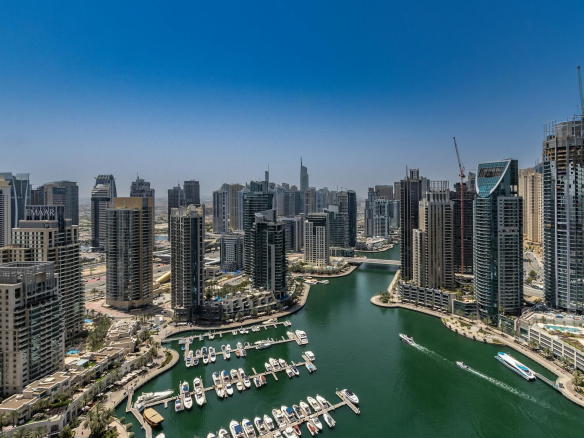
- Family Offices: Greater confidence in long‑term stability, prompting larger ticket sizes for mixed‑use developments in Dubai Marina and Abu Dhabi’s Al Maryah Island.
- Entrepreneurs & Start‑ups: Increased interest in flexible office‑to‑residential conversion projects, especially in free‑zone districts where regulatory support aligns with the diversification agenda.
- International Buyers: A surge in enquiries from Europe and North America, attracted by the UAE’s continued tax‑friendly regime and an emerging narrative of “energy‑independent growth.”
3. Supply‑Demand Dynamics in the UAE Property Market
3.1 Current Inventory Landscape
Dubai’s total delivered residential units in 2025 reached ~680,000, with a net absorption of ~420,000. Abu Dhabi’s supply is tighter, with an average vacancy rate of ~7 % in premium office cores versus ~12 % in Dubai’s secondary office market.
3.2 Impact of the OPEC Exit on Development Pipelines
Developers that previously hinged financing on oil‑linked sovereign guarantees are now pivoting to private‑equity‑backed projects. This shift manifests as:
- Accelerated completion schedules to lock in pre‑sale revenues before potential tightening of capital markets.
- Higher quality standards; investors demand ESG‑compliant buildings, aligning with the UAE’s green‑energy roadmap.
- Geographic re‑balancing with increased focus on secondary cities such as Sharjah, Ras Al Khaimah, and Al Ain.
3.3 Price Outlook
- Luxury Segment: Dubai’s ultra‑luxury villa market is expected to hold firm, with price per square foot remaining within 2–3 % of 2025 levels.
- Mid‑Range Apartments: Anticipated modest price appreciation of 4–5 % annually, driven by sustained demand from expatriates and the growing middle‑class population.
- Commercial Space: Office rents in core districts (DIFC, ADGM) are projected to rise 6–8 % over the next 12 months, reflecting higher occupancy targets from multinational headquarters relocating from oil‑centric economies.
4. Investor Implications: Risks, Opportunities, and Portfolio Takeaways
4.1 Risks to Monitor
| Risk | Description | Mitigation |
|---|---|---|
| Energy‑Policy Volatility | Future policy reversals could affect sovereign fund allocations. | Diversify across asset classes and maintain cash buffers. |
| Financing Tightening | Potential rise in UAE‑linked loan spreads as banks adjust to lower oil‑linked capital. | Secure long‑term financing early; explore mezzanine or private‑equity structures. |
| Regulatory Evolution | New ESG mandates may affect building certifications and tenant demand. | Target developments with pre‑existing green certifications (LEED, Estidama). |
| Currency Exposure | While the dirham is pegged, cross‑border investors may face USD‑rate volatility. | Hedge foreign‑exchange exposure through forward contracts. |
4.2 Opportunities
- Strategic acquisitions in emerging sub‑markets such as Al Ain.
- Mixed‑use development premiums attractive to diversified investors.
- Asset‑light vehicles (REITs, fractional ownership) gaining traction.
- Value‑add renovations to meet ESG standards, unlocking 10–15 % upside in yields.
4.3 Portfolio Takeaways
- Re‑balance toward real estate: allocate 15–20 % of a diversified portfolio to UAE property, emphasizing assets with long‑term lease structures and strong tenant credit.
- Prioritize ESG‑ready assets to attract premium tenants and mitigate regulatory risk.
- Leverage local expertise to reduce due‑diligence friction and improve risk assessment.
5. Regional Spotlight: Dubai and Abu Dhabi in a Post‑OPEC World
5.1 Dubai – The Global Hub of Choice
Dubai remains the marquee market for foreign capital, thanks to its free‑zone ecosystem, world‑class logistics infrastructure, and a regulatory environment that encourages 100 % foreign ownership. The OPEC exit reinforces Dubai’s narrative as a “non‑oil gateway to the Middle East.”
- Key Projects: Dubai Creek Harbour, MBR City, Sustainability District near Expo 2025.
- Investor Incentives: Extended 5‑year residency visas for investors purchasing property worth ≥ AED 5 million, now coupled with preferential loan terms.
5.2 Abu Dhabi – The Emerging Counterbalance
Abu Dhabi’s slower, more measured development pace delivers comparatively lower price volatility. Sovereign wealth vehicles are actively channeling capital into high‑tech and clean‑energy zones, stimulating demand for premium office and residential stock.
- Key Projects: ADGM expansion, Saadiyat Island cultural precinct, Al Maryah Island financial hub.
- Investor Angle: Emphasis on long‑term lease contracts with government‑linked tenants, offering stable, inflation‑linked yields.
6. How David Moya Real Estate LLC Elevates Your Investment
6.1 Full‑Spectrum Advisory Partner
David Moya Real Estate LLC is not a conventional broker. We act as a strategic advisor, guiding investors through every stage of the acquisition process—from macro‑level market outlook to micro‑level unit selection.
- Market Guidance & Trend Analysis – Real‑time data on oil‑policy shifts, capital‑flow patterns, and demographic trends.
- Investment Strategy Development – Bespoke portfolio blueprints balancing risk, liquidity, and growth.
- Location Selection & Site Intelligence – High‑potential districts mapped with zoning, infrastructure, and master‑plan insights.
- Property Shortlisting & Due Diligence – Vetted lists, financial models, and risk‑adjusted return scenarios.
- Transaction Support & Negotiation – Trusted intermediary leveraging developer and legal networks.
- Risk Awareness & Mitigation – Early identification of regulatory, ESG, and financing risks.
- Long‑Term Portfolio Planning – Ongoing performance monitoring and exit‑strategy formulation.
6.2 Tangible Outcomes for Investors
- Better market understanding through concise, data‑driven briefs.
- Clearer decision‑making via scenario analysis and customized financial models.
- Improved property selection with a rigorous due‑diligence framework.
- Stronger risk evaluation using integrated risk dashboards.
- Smoother purchasing process with coordinated title verification and settlement.
- Confident market entry for international buyers through multilingual support and compliance expertise.
Frequently Asked Questions
Q1. How does the UAE’s exit from OPEC affect property prices?
The move reduces oil‑related fiscal volatility, encouraging investors to allocate more capital to real estate. This generally supports price stability and modest appreciation, especially in premium and ESG‑compliant assets.
Q2. Is now a good time for foreign investors to buy in Dubai?
Yes. Favorable financing terms, continued foreign‑ownership allowances, and heightened demand for high‑quality mixed‑use developments make the current environment attractive for long‑term investors.
Q3. What are the primary risks for real‑estate investors in the UAE post‑OPEC?
Potential tightening of bank loan spreads, evolving ESG regulations, and residual exposure to regional geopolitical tensions. Early financing and ESG‑ready asset selection can mitigate these risks.
Q4. How can David Moya Real Estate LLC help with financing?
We connect clients with reputable lenders, structure financing packages aligned with investment horizons, and advise on currency‑hedging strategies to protect against USD‑linked exposure.
Q5. Are there tax advantages for international buyers?
The UAE offers a zero‑tax regime on personal income and capital gains, and recent visa reforms provide residency options for investors meeting property‑value thresholds.
Call to Action
Ready to translate the macro‑economic shift of “UAE quits OPEC in blow to leading oil exporters” into a high‑impact real‑estate position? Contact David Moya Real Estate LLC today for a confidential, no‑obligation market briefing and strategic asset‑allocation plan.
Phone: +971 4 555 1234
Email: info@davemoya-realestate.com
Your partnership with David Moya Real Estate LLC is the first step toward a resilient, diversified UAE property portfolio that thrives in a post‑oil economy.
Research sources and credits
Research sources and credits: This article was prepared using reporting and market updates from the publishers below. Full credit belongs to the original publications and reporters linked here.
- UAE quits OPEC in blow to leading oil exporters – CNN
Credit: Web | Published: Wed, 29 Apr 2026 07:23:07 GMT
World + Africa + Americas + Asia + Australia + China + Europe + India + Middle East + United Kingdom US Politics + Elections 2026 + Trump + Facts First + CNN Polls + Redistricting Tracker + Epstein Files Business + Tech + Media + Calculators + Videos Markets + Pre-markets + After-Hours + Fear & Greed + Investing + Markets Now + Nightcap Health + Life, But Better + Fitness + Food + Sleep + Mindfulness + Relationships Entertainment + Movies + Television + Celebrity Tech + Innovate Style + Arts + Design + Fashion + Architecture + Luxury + Beauty + Video Travel + Destinations + Food & Drink + Stay + News + Videos Sports + Football + Tennis + Golf + Motorsport […] Now playing • Source: CNNBusiness Video Ad Feedback ‘I can’t withstand the heat’: Americans behind on utility bills face extreme weather 02:38 Now playing • Source: CNN Video Ad Feedback Inflation is cooling but prices are still painfully high 02:25 Now playing • Source: CNN Video Ad Feedback EU countries agree to reduce gas consumption to prep for winter 02:29 Now playing • Source: CNN Video Ad Feedback IEA director says Europe needs to lower gas consumption to prepare for winter 03:04 Now playing • Source: CNN Video Ad Feedback Nord Stream 1 makes Europe more reliant on Russian gas. Here’s why 02:55 Now playing • Source: CNN Video Ad Feedback French finance minister says country prepping for cutoff of Russian gas supply 02:50 Now playing […] US + Crime & Justice + Immigration + Education + Transportation + Race & Identity World + Africa + Americas + Asia + Australia + China + Europe + India + Middle East + United Kingdom Politics + Elections 2026 + Trump + Facts First + CNN Polls + Redistricting Tracker + Epstein Files Business + Tech + Media + Calculators + Videos Markets + Pre-markets + After-Hours + Fear & Greed + Investing + Markets Now + Nightcap Health + Life, But Better + Fitness + Food + Sleep + Mindfulness + Relationships CNN Underscored + Electronics + Fashion + Beauty + Health & Fitness + Home + Reviews + Deals + Money + Gifts + Travel + Outdoors + Pets Entertainment + Movies + Television
Next steps
If you want help evaluating projects, comparing returns, or building a UAE property strategy, contact David Moya Real Estate at +971 52 217 2034 or info@davidmoya.org.