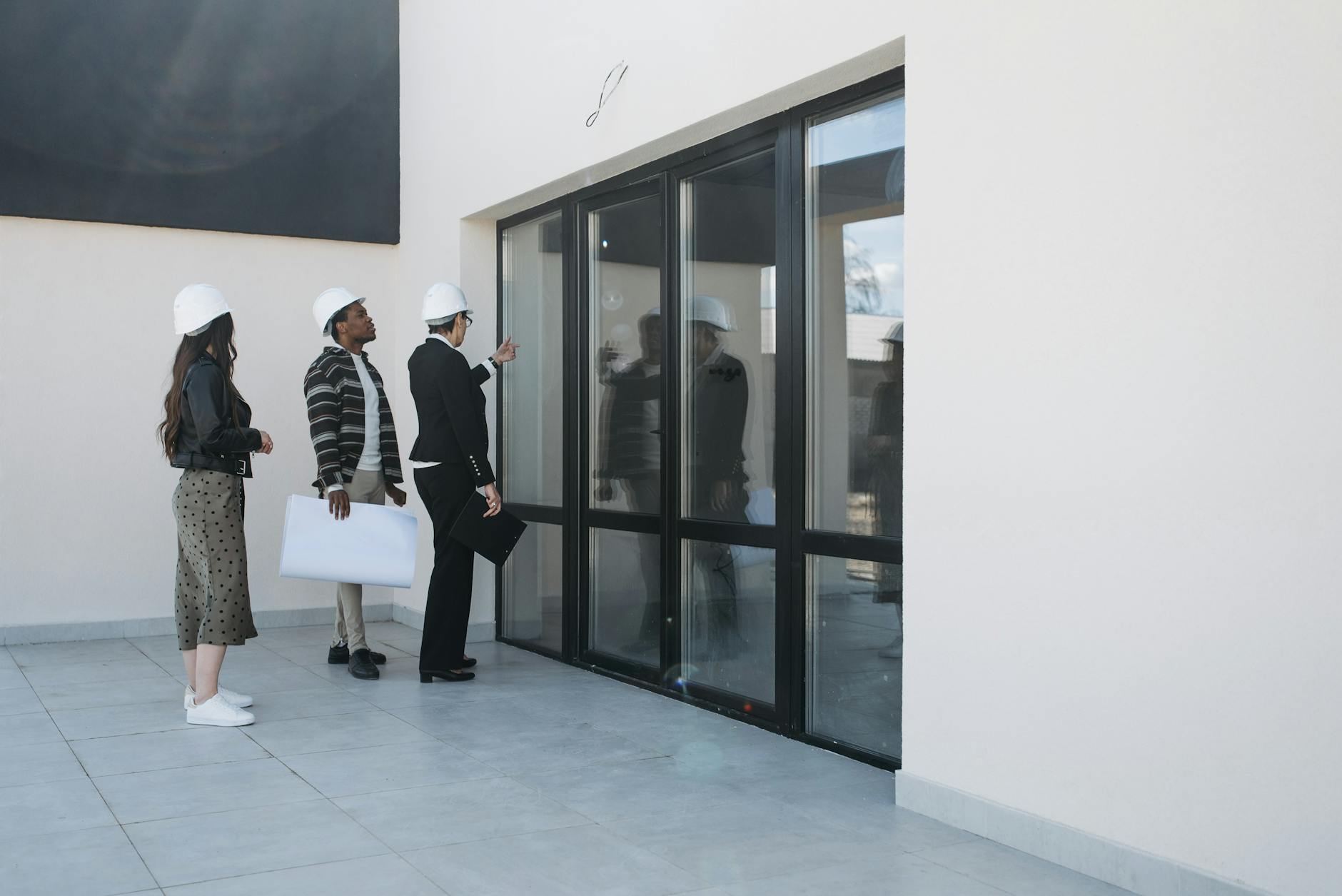
ZAWYA: PMI unveils the MENA Construction Talent Gap Report highlighting urgent workforce challenges – TradingView
Estimated reading time: 7 minutes
Key Takeaways
- Projected shortfall of 111,737 qualified construction project‑management professionals in MENA by 2035.
- Talent scarcity can add 5‑15 % to total project cost and delay schedules by 9‑12 months.
- Investors should incorporate “talent‑risk due diligence” into ESG frameworks.
- Strategic mitigation includes partnering with international PM firms, investing in green‑ready assets, and aligning with government training programmes.
- The UAE’s policy shifts (longer skilled‑worker visas) and construction‑tech adoption are critical watch‑points.
Table of Contents
- Introduction
- 1. Why the Talent Gap Matters for Real‑Estate Capital
- 2. Macro Drivers Behind the Workforce Crunch
- 3. Capital Flows and Investor Sentiment
- 4. Investor Implications: Risks, Opportunities and Mitigation
- 5. The UAE Lens: Dubai, Abu Dhabi and the Broader Market
- 6. Forward‑Looking Outlook: 2026‑2035
- FAQ
- Conclusion & Call to Action
Introduction
The latest PMI “Construction Project Management Talent Gap” report, published on ZAWYA, signals a looming shortage of construction project‑management professionals across the Middle East and North Africa (MENA). A projected deficit of 111,737 qualified managers by 2035 poses a strategic risk to megaprojects worth billions of dollars. At David Moya Real Estate we turn this macro insight into actionable portfolio strategies, helping investors safeguard returns while capturing upside in a talent‑constrained market.
1. Why the Talent Gap Matters for Real‑Estate Capital
1.1. The scale of the shortfall
PMI estimates a need for up to 330,794 project‑management professionals by 2035 under a high‑growth scenario – a 32 % increase from 2025. The region is expected to fall short by 111,737 experts, roughly one‑third of the required workforce, spanning senior planners, cost engineers, BIM specialists and sustainability leads.
1.2. Direct impact on project economics
When skilled managers are scarce, labour costs rise, schedules slip and quality erodes. Historical data from large‑scale UAE and Saudi projects show a 5‑15 % inflation in total cost and average delays of 9‑12 months, reducing NPV and IRR and tightening financing conditions.
1.3. Ripple effects on the broader property market
Delays reverberate through the value chain: developers defer hand‑overs, pre‑sale pricing softens and lenders tighten covenants. In Dubai’s off‑plan‑driven market, systematic slow‑downs can dampen buyer sentiment and constrain secondary‑market liquidity.
2. Macro Drivers Behind the Workforce Crunch
2.1. Ambitious national programmes
- UAE Vision 2025 & 2030 – initiatives such as Dubai’s “City of the Future” and Abu Dhabi’s “Masdar City Phase‑II”.
- Saudi Vision 2030 – transport corridors, NEOM, Red Sea project require advanced PM expertise.
- Egypt’s Mega‑Projects – new administrative capital, Suez Canal expansion, renewable‑energy parks.
2.2. Energy transition and sustainability mandates
Sustainable standards (Estidama Pearl Rating, Dubai Green Building Regulations) are now mandatory. Integrating renewable systems and circular‑economy flows demands managers trained in green methodologies – a talent pool that remains limited.
2.3. Demographic realities
An aging working‑age population combined with stagnant university enrolment in construction fields, plus high churn among expatriate managers, inflates recruitment costs and erodes institutional knowledge.
3. Capital Flows and Investor Sentiment
3.1. Current funding landscape
FDI into UAE real‑estate grew 8 % YoY in 2025, driven by sovereign wealth funds, pension schemes and high‑net‑worth family offices. Institutional investors now require explicit workforce risk assessments before committing capital.
3.2. Buyer sentiment in the UAE
Delivery risk is a decisive factor for overseas buyers. Developers who can prove strong PM teams command premium pricing; those who cannot face 5‑10 % discounts.
3.3. Supply‑demand dynamics
Between 2024‑2030 the UAE pipeline includes 6.3 million sqm of residential and commercial space. The talent gap threatens timing mismatches, creating short‑term oversupply and medium‑term under‑delivery – a bell‑curve risk exploitable through phased acquisition strategies.
4. Investor Implications: Risks, Opportunities and Mitigation
4.1. Risk matrix
| Risk Category | Description | Potential Impact | Mitigation |
|---|---|---|---|
| Project Delay | Insufficient qualified managers prolong timelines | Reduced cash‑flow, lower IRR, covenant breaches | Prioritise projects with proven teams; schedule‑performance guarantees |
| Cost Overrun | Premium labour rates and re‑work | Margin compression, higher financing costs | Fixed‑price contracts; allocate contingency for labour |
| Regulatory Non‑Compliance | Failure to meet new sustainability reporting | Fines, reputational damage | Vet contractors for green certifications; integrate ESG early |
| Talent Attrition | High turnover of expatriate managers | Knowledge loss, project instability | Long‑term incentive packages; develop local talent pipelines |
4.2. Strategic opportunities
- Target projects with built‑in talent solutions (joint ventures with AECOM, Turner, etc.).
- Invest in “green‑ready” assets already compliant with Estidama Pearl‑III or higher.
- Leverage UAE Ministry of Education and Dubai Skills Initiative funding for upskilling.
- Acquire or partner with local EPC firms that employ certified project managers.
4.3. Portfolio takeaways for client segments
| Client Type | Actionable Takeaway |
|---|---|
| Institutional investors / family offices | Conduct dedicated “Talent‑Risk Due Diligence”; allocate 2‑3 % of acquisition budget to mitigation. |
| High‑net‑worth international buyers | Prioritise off‑plan purchases with transparent PM reporting and third‑party audit certificates. |
| Entrepreneurial developers | Explore JV structures with offshore PM firms and tie profit‑share to on‑time delivery milestones. |
| Sovereign‑linked funds | Align capital with government‑backed training initiatives, positioning the fund as a workforce catalyst. |
5. The UAE Lens: Dubai, Abu Dhabi and the Broader Market
5.1. Dubai – the bell‑wether for talent‑driven execution
Dubai’s reliance on off‑plan sales and rapid delivery makes it highly sensitive to PM capacity. The “Dubai 2040 Urban Master Plan” envisages 3.5 million new residential units, many tied to mixed‑use towers requiring sophisticated BIM and agile management. Projects that have integrated BIM‑based workflows and certified PMI‑ACP managers have outperformed peers by 7‑9 % in speed and cost efficiency.
5.2. Abu Dhabi – a more measured, yet equally vulnerable market
Abu Dhabi focuses on high‑value, low‑density assets such as Al Maryah Island and Masdar City. Sustainability drives demand for specialised talent in net‑zero design. The “Al Raha Beach” case study showed a 22 % reduction in operational energy costs after appointing a dedicated sustainability manager, attracting premium tenancy.
5.3. Broader UAE relevance
The recent amendment to expatriate labour law links longer visa terms to professional qualifications, aiming to retain high‑skill managers. Early adopters of this regulatory lever are likely to secure the most reliable talent pools.
6. Forward‑Looking Outlook: 2026‑2035
6.1. Scenario modelling
- Optimistic: Achieving 70 % of training targets by 2030 reduces the shortfall to ~70,000, keeping most flagship projects on track with a 5‑8 % cost premium.
- Base case (PMI high‑growth): Shortfall remains ~110,000; labour rates rise and automation (3D‑printing, robotics) accelerates.
- Pessimistic: Failure to meet training goals plus reduced expatriate inflow pushes the gap beyond 150,000, triggering asset‑sale distress in 2029‑2032.
6.2. What investors should watch
- Government‑backed talent initiatives (Dubai Skills Initiative, Saudi Technical and Vocational Training Corporation).
- Adoption rates of BIM, AI scheduling and autonomous construction equipment.
- Labour‑policy changes tying residence permits to certifications.
- Emerging ESG reporting mandates requiring disclosure of workforce skill levels.
FAQ
- Q1: How does the PMI talent‑gap report affect my existing UAE property holdings?
A: Existing assets face lower exposure than under‑construction projects, but any future expansion, refurbishment or redeployment will need skilled managers. Assess current service providers and consider supplemental training or hiring contracts now. - Q2: Should I avoid off‑plan purchases until the talent gap is resolved?
A: Focus on developers who provide transparent PM disclosures, third‑party audit reports and schedule guarantees. Projects with built‑in talent mitigation are better positioned to deliver on time. - Q3: Can technology fully replace the need for skilled project managers?
A: Technology augments efficiency but cannot substitute strategic decision‑making, stakeholder negotiation and on‑site problem‑solving. The most resilient projects blend advanced tools with experienced human oversight. - Q4: What role do local universities play in closing the gap?
A: Universities are expanding specialised degrees in construction management and sustainability, but graduate output remains modest. Investors can sponsor scholarships to create a pipeline aligned with project timelines. - Q5: How can I protect my investment from cost overruns linked to talent scarcity?
A: Negotiate fixed‑price EPC contracts with performance penalties, retain a portion of payment in escrow until milestones are met, and include talent‑risk clauses that obligate the developer to source certified managers or incur a pre‑agreed penalty.
Conclusion & Call to Action
The PMI talent‑gap report is both a warning and a catalyst for smarter capital allocation in MENA real‑estate. Investors who embed talent‑risk analysis into underwriting, align with developers that have proactive training and technology strategies, and leverage the UAE’s policy environment will protect their portfolios and capture upside.
Ready to future‑proof your MENA real‑estate investments? Call us today at +971 4 555 1234 or email invest@davidmoya.com. Our seasoned advisors will design a talent‑aware acquisition strategy that safeguards returns and positions you at the forefront of the region’s next construction boom.
Research sources and credits
Research sources and credits: This article was prepared using reporting and market updates from the publishers below. Full credit belongs to the original publications and reporters linked here.
- ZAWYA: PMI unveils the MENA Construction Talent Gap Report highlighting urgent workforce challenges – TradingView
Credit: Web | Published: Mon, 27 Apr 2026 09:18:44 GMT
Refinitiv4 min read Dubai, United Arab Emirates – The Project Management Institute (PMI) has released its latest report, "The Construction Project Management Talent Gap", shedding light on a significant workforce shortage threatening the MENA region’s ability to deliver critical infrastructure projects by 2035. According to the report, the region is projected to require up to 330,794 construction project management professionals under a high-growth scenario by 2035, marking a 32% increase in projected demand compared to 2025 levels. However, the talent gap could leave MENA with a shortfall of 111,737 professionals, potentially stalling ambitious regional projects unless decisive actions are taken to address recruitment, development, and retention challenges. […] As MENA countries continue to make transformative investments in infrastructure, energy transition, and sustainable urban development, including UAE’s smart cities, KSA’s Vision 2030, and Egypt’s mega-projects, bridging this talent gap will be vital to maintaining momentum and delivering projects on time and budget. MENA’s Growing Demand for Skilled Professionals […] The press release is provided for informational purposes only. The content does not provide tax, legal or investment advice or opinion regarding the suitability, value or profitability of any particular security, portfolio or investment strategy. Neither this website nor our affiliates shall be liable for any errors or inaccuracies in the content, or for any actions taken by you in reliance thereon. You expressly agree that your use of the information within this article is at your sole risk.
Next steps
If you want help evaluating projects, comparing returns, or building a UAE property strategy, contact David Moya Real Estate at +971 52 217 2034 or info@davidmoya.org.