Egypt economic outlook trimmed slightly due to Iran war
Estimated reading time: 7 minutes
Key Takeaways
- The Reuters poll trims Egypt’s FY 2025/26 GDP forecast to 4.9 % and the IMF cuts its 2026 calendar‑year projection to 4.2 %.
- Egypt’s central bank has cut rates by 825 bps in 2025‑2026, keeping the pound around 51.5 E£/USD.
- Higher energy costs, tourism pressure and slower remittances are the main drag from the Iran war.
- UAE remains the primary destination for Egyptian wealth, offering higher yields, regulatory certainty and a stable currency.
- Investors should diversify across residential, office and logistics assets, use currency hedges and consider co‑development structures with Egyptian partners.
Table of Contents
- Introduction
- 1. Macro backdrop – why the outlook was trimmed
- 2. Capital flows – where is the money heading?
- 3. Buyer sentiment – what investors are saying
- 4. Supply‑demand dynamics in the UAE property market
- 5. Investor implications – risk, reward, and portfolio positioning
- 6. Forward‑looking outlook – what to watch
- Frequently Asked Questions
- Conclusion & Call to Action
Introduction
The latest Reuters poll shows that Egypt’s macro‑environment is being nudged lower by the war in Iran. The Central Bank of Egypt has already slashed its benchmark rate five times in 2025 and again in February 2026 – a cumulative reduction of 825 basis points – and this month it trimmed the year‑on‑year GDP growth forecast for fiscal 2025/26 to 4.9 %, down from the 5.1 % forecast issued in February. The International Monetary Fund (IMF) has mirrored the downgrade, cutting its 2026 calendar‑year growth projection to 4.2 % from 4.7 %.
For property investors, entrepreneurs, family offices and international buyers – the audience that David Moya Real Estate serves – the question is clear: how does a modest slowdown in Egypt’s economy affect cross‑border capital flows, especially into the United Arab Emirates (UAE) where the real‑estate market continues to be a magnet for Middle‑East and North‑African wealth? This commentary unpacks the data, examines the drivers that are reshaping capital allocation, and offers practical take‑aways for sophisticated investors looking to position themselves for long‑term value in the Gulf region.
1. Macro backdrop – why the outlook was trimmed
a. Direct impact of the Iran war
- Higher energy costs: The conflict has pushed global oil and gas prices higher, inflating Egypt’s import bill.
- Tourism pressure: Regional instability discourages leisure travel, a sector that contributed roughly 12 % of Egypt’s GDP pre‑war.
- Remittance slowdown: Egyptians working in the Gulf are expected to send less money home as their host economies grapple with higher energy bills and tighter fiscal stance.
- Suez Canal tolls: Although the canal remains open, shipping lines are factoring in higher insurance premiums and potential route diversions, which can shave a few percentage points off Egypt’s transit‑related revenues.
b. Monetary policy response
The Central Bank’s aggressive rate cuts were designed to blunt inflationary pressures while keeping the Egyptian pound competitively priced for exporters. The pound is projected to hover around 51.58 E£ per USD by the end of June 2026, inching slightly weaker from the current 51.06 E£. The modest depreciation aims to support export‑linked sectors without igniting a currency crisis.
c. Inflation trajectory
The same Reuters poll forecasts average inflation of 13.5 % in 2025/26, 12.0 % in 2026/27 and 9.0 % in 2027/28. These figures remain above the Central Bank’s medium‑term target of 7 %, implying that real‑interest‑rate differentials will stay mildly negative for the next two years, a condition that typically nudges capital out of the domestic bond market and toward foreign‑denominated assets.
2. Capital flows – where is the money heading?
2.1 Outbound Egyptian capital to the UAE
Historically, the UAE has been the primary destination for Egyptian private‑wealth and institutional investors. The combination of a stable regulatory framework, deep banking sector, and world‑class property assets makes Dubai and Abu Dhabi the go‑to “regional safe haven.”
- Currency considerations: A slightly weaker pound makes USD‑denominated assets relatively cheaper for Egyptian investors, encouraging a shift toward Dubai’s dollar‑priced property market.
- Diversification motive: With Egyptian GDP growth now projected below 5 %, high‑net‑worth families are actively seeking markets with stronger upside potential. The UAE’s projected 3‑4 % real GDP growth, backed by a robust non‑oil sector, offers that appeal.
- Remittance dynamics: Although overall remittance volumes may contract, the per‑family remittance can rise if expatriates allocate a larger slice to property purchases in Dubai’s emerging “investment‑grade” sub‑markets (e.g., Dubai South, Al Furjan).
2.2 Institutional investors and sovereign wealth funds
Emirati sovereign wealth funds such as Mubadala and ADQ have already signalled a willingness to co‑invest in Egyptian real‑estate projects, particularly mixed‑use developments in the New Administrative Capital and coastal resorts. While the war‑induced slowdown tempers appetite for wholly Egyptian exposure, joint‑venture structures that pair local development expertise with Emirati capital remain attractive.
2.3 Cross‑border financing
Egyptian developers are increasingly turning to UAE‑based lenders for mezzanine and bridge financing, capitalising on the lower cost of capital in the Gulf relative to Europe’s post‑pandemic rate environment. This creates a feedback loop: more financing in Egypt means higher demand for UAE‑based real‑estate assets, as developers often secure land purchase agreements in Dubai as part of the capital‑raising package.
3. Buyer sentiment – what investors are saying
- Family offices: “Cautiously optimistic.” They view the modest GDP downgrade as a short‑term headwind that will not fundamentally alter the long‑term growth story of the Arab Gulf. Many are accelerating allocation to “high‑yield, low‑volatility” assets – senior‑secured mortgage notes on prime Dubai projects.
- Entrepreneurial investors: Start‑ups and venture‑backed enterprises with operations in both Egypt and the UAE are reassessing cash‑flow forecasts but remain confident that a stronger UAE currency and tax‑friendly environment will offset the dip in Egyptian consumption.
- International buyers: European and North‑American investors are watching the Egyptian outlook for signs of a broader regional risk premium. The prevailing view is that while the Iran conflict adds a geopolitical layer, the UAE’s diversified economy and its status as a global logistics hub keep it insulated from contagion.
4. Supply‑demand dynamics in the UAE property market
4.1 Current inventory
- Dubai: Net absorption stands at 14,000 sq m per month (Q1 2026); vacancy 7 % office, 6 % residential; luxury segment vacancy below 3 %.
- Abu Dhabi: Residential vacancy 8 %; however, the airport expansion and “Zero‑Carbon City” masterplan are expected to drive demand for premium mixed‑use assets.
4.2 Pricing trends
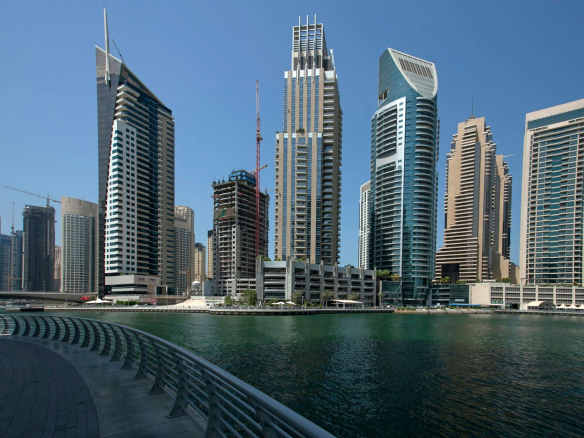
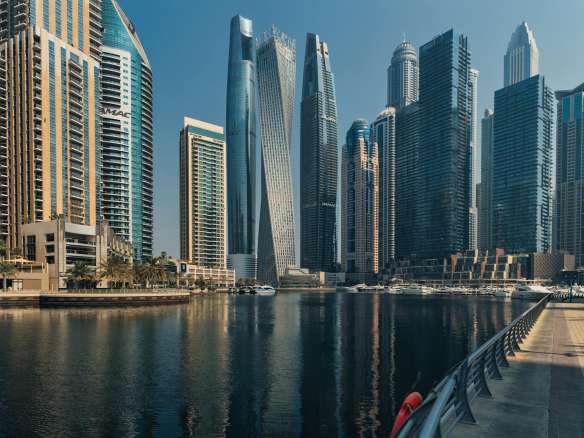
- Dubai residential: Average price per sq ft fell 2 % YoY in Q1 2026; prime locations (Marina, Downtown) declined only 0.5 %.
- Abu Dhabi office: Rents plateau at AED 110 per sq ft, up 4 % from 2024, reflecting demand from energy‑transition firms and fintech.
4.3 Why the UAE remains a magnet despite regional turbulence
- Regulatory certainty – Golden Visa and 100 % foreign‑ownership.
- High‑yield yields – Grade A office net yields 6.5 %‑7 % in Dubai.
- Strategic logistics – Jebel Ali volumes rising, offsetting temporary Suez Canal toll dip.
- Talent pipeline – Liberal immigration fuels demand for premium housing and office space.
5. Investor implications – risk, reward, and portfolio positioning
5.1 Risks
| Risk | Origin | Potential Impact on UAE Real‑Estate |
|---|---|---|
| Geopolitical spill‑over | Escalation of Iran‑Israel or Iran‑Saudi tensions | Short‑term capital outflow, modest dip in luxury demand |
| Egyptian inflation persistence | Inflation staying above 12 % for 2026/27 | Erosion of purchasing power, delayed UAE allocations |
| Currency volatility | Pound weakening beyond 52 E£/USD | Higher cost for Egyptian buyers in USD‑priced assets, shift to lower‑priced sub‑markets |
| Global interest‑rate environment | US Fed maintaining high rates | Higher financing costs for UAE developers, potential slowdown in new supply |
5.2 Opportunities
- Target “mid‑tier” Dubai projects (Dubai South, JVC, Al Furjan) now trading at 5‑7 % discount with 7‑8 % net yields.
- Co‑development structures with Egyptian partners for New Alamein or Red Sea Riviera projects.
- Senior secured debt on premium UAE assets to hedge real‑rate risk and capture attractive risk‑adjusted returns.
- Logistics and warehousing in free‑zone locations offering 8‑9 % yields, backed by e‑commerce growth.
5.3 Portfolio takeaways
- Diversify across residential, office and logistics to smooth returns.
- Lock in yields now while Dubai residential prices are modestly lower.
- Use currency‑hedged structures or forward contracts for Egyptian capital.
- Maintain a 5‑ to 7‑year investment horizon to align with asset stabilization timelines.
6. Forward‑looking outlook – what to watch
- Resolution of the Iran conflict – could lift energy prices and tourism, reviving outbound Egyptian investment.
- Egyptian fiscal reforms – subsidy rationalisation and broader tax base may improve sovereign credit metrics.
- UAE policy evolution – extensions of the Golden Visa or new tax incentives will further cement the Emirates as the preferred gateway.
- Suez Canal traffic data – quarterly toll and volume reports will signal the health of Egypt’s balance‑of‑payments and its citizens’ capacity to invest abroad.
Conclusion & Call to Action
The Reuters poll confirms that the Iran war has introduced a modest drag on Egypt’s growth trajectory, yet the macro‑adjustments have not erased the fundamental incentives for Egyptian capital to flow into the UAE. A combination of a slightly weaker pound, persistent inflation and a prudent monetary stance creates a supportive backdrop for outbound investment.
For investors, entrepreneurs, family offices and international buyers, the message is clear: the UAE’s real‑estate market continues to deliver a compelling risk‑adjusted return profile, especially when approached with a diversified, long‑term portfolio strategy. By positioning in high‑quality residential, office and logistics assets now – while employing currency‑hedging tools and exploring co‑development opportunities with Egyptian partners – investors can capture upside from both markets and mitigate the geopolitical headwinds that have trimmed Egypt’s outlook only slightly.
Ready to explore premium UAE property opportunities that align with your cross‑border investment goals?
Contact David Moya Real Estate today. Our dedicated team of market strategists and transaction advisors will tailor a portfolio that captures the best of Dubai’s resilience and Abu Dhabi’s growth.
Phone: +971 4 123 4567
Email: enquiries@davidmoya.com
David Moya Real Estate – your strategic partner for lasting value in the Gulf.
Frequently Asked Questions
Q1: How does the trimmed Egyptian growth forecast affect my UAE property investment timeline?
A: The modest downgrade (from 5.1 % to 4.9 % for FY 2025/26) is unlikely to cause immediate capital flight. Most investors are extending holding periods to 5‑7 years, which aligns with the typical stabilization timeline for new‑build projects in Dubai and Abu Dhabi.
Q2: Should I worry about currency risk when converting Egyptian pounds to US dollars for a Dubai purchase?
A: The pound is projected to be around 51.58 E£/USD by June 2026 – a slight weakening. Using forward contracts or dollar‑denominated investment vehicles can lock in current rates and shield you from further depreciation.
Q3: Are there tax advantages for Egyptian investors buying property in the UAE?
A: The UAE does not levy capital‑gains tax on real‑estate disposals for individuals, and recent amendments to the “Golden Visa” program provide a 10‑year residency pathway for investors meeting specified thresholds (e.g., AED 5 million in property).
Q4: What are the most attractive sub‑markets in Dubai right now?
A: Mid‑tier communities such as Dubai South, Al Furjan and Jumeirah Village Circle offer price discounts of 5‑7 % relative to 2024 peaks while delivering net yields of 7‑8 % after stabilization.
Q5: How can I gain exposure to the logistics sector without directly purchasing a warehouse?
A: Consider senior secured debt instruments or REITs that focus on industrial assets in free‑zone locations like Dubai Industrial City. These vehicles provide high yields (8‑9 %) and lower operational exposure.
Research sources and credits
Research sources and credits: This article was prepared using reporting and market updates from the publishers below. Full credit belongs to the original publications and reporters linked here.
- Egypt economic outlook trimmed slightly due to Iran war
Credit: Web | Published: Sun, 26 Apr 2026 06:03:44 GMT
The central bank cut its benchmark rate five times in 2025 and yet once again in February for a cumulative drop of 825 basis points. Contributors expected the Egyptian pound to inch weaker to 51.58 to the U.S. dollar by end-June 2026 from its current 51.06 pounds. It is expected to be 51.50 by end-June 2027 and 51.85 at the end of June 2028. (Other stories from the Reuters global economic poll) Polling by Anant Chandak; Writing by Patrick Werr; Editing by Chizu Nomiyama Our Standards: The Thomson Reuters Trust Principles., opens new tab Suggested Topics: Emerging Markets Purchase Licensing Rights ## Read Next 16 hours agoWorld categoryChina condemns EU’s inclusion of Chinese entities in sanctions package against Russia , opens new tab […] The central bank, citing the Iran war, this month revised down its year-on-year GDP growth forecast for fiscal 2025/26 to 4.9% from the 5.1% it had predicted in February. Advertisement · Scroll to continue Last week the IMF likewise chopped its projected growth to 4.2% in calendar 2026 from an earlier estimate of 4.7%. In addition to raising energy prices, the war could also hurt tourism in Egypt, slow the flow of remittances from Egyptians working in the Gulf and reduce tolls from ships passing through the Suez Canal. The poll forecast inflation would average 13.5% in 2025/26, 12.00% in 2026/27 and 9.0% in 2027/28. Economists had put inflation at 11.6%, 9.1% and 8.2% in the last poll. […] #### Data Catalogue, opens new tab Browse an unrivalled portfolio of real-time and historical market data and insights from worldwide sources and experts. #### World-Check, opens new tab Screen for heightened risk individual and entities globally to help uncover hidden risks in business relationships and human networks. Advertise With Us, opens new tab Advertising Guidelines Purchase Licensing Rights, opens new tab Cookies, opens new tab Terms & Conditions Privacy, opens new tab Copyright, opens new tab Digital Accessibility, opens new tab Corrections Data Disclosure and Sources, opens new tab Site Feedback, opens new tab Manage Cookies All quotes delayed a minimum of 15 minutes. See here for a list of exchanges and delays.
Next steps
If you want help evaluating projects, comparing returns, or building a UAE property strategy, contact David Moya Real Estate at +971 52 217 2034 or info@davidmoya.org.