Retailers shift to standalone stores as Vietnam CBD space tightens – Asian Business Review
Estimated reading time: 7 minutes
Key Takeaways
- Vietnam’s CBDs are saturated, driving retailers toward larger, freestanding sites on the city periphery.
- Hybrid lease structures (fixed rent + turnover) are becoming the norm, offering more resilient cash flows.
- Peripheral stand‑alone assets deliver 150‑200 bps higher yields than comparable CBD leases.
- Investors can leverage UAE experience with mixed‑use community hubs and turnover‑linked leases.
- Risks include regulatory lag, infrastructure gaps, future peripheral saturation, and currency volatility.
Table of Contents
- 1. Why Vietnam’s CBD Is No Longer “The Place to Be”
- 2. The Stand‑Alone Store Model: What It Means for Investors
- 3. Parallels With the UAE Retail Landscape
- 4. Market Drivers Underpinning the Shift
- 5. Investor Implications: Opportunities and Risks
- 6. Portfolio Takeaways
- 7. Forward‑Looking View: 2027‑2030 Outlook
- 8. Frequently Asked Questions
- 9. Conclusion
The retail landscape across Southeast Asia is undergoing a quiet but profound transformation. Vietnam’s central business district (CBD) has reached capacity, prompting brands to seek freedom beyond cramped high‑rise corridors. For investors, entrepreneurs, family offices, and international buyers, this shift signals both a challenge to traditional lease models and a fresh set of opportunities for asset allocation, especially when viewed through the lens of the United Arab Emirates’ (UAE) evolving retail real‑estate dynamics.
1. Why Vietnam’s CBD Is No Longer “The Place to Be”
1.1 Saturation of Prime Office‑Retail Mixes
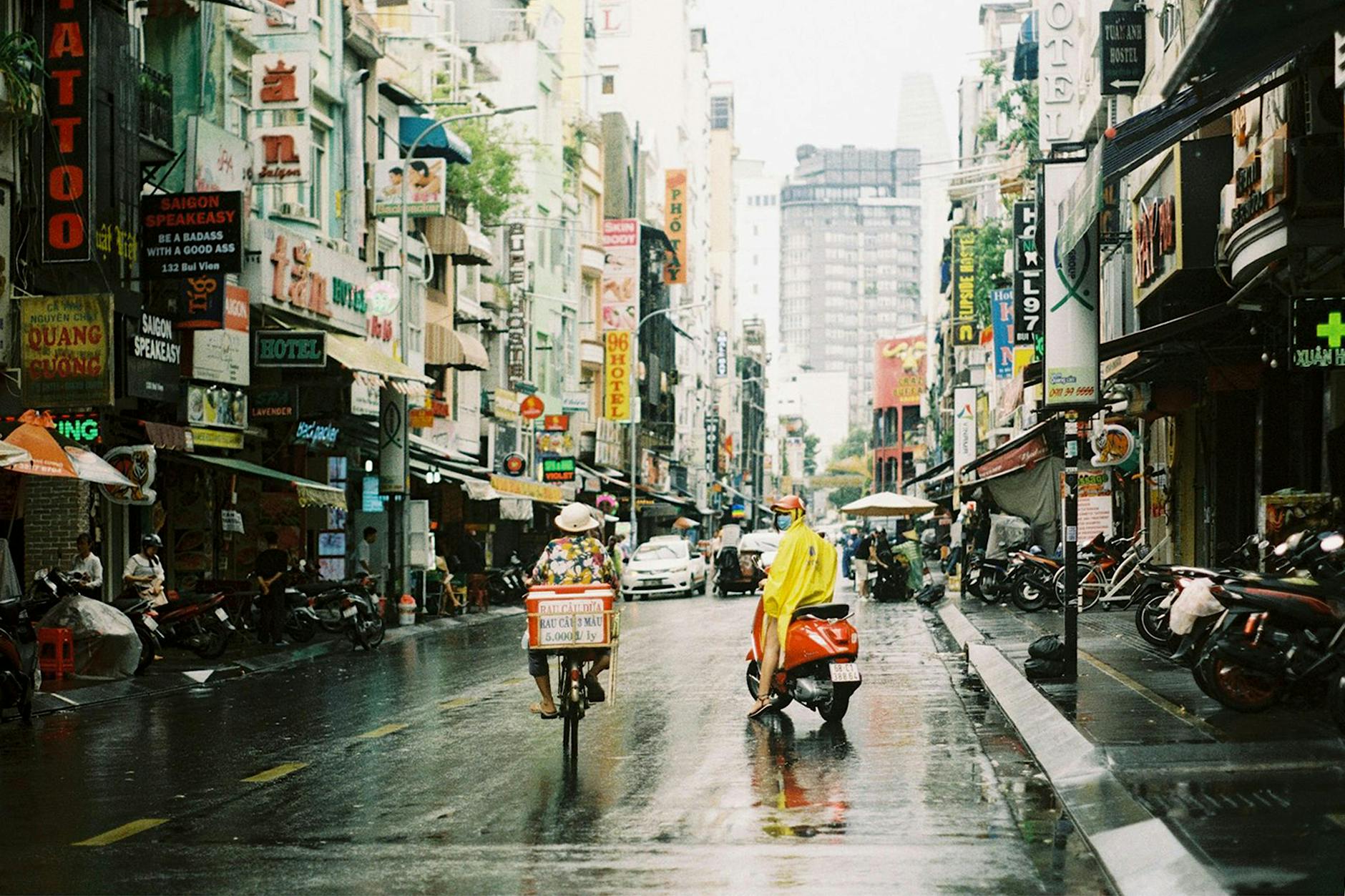
The Asian Business Review notes that Hanoi’s Ba Dinh and Ho Chi Minh City’s District 1 have reached a breaking point. Decades of rapid commercial development have packed high‑rise towers with mixed‑use podiums, leaving only narrow street‑level retail strips. Landlords now prioritize office and residential yields, making retail frontage thin, expensive, and less usable.
1.2 Licensing and Regulatory Friction
Vietnam’s licensing regime for retail inside mixed‑use towers has become increasingly complex. Signage, operating hours, and health‑code compliance require lengthy negotiations. The Asian Business Review warns that “the shift toward standalone retail formats will require businesses to better navigate licensing processes to avoid delays,” making suburban malls and purpose‑built retail parks more attractive.
1.3 Consumer Behaviour Realignment
Vietnam’s burgeoning middle class now values experiential shopping, open‑air plazas, and easy parking—features difficult to deliver in congested CBD environments. E‑commerce growth further pushes brands toward locations that can host omni‑channel fulfillment hubs, which downtown parcels with limited loading bays cannot support efficiently.
2. The Stand‑Alone Store Model: What It Means for Investors
2.1 Capital Flows Redirected to Peripheral Nodes
Developers are delivering larger, freestanding units on the city’s edge, typically offering:
- Expanded square footage – 30‑50 % larger footprints than CBD equivalents.
- Dedicated parking and logistics bays – essential for last‑mile delivery and inventory turnover.
- Lower land‑cost inflation – while still poised for capital appreciation as suburbs mature.
This reallocation creates a fresh pool of high‑yield “edge‑city” opportunities.
2.2 Rental Structures and Risk Allocation
Vietnamese landlords are experimenting with hybrid leases that blend fixed rent with turnover‑based components. The Asian Business Review highlights this as a way to mitigate risk and provide more resilient cash flow, especially where footfall can be measured accurately in stand‑alone sites.
2.3 Portfolio Diversification Benefits
For family offices and sovereign‑wealth‑type investors, stand‑alone assets offer:
- Geographic spread – less correlation with volatile prime CBD office markets.
- Sector resilience – easier repurposing for co‑working, health‑care, or entertainment uses.
- Long‑term value creation – suburbs will evolve into new sub‑centers, delivering appreciation alongside yields.
3. Parallels With the UAE Retail Landscape
The UAE’s shift from mall‑centric to mixed‑use community hubs mirrors Vietnam’s stand‑alone trend. Developers such as Emaar and Nakheel are creating “town centre” districts that give retailers space and infrastructure without high‑rise constraints. Additionally, turnover‑linked leases have become common for luxury brands in Dubai, providing a model for Vietnam’s evolving contracts.
4. Market Drivers Underpinning the Shift
| Driver | Vietnam Impact | UAE Relevance |
|---|---|---|
| Economic Uncertainty | Slower GDP forecasts encourage risk‑sharing lease terms. | Dubai’s diversification away from oil creates similar demand for flexible leases. |
| Consumer Preference for Experience | Demand for open‑air plazas and community events. | UAE’s “lifestyle districts” (City Walk, Bluewaters) reflect the same trend. |
| Logistics & E‑Commerce Integration | Need for loading bays and proximity to distribution centres. | UAE’s logistics hubs (Jebel Ali, Al Maktoum International) shape retail siting. |
| Regulatory Evolution | Complex CBD licensing pushes retailers outward. | UAE free‑zone permitting provides a smoother template. |
| Capital Allocation Trends | Institutional capital moving to high‑yield peripheral assets. | UAE investors already targeting “edge‑city” projects in Saudi Arabia and Egypt. |
5. Investor Implications: Opportunities and Risks
5.1 Opportunities
- Higher yield potential – 150‑200 bps above comparable CBD leases.
- Early‑mover advantage – anchor positions in upcoming parks secure preferential terms.
- Cross‑border synergies – apply UAE lease, sustainability, and tech best practices to Vietnam.
- Brand differentiation – dedicated façades and experiential zones unavailable in high‑rise podiums.
5.2 Risks
- Regulatory lag – permitting for new suburbs can be protracted.
- Infrastructure gaps – limited public transport may suppress foot traffic initially.
- Future peripheral saturation – increased supply could compress yields.
- Currency exposure – VND volatility; consider hedging or local‑currency financing.
6. Portfolio Takeaways
- Blend core CBD assets with growth‑oriented stand‑alone investments.
- Leverage hybrid lease structures for resilient cash flow.
- Integrate technology (footfall analytics, digital signage, contactless payment) early.
- Form strategic partnerships with experienced local developers to navigate zoning and approvals.
7. Forward‑Looking View: 2027‑2030 Outlook
By 2030 Vietnam is expected to adopt a poly‑centric retail model:
- Retail floor‑space growth of 6‑8 % annually in suburban districts vs. 3‑4 % in CBDs.
- Land‑price appreciation of 12‑15 % in emerging parks, versus 5‑7 % in central locations.
- Average lease term extending to 7‑9 years for stand‑alone assets, longer than today’s 4‑5 year CBD averages.
These dynamics provide a diversification edge for investors already active in the more mature UAE market.
8. Frequently Asked Questions
Q1: How do hybrid leases work in practice?
A hybrid lease combines a fixed base rent with a percentage of the tenant’s monthly sales. The fixed component guarantees a minimum cash flow, while the turnover component aligns landlord‑tenant interests and incentivizes marketing support.
Q2: What should I evaluate when selecting a stand‑alone site?
Look for proximity to arterial roads, access to public transport, adequate parking, high visibility from traffic corridors, and the presence of complementary anchors such as supermarkets or entertainment venues.
Q3: Are there tax advantages compared with the UAE?
Vietnam offers corporate income tax incentives for projects in designated economic zones or those meeting sustainability standards. The UAE’s zero‑tax environment remains a differentiator; a dual‑structure can optimize tax efficiency across jurisdictions.
Q4: How does currency risk affect returns?
The Vietnamese Dong can be volatile. Mitigate exposure with forward contracts, local‑currency financing, or structuring lease payments in a stable foreign currency where permissible.
Q5: Can a stand‑alone asset be repurposed?
Yes. Larger floor plates and dedicated access points make conversion to mixed‑use concepts—co‑working, health clubs, residential lofts—relatively straightforward, providing an embedded exit strategy.
9. Conclusion: Positioning Your Portfolio for the Next Retail Wave
The migration from cramped CBD podiums to spacious stand‑alone formats is a strategic realignment of brand‑consumer interaction, logistics, and urban growth. For sophisticated investors, the shift offers higher yields, hybrid lease resilience, and technology‑driven performance insights. Lessons from the UAE’s own transition to mixed‑use community hubs and turnover‑linked leases are directly applicable, enabling a seamless cross‑border strategy.
Integrating stand‑alone retail assets into a diversified Asian real‑estate portfolio captures immediate cash‑flow upside and long‑term appreciation as Vietnam’s urban fabric expands outward.
Ready to explore stand‑alone retail opportunities in Vietnam—or evaluate how they fit alongside your UAE holdings?
Contact David Moya Real Estate today.
Phone: +971 4 123 4567
Email: info@davidmoya.ae
Our team of seasoned advisors will help you structure strategic acquisitions, assess risk, and build a portfolio that thrives across borders. Let’s turn today’s market shift into tomorrow’s lasting value.
Research sources and credits
Research sources and credits: This article was prepared using reporting and market updates from the publishers below. Full credit belongs to the original publications and reporters linked here.
- Retailers shift to standalone stores as Vietnam CBD space tightens – Asian Business Review
Credit: Web | Published: Wed, 22 Apr 2026 02:53:46 GMT
– Sections Banking Technology Building & Engineering Co-Written / Partner Commercial Office Commercial Property Commercial Retail Energy & Offshore Financial Services Financial Technology Food & Beverage Hotels & Tourism HR & Education Information Technology Leisure & Entertainment Markets & Investing Media & Marketing Professional Services/Legal Residential Property Retail Banking Shipping & Marine Stocks Telecom & Internet Transport & Logistics Utilities – Awards – Events There are no upcoming events found. Please try again later. – Advertising Advertising Digital Events – Partner – Contact Us Sections Awards Events Contact Us English Bahasa Indonesia Agribusiness Aviation Banking Technology […] Beyond retail, Vietnam is positioning itself as a rising destination for concerts and large-scale events, with developers leveraging these activities to promote brands and drive property sales. Looking ahead, the shift toward standalone retail formats will require businesses to better navigate licensing processes to avoid delays. The report also noted that ongoing economic uncertainty is expected to push landlords and tenants to collaborate more closely, particularly in balancing turnover-based and fixed rental strategies to mitigate risk. Join Asian Business Review community Since you’re here… […] ### 2026 Malaysia National Business Awards, International Business Awards, and Technology Excellence Awards Event Highlights ### Indonesia Technology Excellence Awards 2025 Winner: Lani Sri Rahayu and Donatus Kreszyantody of PT Telkomsel ### DHL scales automation in Vietnam logistics operations View more videos Contact me about the awards Join the community ## Most Read 1. Probability disclosures unlikely to dent blind-box demand in Singapore 2. Affluent women force rethink of legacy planning in Asia-Pacific 3. Easing rents lure retailers back to Hong Kong streets 4. HK retail sales up 11.8% as durable goods and jewellery drive growth 5. Japan insurers face decline as premiums fall and growth stalls ## Resource Center
Next steps
If you want help evaluating projects, comparing returns, or building a UAE property strategy, contact David Moya Real Estate at +971 52 217 2034 or info@davidmoya.org.